
U.S. Deploys Typhon Mid-Range Missile System to Japan, Escalating Indo-Pacific Tensions and Expanding First Island Chain Strike Deterrence Against China
The deployment of America’s Typhon mid-range missile system to southern Japan marks a major escalation in Indo-Pacific force posture strategy, strengthening U.S.-Japan precision-strike interoperability while intensifying Chinese fears of an expanding First Island Chain missile containment network targeting Taiwan Strait and East China Sea contingencies.
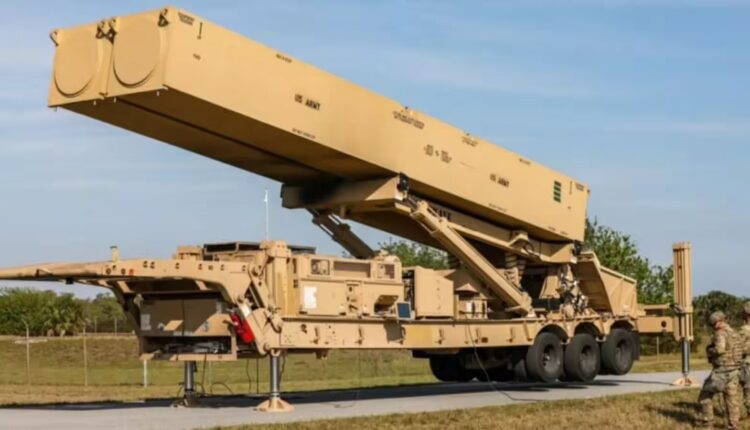
(DEFENCE SECURITY ASIA) — The United States deployment of the Typhon mid-range missile system to southern Japan marks one of Washington’s most consequential Indo-Pacific force posture adjustments since the collapse of the Intermediate-Range Nuclear Forces Treaty reshaped the regional missile balance in Asia.
The deployment signals a transition from rotational military presence toward semi-persistent conventional precision-strike positioning along the First Island Chain, directly affecting Chinese operational planning in any Taiwan Strait, East China Sea, or South China Sea contingency.
The U.S. Army’s Strategic Mid-Range Fires System, commonly known as Typhon, will participate in joint exercises with Japanese forces before being stored inside Japan afterward, indicating a deeper level of alliance integration than previous temporary deployments.

The decision reflects accelerating U.S.-Japan military interoperability efforts designed to strengthen distributed combat operations, long-range precision strike coordination, and maritime denial capabilities against increasingly sophisticated Chinese anti-access and area-denial networks across the Western Pacific.
The deployment coincides with broader Pentagon efforts to operationalize Multi-Domain Task Force concepts that integrate long-range fires, intelligence networks, electronic warfare, airpower, maritime targeting, and distributed logistics into a survivable regional combat architecture.
From southern Kyushu, Tomahawk cruise missiles launched from Typhon systems possess the theoretical range to strike critical military infrastructure, naval facilities, logistics nodes, and command centers along China’s eastern seaboard during a high-intensity regional conflict.
The deployment also reinforces a growing “missile arc” stretching from Japan through the Philippines and potentially other allied territories, complicating Chinese naval maneuverability and increasing risks for People’s Liberation Army Navy surface operations entering the Pacific Ocean.
Washington and Tokyo continue framing the deployment as defensive deterrence designed to preserve regional stability through credible combat capability, although Beijing increasingly interprets the move as an offensive encirclement strategy targeting China’s strategic depth.
Chinese officials previously described Typhon deployments as destabilizing military provocations that accelerate regional militarization, increase confrontation risks, and undermine what Beijing considers its legitimate security interests throughout the Indo-Pacific battlespace.
The deployment additionally demonstrates how the post-INF strategic environment has transformed Asia into the central theater for conventional intermediate-range missile competition between the United States and China, replacing Europe as the primary geographic focus for such systems.
Regional defence analysts increasingly assess that forward-deployed conventional missile systems now represent a core element of deterrence architecture because survivable mobile launchers complicate adversary targeting cycles more effectively than vulnerable fixed military installations.
The evolving deployment posture therefore represents not merely another bilateral military exercise but a structural shift in Indo-Pacific strike capability positioning that could alter Chinese military calculations during any future regional crisis involving Taiwan or maritime territorial disputes.
Typhon System Expands U.S. Conventional Precision Strike Reach Across the First Island Chain
The Typhon system, officially designated the Strategic Mid-Range Fires System, was developed after Washington withdrew from the INF Treaty in 2019, eliminating previous restrictions on ground-launched missiles with ranges between 500 kilometers and 5,500 kilometers.
The system employs modified naval missile technology mounted on mobile truck-based launchers, enabling U.S. Army units to conduct long-range conventional precision strikes previously reserved primarily for naval destroyers and submarines equipped with the Mk 41 Vertical Launch System.
Each Typhon launcher contains four vertical launch cells mounted on Heavy Expanded Mobility Tactical Trucks, creating a highly mobile missile capability capable of rapidly dispersing across austere operating environments throughout the Indo-Pacific operational theater.
The system fires Tomahawk land-attack cruise missiles with operational ranges approaching approximately 1,600 kilometers, allowing U.S. forces to target hardened command facilities, logistics hubs, naval infrastructure, and coastal military installations deep inside contested battlespaces.
Typhon also launches the SM-6 multi-role missile, providing anti-air, anti-ship, and land-attack functionality that significantly expands operational flexibility during complex multi-domain combat operations involving maritime and aerospace threats simultaneously.
The dual-missile capability gives commanders substantial operational versatility because SM-6 interceptors can engage hostile aircraft, surface combatants, and select land targets while Tomahawk missiles conduct deep precision strike missions against strategic infrastructure.
The mobile architecture represents a major doctrinal shift because survivable dispersed launchers reduce reliance on fixed air bases and naval ports increasingly threatened by Chinese ballistic missiles, cruise missiles, and long-range precision fires.
Typhon batteries generally include four launchers, command-and-control vehicles, operational coordination systems, communications nodes, and logistics support elements, creating a distributed expeditionary missile package optimized for rapid Indo-Pacific deployment scenarios.
The system operates under U.S. Army Multi-Domain Task Force formations specifically designed to integrate cyber warfare, electronic warfare, long-range fires, space-enabled targeting, and conventional strike capabilities into unified theater-level operational effects.
Military planners increasingly view Typhon as a crucial capability bridging the operational gap between shorter-range systems like HIMARS and emerging hypersonic weapons, thereby strengthening layered deterrence options against near-peer military competitors.
The deployment therefore reflects Washington’s broader effort to establish survivable land-based precision-strike networks capable of contesting Chinese maritime expansion and preserving allied freedom of maneuver throughout strategically vital Indo-Pacific sea lanes.

Southern Japan Deployment Directly Enhances Alliance Strike Coordination and Maritime Denial Operations
The current Typhon deployment centers around Japan Maritime Self-Defense Force Kanoya Air Base in Kagoshima Prefecture on southern Kyushu, positioning the missile system significantly closer to Taiwan and critical East China Sea operational corridors.
The deployment supports Valiant Shield 2026, a major multinational military exercise beginning around June 22 involving joint maritime, aerospace, and land operations extending across Japan, Guam, Hawaii, and surrounding Indo-Pacific operational areas.
Typhon systems will subsequently participate in Orient Shield 2026, the annual U.S.-Japan ground forces exercise focused heavily on interoperability, distributed combat operations, and integrated targeting coordination between allied military formations.
Unlike previous rotational deployments, the launchers are expected to remain stored inside Japan after exercises conclude around mid-October 2026, signaling a more persistent operational footprint supporting rapid future redeployment capabilities.
The storage decision effectively shortens crisis response timelines because forward-positioned launchers eliminate lengthy trans-Pacific transportation requirements during fast-moving regional military contingencies involving Taiwan or disputed maritime territories.
HIMARS rocket artillery systems are deploying alongside Typhon batteries, allowing integrated anti-ship warfare training emphasizing coordinated long-range precision strike operations against maritime targets operating near strategically sensitive island chains.
Joint training activities near Kanoya and Amami Oshima illustrate how Washington and Tokyo increasingly prioritize distributed maritime denial operations designed to complicate Chinese amphibious maneuvers and naval force projection into the Western Pacific.
No live missile firings are planned during current exercises, indicating that alliance planners remain sensitive toward domestic political concerns inside Japan regarding escalation risks and potential regional diplomatic backlash from neighboring countries.
The deployment represents Typhon’s second appearance in Japan following a temporary 2025 deployment at Marine Corps Air Station Iwakuni during Resolute Dragon exercises that triggered local opposition and security-related civic protests.
Southern Kyushu’s geographic proximity to Taiwan and major Chinese maritime approaches nevertheless provides exceptional operational relevance because missile coverage from the region can influence critical sea lanes and naval maneuver corridors.
The deployment therefore demonstrates how Japan’s evolving defense posture increasingly accepts hosting advanced U.S. long-range strike systems despite enduring domestic sensitivities surrounding militarization, escalation management, and regional strategic stability concerns.
China Views Typhon Deployment as Offensive Encirclement Threatening Strategic Access to the Pacific
Chinese officials have consistently condemned Typhon deployments as destabilizing actions that intensify regional military confrontation risks while accelerating an Indo-Pacific arms competition centered around intermediate-range missile capabilities.
Beijing argues that forward-deployed American missile systems undermine regional security by introducing offensive strike capabilities capable of threatening Chinese coastal cities, military installations, naval facilities, and strategic infrastructure during potential conflict scenarios.
Chinese strategic analysts additionally warn that missile deployments across southern Japan and the Philippines could restrict People’s Liberation Army Navy access routes into the Pacific Ocean during high-intensity wartime operations.
The criticism reflects longstanding Chinese concerns regarding First Island Chain containment strategies that seek to constrain Beijing’s maritime expansion and limit operational freedom for Chinese naval and aerospace forces beyond coastal waters.
China currently maintains one of the world’s largest inventories of intermediate-range conventional missiles, with recent estimates indicating approximately 1,850 systems operating within the 1,000-kilometer to 5,500-kilometer strike range category.
That arsenal previously provided Beijing a substantial regional advantage because the INF Treaty prohibited equivalent American ground-launched systems while China remained unconstrained by the Cold War-era bilateral agreement between Washington and Moscow.
The post-INF environment now permits the United States to field comparable conventional strike systems throughout allied territories, gradually eroding China’s missile asymmetry advantage in potential Taiwan Strait or East China Sea conflicts.
Chinese state-affiliated commentators increasingly portray Typhon deployments as evidence that Washington seeks to militarize the Indo-Pacific through offensive missile networks designed to pressure China strategically and economically simultaneously.
Beijing has repeatedly urged both Washington and Tokyo to withdraw the systems while warning that persistent deployments could trigger reciprocal military countermeasures, expanded exercises, and additional missile positioning near contested regional flashpoints.
Russia also criticized earlier Typhon deployments during 2025, indicating broader Eurasian concerns that expanding American intermediate-range missile networks could fundamentally reshape strategic deterrence calculations throughout multiple geographic theaters simultaneously.
The deployment consequently intensifies broader U.S.-China strategic competition by introducing highly mobile conventional strike systems into an already contested regional security environment increasingly shaped by rapid military modernization and force posture transformation.
U.S.-Japan Missile Integration Reshapes Indo-Pacific Deterrence and Regional Security Calculations
The deployment underscores how the U.S.-Japan alliance increasingly prioritizes distributed long-range precision fires as a central component of regional deterrence strategy against rapidly expanding Chinese military capabilities across multiple operational domains.
American and Japanese military planners assess that mobile missile systems improve survivability because dispersed launchers can relocate rapidly, complicating enemy targeting cycles and reducing dependence on vulnerable fixed military infrastructure.
Typhon integration additionally strengthens joint targeting coordination between U.S. and Japanese forces, improving alliance responsiveness during maritime security crises involving hostile naval formations or long-range missile threats across contested regional waters.
The deployment also complements Japan’s evolving defence modernization strategy emphasizing counterstrike capabilities, integrated air and missile defense systems, and enhanced interoperability with American combat formations throughout the Indo-Pacific theater.
Tokyo’s willingness to support long-range American missile deployments reflects broader strategic anxiety regarding Chinese military expansion, particularly surrounding Taiwan contingency planning and increased Chinese naval activity near southwestern Japanese islands.
The deployment could influence regional calculations beyond Japan because allies such as the Philippines already host Typhon systems, potentially encouraging wider adoption of distributed allied missile networks across Southeast Asia and the Pacific.
A more geographically dispersed missile architecture complicates Chinese operational planning because multiple allied launch sites increase uncertainty regarding strike origin points, response timelines, and targeting priorities during fast-moving military confrontations.
The deployment additionally reinforces broader Pentagon concepts emphasizing expeditionary logistics, distributed operations, and survivable combat networks rather than concentrated force structures vulnerable to large-scale precision missile attacks.
Strategically, the positioning of Typhon systems inside allied territory demonstrates long-term American commitment to forward military presence despite growing concerns regarding Chinese anti-access capabilities and evolving regional military balances.
The deployment nevertheless risks intensifying regional security dilemmas because Chinese counter-deployments, expanded missile exercises, and increasingly confrontational military signaling could produce an escalating cycle of reciprocal force modernization.
The evolving Typhon posture therefore represents both a deterrence mechanism and a geopolitical flashpoint capable of reshaping Indo-Pacific strategic stability as Washington and Beijing compete increasingly through missile deployments, force posture adjustments, and alliance integration.
Persistent Missile Presence Signals Structural Transformation in Indo-Pacific Force Posture Competition
The decision to retain Typhon launchers inside Japan after exercises conclude signals that Washington increasingly views persistent regional missile presence as essential for credible deterrence against near-peer military competitors in Asia.
Forward-stored launchers provide operational advantages because pre-positioned systems reduce deployment timelines while enabling rapid reinforcement during crises involving Taiwan, maritime territorial disputes, or broader regional military escalation scenarios.
The arrangement also enhances alliance operational integration because Japanese forces gain sustained exposure to American long-range strike doctrine, command coordination procedures, and distributed expeditionary logistics supporting multi-domain operations.
Persistent deployment structures increasingly replace purely temporary rotational exercises because military planners seek enduring operational readiness capable of generating immediate combat effects during rapidly evolving Indo-Pacific contingency environments.
The broader strategy reflects recognition that Chinese missile forces already possess extensive regional reach, requiring the United States and allies to establish survivable countervailing strike architectures throughout the First Island Chain.
From Beijing’s perspective, however, persistent Typhon positioning indicates that Washington intends establishing semi-permanent offensive missile infrastructure capable of threatening Chinese military assets from multiple allied territories simultaneously.
The deployment therefore carries significance extending beyond simple military exercises because it institutionalizes conventional intermediate-range missile competition as a permanent feature of Indo-Pacific strategic rivalry between major powers.
Domestic political sensitivities inside Japan nevertheless remain significant because local civic groups previously protested Typhon deployments over safety concerns, escalation risks, and fears surrounding deeper entanglement in potential regional conflicts.
Potential opposition near Kanoya or future storage locations could influence Japanese political debate regarding alliance burden-sharing, long-range strike hosting, and the broader trajectory of Japan’s postwar security posture transformation.
The deployment also illustrates how regional military competition increasingly revolves around mobility, survivability, logistics resilience, and distributed precision strike capability rather than solely numerical force comparisons between competing military powers.
Ultimately, the Typhon deployment to Japan demonstrates how Indo-Pacific deterrence architecture is shifting toward integrated allied missile networks designed to constrain adversary maneuverability while strengthening rapid conventional response capability during future regional crises.
