
Singapore Escalates Maritime Surveillance: RSAF Acquires Gulfstream G550-MSA to Secure Strait of Malacca Amid South China Sea Tensions
Jet-powered ISR upgrade strengthens Singapore’s early warning architecture as submarine proliferation and grey-zone pressure intensify across Indo-Pacific sea lanes.
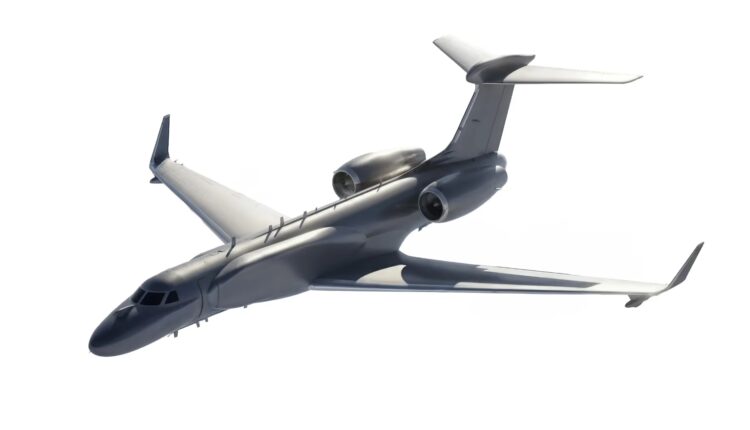
(DEFENCE SECURITY ASIA) — The Republic of Singapore Air Force’s decision to acquire three Gulfstream G550 Maritime Surveillance Aircraft fundamentally recalibrates Singapore’s maritime force posture at a time when sea lines of communication across the Strait of Malacca and South China Sea are increasingly exposed to grey-zone coercion, submarine proliferation, and intensifying major power competition.
Announcing the acquisition during the parliamentary debate on the Ministry of Defence’s fiscal year 2026 spending plans on 27 February 2026, Defence Minister Chan Chun Sing framed the move as a structural enhancement of Singapore’s maritime security architecture rather than a platform replacement, underscoring its linkage to national economic survival.
“This supports the SAF’s mission in safeguarding Singapore’s sea lines of communication as part of Singapore’s maritime security surveillance network,” Chan stated in Parliament, explicitly tying the G550-MSA procurement to early warning, networked detection, and maritime domain awareness imperatives central to deterrence credibility.

For a trade-dependent city-state where over 90 percent of economic throughput transits by sea, the resilience of SLOC monitoring is not a peripheral defence issue but a systemic vulnerability management challenge with direct implications for supply chain stability, energy security, and sovereign crisis response autonomy.
The acquisition must therefore be understood not merely as an airpower upgrade but as a logistics-centric strategic investment designed to harden surveillance coverage over chokepoints that handle a third of global seaborne commerce and remain vulnerable to both state and non-state maritime disruption.
By integrating the G550-MSAs into a layered surveillance construct that complements four Boeing P-8A Poseidon maritime patrol aircraft announced in September 2025, the Singapore Armed Forces are institutionalising a high-low ISR mix engineered for persistent coverage and rapid cueing across multi-domain battlespace environments.
This layered architecture reflects Singapore’s long-standing doctrine of technological overmatch as a compensatory mechanism for limited strategic depth, ensuring that early detection compresses adversary decision cycles while extending Singapore’s own response windows in contested maritime theatres.
Regional militarisation trends, including submarine expansion, surface combatant modernisation, and enhanced ISR deployments by neighbouring states, create an operating environment in which surveillance latency becomes a liability, thereby amplifying the operational logic behind jet-powered, high-altitude maritime surveillance platforms.
The procurement also signals continuity in Singapore’s force modernisation trajectory, replacing ageing Fokker 50 maritime enforcer aircraft whose turboprop limitations in endurance, sensor reach, and transit speed increasingly constrain wide-area surveillance over expanding maritime security demands.
Against this backdrop, the G550-MSA acquisition is less an isolated procurement decision than a structural reinforcement of Singapore’s maritime deterrence ecosystem, embedding early warning, interoperability, and force readiness within a rapidly evolving Indo-Pacific security landscape.
Maritime Surveillance Modernisation as Strategic Necessity
Singapore’s maritime surveillance modernisation reflects an acknowledgement that legacy propeller-driven platforms such as the Fokker 50, operational since the 1990s, are structurally mismatched against contemporary threat vectors that include quiet diesel-electric submarines, long-range anti-ship missile deployments, and coordinated grey-zone maritime manoeuvres.
The Fokker 50’s limited range, altitude ceiling, and sensor architecture restrict coverage breadth, particularly when tasked to monitor high-density sea lanes where vessel traffic exceeds 80,000 annual transits through the Strait of Malacca alone.
Transitioning to a jet-powered Gulfstream G550 platform enables higher transit speeds and elevated radar horizons, thereby reducing time-to-station and expanding surveillance arcs, which in turn compress detection-to-decision cycles critical for early warning effectiveness.
This capability enhancement becomes strategically salient as neighbouring states pursue maritime capacity upgrades, including submarine acquisitions and patrol vessel expansions, thereby increasing underwater and surface domain complexity across Southeast Asian waters.
Simultaneously, China’s naval modernisation trajectory, encompassing aircraft carriers, advanced submarines, and networked ISR systems, intensifies operational density within the South China Sea, a theatre characterised by overlapping territorial claims and heightened strategic signalling.
Singapore’s surveillance recalibration therefore operates within a deterrence-balancing framework, wherein improved maritime domain awareness serves both defensive transparency and coercion resistance without overtly escalating force projection dynamics.
Through frameworks such as the Five Power Defence Arrangements and bilateral exercises with partners including the United States and Australia, Singapore’s ISR modernisation also strengthens interoperability channels essential for coalition-based maritime stability operations.
The G550-MSA’s integration into this networked ecosystem enhances real-time data fusion capabilities, enabling cross-domain cueing between air, naval, and ground assets while supporting joint and combined operations without necessitating permanent basing shifts.
Importantly, this procurement aligns with Chan Chun Sing’s articulated “high-low” capability mix, blending high-end manned platforms with cost-effective unmanned systems to ensure scalable responses across both conventional and hybrid threat environments.
Within this strategic calculus, maritime surveillance modernisation functions as a force multiplier that reinforces Singapore’s broader deterrence posture while preserving fiscal discipline under the Ministry of Defence’s 2026 expenditure framework.

Technical Architecture of the Gulfstream G550-MSA Platform
The Gulfstream G550-MSA, derived from a long-range business jet airframe, incorporates structural reinforcements and mission-specific modifications that transform it into a high-end maritime intelligence, surveillance, and reconnaissance platform optimised for persistent, high-altitude operations.
Measuring 29.8 metres in length with a wingspan of 28.5 metres and a height of 8.3 metres, the aircraft operates at cruise speeds of Mach 0.82, approximately 904 kilometres per hour, enabling rapid repositioning across extended maritime patrol zones.
Its service ceiling of 40,000 feet, equivalent to 12,192 metres, allows operations above commercial air traffic corridors and adverse weather systems, thereby expanding radar line-of-sight and reducing environmental interference during surveillance missions.
Powered by two Rolls-Royce BR710C4-11 turbofan engines delivering 15,385 pounds of thrust each, the aircraft supports a maximum takeoff weight of 91,000 pounds, or 41,277 kilograms, and carries up to 41,300 pounds of fuel for extended endurance.
With an approximate range of 6,750 nautical miles, or 12,501 kilometres, and endurance of up to nine hours, the G550-MSA sustains prolonged maritime patrols without frequent refuelling, enhancing persistence over critical sea lanes.
Advanced avionics, including the Honeywell Primus Epic PlaneView suite and fly-by-wire controls, reduce pilot workload while enabling precise flight management essential for ISR mission stability and sensor optimisation.
The maritime surveillance radar fitted to the aircraft facilitates wide-area surface search capability, detecting vessels across extended ranges even within cluttered littoral environments where radar cross-section discrimination becomes operationally challenging.
Electro-optical and infrared imaging systems provide day-night target identification, while integrated communication suites enable real-time data relay to ground stations and other SAF assets, reinforcing network-centric warfare principles.
Maritime Automatic Identification System integration allows cooperative vessel tracking, and a self-protection suite mitigates exposure to surface-to-air missile threats, while signals intelligence components expand electronic warfare awareness through emission detection.
Configured with two pilots and up to six mission specialists operating from ergonomic mission workstations, the G550-MSA combines cabin space efficiency with advanced sensor fusion to deliver a persistent surveillance capability tailored to Singapore’s maritime security demands.
Complementarity with the Boeing P-8A Poseidon Fleet
The three G550-MSAs are designed to complement four Boeing P-8A Poseidon aircraft approved in a US$2.3 billion procurement announced in 2025, equivalent to approximately RM8.74 billion at an exchange rate of USD1 to RM3.8.
Where the P-8A specialises in anti-submarine warfare through deployment of sonobuoys, torpedoes, and acoustic processing systems, the G550-MSA prioritises high-altitude surface surveillance and strategic early warning functions.
This division of labour establishes a layered ISR construct in which the G550-MSA performs broad-area maritime scanning and target classification, subsequently cueing the P-8A for tactical engagement or close-in investigation.
Such role differentiation reduces mission overlap while optimising platform-specific strengths, thereby enhancing overall fleet efficiency and reducing unnecessary wear on higher-cost anti-submarine warfare assets.
The networked integration of both aircraft types with ground-based radars, unmanned aerial vehicles, and naval surface combatants creates a distributed maritime domain awareness grid that enhances detection redundancy.
In potential contingencies involving suspicious surface contacts in the South China Sea, the G550-MSA’s elevated radar horizon enables early anomaly detection, with subsequent tasking of a P-8A for acoustic verification or interdiction.
By replacing Fokker 50 maritime enforcers, the new architecture improves transit times and endurance while lowering operational strain associated with ageing airframes, thereby enhancing long-term fleet sustainability.
The high-low mix articulated by Chan Chun Sing reflects a resource-optimised doctrine in which high-end ISR assets are deployed judiciously while supported by complementary capabilities to maintain persistent coverage.
Interoperability with partner forces during exercises such as RIMPAC and SEACAT is facilitated by compatible communication and data-link systems, strengthening coalition maritime security frameworks without altering Singapore’s neutrality posture.
Collectively, the G550-MSA and P-8A combination establishes a multi-tiered maritime surveillance architecture capable of addressing both surface and subsurface threats across complex Indo-Pacific operating environments.
Logistics Footprint and Force Posture Implications
The introduction of three jet-powered maritime surveillance aircraft necessitates infrastructure adjustments, including hangar capacity expansion, maintenance facility upgrades, and mission systems integration hubs within RSAF basing structures.
Training pipelines for pilots and mission specialists must adapt to advanced avionics, sensor fusion software, and network-centric operational doctrines, thereby increasing short-term human capital investment requirements.
However, the G550 platform’s commercial lineage provides maintenance efficiencies and global supply chain access for spare parts, mitigating lifecycle sustainment risks compared to bespoke military airframes.
The aircraft’s ability to deploy rapidly to patrol sectors reduces forward basing demands while enhancing flexible force posture options during heightened regional tensions.
From a logistics perspective, nine-hour endurance and extended range reduce sortie frequency required to maintain surveillance coverage, thereby optimising fuel consumption and crew rotation cycles.
Force posture recalibration also carries signalling value, demonstrating Singapore’s commitment to proactive maritime security without resorting to overtly offensive capability expansion.
Financially, while specific acquisition costs for the G550-MSAs were not disclosed, such platforms typically fall within the hundreds of millions of US dollars, translating into several hundred million ringgit under current exchange assumptions, indicating a substantial yet targeted investment.
Integration into existing command-and-control networks ensures that new capabilities reinforce rather than duplicate existing surveillance nodes, preserving cost-efficiency within the broader defence budget.
Operationally, the high-altitude profile expands radar horizons beyond ground-based limitations, extending early warning envelopes across congested sea lanes critical to national economic continuity.
Thus, the logistics and force posture implications of the G550-MSA acquisition reflect a calculated enhancement of readiness, resilience, and response elasticity within Singapore’s maritime security framework.
Strategic Signalling and Regional Stability Calculus
Singapore’s acquisition of advanced maritime surveillance aircraft inevitably carries strategic signalling effects within Southeast Asia’s evolving balance of power, particularly amid intensified South China Sea contestation.
Enhanced early warning capabilities improve deterrence credibility by reducing opportunities for surprise manoeuvres or covert maritime encroachments within Singapore’s surrounding waters.
At the same time, Singapore’s emphasis on defensive surveillance rather than strike augmentation mitigates escalation risks by framing the acquisition within a maritime domain awareness paradigm.
Regional actors may reassess their own ISR capacities in response, potentially accelerating surveillance upgrades to maintain situational parity, though this dynamic reflects competitive adaptation rather than explicit arms race triggers.
Singapore’s interoperability with U.S.-led security architectures, facilitated through compatible ISR systems, strengthens coalition deterrence frameworks while preserving sovereign decision-making autonomy.
By contributing to collective maritime transparency, the G550-MSAs may support multilateral patrols and information-sharing initiatives that stabilise chokepoints vulnerable to piracy, smuggling, and grey-zone coercion.
However, geopolitical sensitivities remain, requiring calibrated diplomatic communication to avoid misperception of alignment shifts or coercive intent.
The acquisition underscores Singapore’s long-standing “poisoned shrimp” deterrence logic, wherein technological sophistication compensates for limited territorial depth by imposing prohibitive costs on potential aggressors.
Uncertainties persist regarding long-term regional maritime dynamics, particularly given submarine proliferation and electronic warfare advancements that challenge traditional ISR paradigms.
Nevertheless, by institutionalising high-altitude, networked maritime surveillance within its force structure, the RSAF positions Singapore to navigate an increasingly complex Indo-Pacific security environment with enhanced early warning resilience and strategic flexibility. — DEFENCE SECURITY ASIA
