
Pakistan’s Pledge to Defend Makkah and Madinah Resurfaces Amid Israel’s Strike on Doha
Israel’s unprecedented strike on Doha has reignited global focus on Pakistan’s pledge to defend Saudi Arabia’s holy mosques, underscoring the enduring military and spiritual bond between Islamabad and Riyadh.
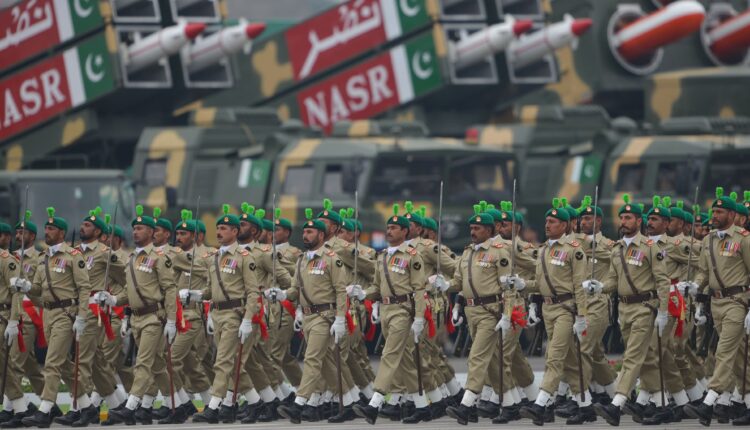
(DEFENCE SECURITY ASIA) — Pakistan’s pledge to defend the Two Holy Mosques in Makkah and Madinah has resurfaced with renewed intensity across social media, reminding the world of a security commitment that sits at the core of Islamabad’s alliance with Riyadh.
This assurance, embedded in decades of military cooperation, has once again entered the global spotlight at a time when the Middle East is shaken by Israel’s unprecedented strike on Doha, raising questions about the vulnerability of sacred and strategic sites across the region.

The origins of this pledge trace back to the 1951 Treaty of Friendship between Pakistan and Saudi Arabia, which laid the foundations for one of the most enduring military alliances in the Muslim world.
Since the 1960s, Pakistan has not only trained Saudi military personnel but has also deployed its own troops to the Kingdom, reinforcing Saudi Arabia’s defences at critical junctures.
During Operation Desert Storm in 1990–91, Pakistan stationed a division-sized contingent in Saudi Arabia, tasked explicitly with securing Masjid al-Haram in Makkah and Masjid an-Nabawi in Madinah against potential regional threats.
That deployment cemented Pakistan’s role not just as a military ally but as a guardian of Islam’s holiest sanctuaries, underscoring the spiritual and geopolitical weight Riyadh places on Islamabad’s commitment.
More recently, following the 2016 terrorist attack near Masjid an-Nabawi in Madinah, Pakistan’s Foreign Office reaffirmed its “unwavering support for the safety, security, and territorial integrity of Saudi Arabia.”
The same year, Pakistan joined the Saudi-led 34-nation Islamic Military Alliance, designed to counter terrorism and asymmetric threats, further embedding its troops in joint operations and training frameworks.
As of 2018, over 1,000 Pakistani officers were stationed in Saudi Arabia in training and advisory roles, with an estimated 10,000 Saudi personnel having undergone advanced training under Pakistani instructors since the 1970s.
High-level visits, including Saudi Crown Prince Mohammed bin Salman’s 2019 state trip to Islamabad, emphasized counter-terrorism, arms modernization, and regional stability, highlighting the alliance’s evolving dimensions in a volatile Gulf landscape.
The viral resurgence of this topic on social media platform X today reflects both public sentiment and strategic anxieties, with thousands sharing posts such as: “Pakistan has an agreement with Saudi Arabia to defend two holy mosques in Makkah and Madinah if they ever come under attack.”
“Pakistan’s assurance is not just a military pact; it’s a symbol of unity in the Ummah,” said Dr. Ahmed Qureshi, a defence analyst based in Islamabad.
This symbolic and military role has gained new salience as the Middle East reels from Israel’s strike in Doha, which shattered diplomatic norms and underscored the vulnerability of even the wealthiest Gulf capitals to high-precision warfare.

The attack on Doha demonstrated the evolving nature of regional conflicts where advanced stand-off munitions, drones, and cyber warfare bypass conventional air defences, forcing nations like Saudi Arabia to strengthen security around sites of global religious significance.
For Riyadh, reliance on Pakistan provides a unique assurance that extends beyond hardware—Pakistan’s nuclear-armed military carries immense deterrent weight within the Muslim world and offers credibility unmatched by Western security guarantees.
Analysts argue that while the U.S. remains Saudi Arabia’s primary security partner, Pakistan’s pledge represents a parallel and deeply religiously charged dimension, designed to deter state and non-state actors alike from even contemplating attacks on Islam’s holiest sites.
The convergence of religious legitimacy, nuclear deterrence, and decades of military-to-military trust explains why this pledge remains a cornerstone of Riyadh’s defence doctrine despite shifting global alliances.
Saudi Arabia, as custodian of the Two Holy Mosques, depends on these alliances to guarantee the safety of millions of pilgrims performing Hajj and Umrah, even as new threats from drones, precision-guided missiles, and regional militias expand the threat matrix.
While neither Islamabad nor Riyadh has issued fresh statements today, the viral discussions demonstrate how historical pledges continue to resonate in the digital age, shaping perceptions of security within the wider Ummah.
In the current climate—marked by Israeli strikes, Iranian regional manoeuvres, and the resurgence of militant threats—the Pakistan-Saudi alliance serves as both a deterrent and a symbol of religious solidarity across the Muslim world.
The pledge to defend Makkah and Madinah thus stands not only as a historic security agreement but also as a living reminder of how spiritual sanctity and strategic necessity converge in one of the world’s most volatile regions.
READ: Pakistan Warns India of “60-0” Defeat: J-10C and PL-15 BVR Missiles Threaten Rafale Fleet
A Historical Security Pact Anchored in Faith and Strategy
Pakistan’s pledge to defend the Two Holy Mosques in Makkah and Madinah is not a new commitment but rather a continuation of a security doctrine shaped more than seven decades ago.
The 1951 Treaty of Friendship between Pakistan and Saudi Arabia served as the formal foundation of their strategic partnership, embedding the defence of Islam’s holiest sanctuaries within broader diplomatic, religious, and military frameworks.
Throughout the 1960s and 1970s, Pakistani officers were seconded to Riyadh to help establish the core structure of the Royal Saudi Armed Forces, including air defence and ground forces that form the backbone of the Kingdom’s deterrence today.
By the 1980s, Pakistan had become the single largest provider of foreign military expertise to Saudi Arabia, with hundreds of officers serving in advisory capacities across the Saudi Army, Air Force, and National Guard.
Pakistani pilots were particularly instrumental in training Royal Saudi Air Force (RSAF) squadrons during their transition to U.S.-supplied F-15 Eagles, ensuring Riyadh could absorb cutting-edge Western platforms into its arsenal.
Joint military exercises such as Al-Samsam and Al-Kassah became recurring features of bilateral cooperation, focusing on counter-terrorism, desert warfare, and the defence of critical infrastructure.
Islamabad’s commitment was not confined to training but extended to the deployment of full combat units, including artillery and armoured regiments, stationed in Saudi Arabia at various points during the Cold War.
This sustained presence reinforced the perception within the Muslim world that Pakistan functioned as the “strategic depth” of Saudi Arabia, ready to defend the Kingdom at moments of crisis.
The alliance was also shaped by Pakistan’s reliance on Saudi oil subsidies during periods of economic hardship, creating a mutually reinforcing security-energy partnership that still underpins relations today.
Even during moments of global realignment, such as the U.S.-Iran rapprochement in the late 1970s or the Soviet invasion of Afghanistan in 1979, Pakistan and Saudi Arabia consistently aligned their policies in defence and religious legitimacy.
Operation Desert Storm: Pakistan’s Defining Moment in Riyadh
Pakistan’s most visible demonstration of this pledge came during Operation Desert Storm in 1990–91, when Saddam Hussein’s invasion of Kuwait threatened the stability of the entire Gulf region.
Islamabad deployed a division-sized contingent to Saudi Arabia, tasked not with frontline combat in Kuwait, but with the exclusive defence of Makkah and Madinah against any potential attack.
That deployment marked Pakistan as a guardian of Islam’s spiritual heartlands, signalling to adversaries that any attempt to threaten the holy mosques would trigger a nuclear-capable state’s military intervention.
This positioning elevated Pakistan’s role in the Muslim world, portraying it as both a military shield and religious custodian, a unique role no other Muslim-majority nuclear power could fulfil.
Pakistani forces were stationed at strategic choke points around Jeddah, Taif, and the approaches to the Hijaz region, effectively creating a defensive cordon to intercept any hostile incursion from Iraq.
The presence of Pakistani troops not only reassured Saudi leadership but also boosted the morale of millions of pilgrims and residents who feared that the Gulf War could spill into the Kingdom’s most sacred territory.
At the same time, Pakistan’s military command maintained close coordination with U.S. Central Command and Saudi counterparts, ensuring that the defence of the holy mosques was integrated into the coalition’s broader operational planning.
Analysts note that this deployment showcased Pakistan’s ability to project power rapidly across borders and sustain a sizable force in one of the world’s most volatile theatres.
It also demonstrated Riyadh’s deep trust in Islamabad at a time when regional alliances were fluid, with Iran on the sidelines and Gulf monarchies uncertain about American staying power.
This episode is often cited in defence circles as the turning point that transformed Pakistan from a symbolic ally to an indispensable security guarantor for Saudi Arabia’s most sensitive religious and strategic assets.
Terrorism, Non-State Actors, and the 2016 Madinah Attack
The July 2016 terrorist attack near Masjid an-Nabawi in Madinah reinforced the relevance of this pact in the modern era.
Although the attack was foiled before it reached the holy mosque, it underscored the vulnerability of even the most heavily defended religious sites to asymmetric threats.
Pakistan immediately reaffirmed its commitment, with the Foreign Office declaring “unwavering support for the safety, security, and territorial integrity of Saudi Arabia.”
This event also catalyzed Pakistan’s inclusion in the Saudi-led Islamic Military Counter Terrorism Coalition (IMCTC), a 34-nation bloc headquartered in Riyadh with a mission to coordinate counter-terrorism strategies.
The attack highlighted a critical evolution in regional security — from conventional state-based threats to non-state actors armed with suicide vests, improvised explosive devices, and potentially drones capable of penetrating urban sanctuaries.
Analysts argued that if such a strike could occur within the second holiest site in Islam, then the security of other pilgrimage hubs, including Mina and Arafat during Hajj season, remained vulnerable.
Pakistan’s counter-terrorism experience, forged in two decades of asymmetric warfare against groups like Tehrik-i-Taliban Pakistan (TTP) and Al-Qaeda affiliates, gave it an invaluable role within the IMCTC’s operational doctrine.
The coalition began to adopt lessons from Pakistan’s “Zarb-e-Azb” and “Radd-ul-Fasaad” operations, which dismantled militant networks through integrated air-ground campaigns and intelligence-driven targeting.
For Riyadh, Pakistani expertise became essential not just in guarding the holy sites, but in hardening Saudi Arabia’s broader security infrastructure against non-state actors inspired by Daesh and Al-Qaeda in the Arabian Peninsula (AQAP).
Israel’s Strike on Doha: A Warning for Riyadh and Islamabad
The sudden Israeli strike on Doha in September 2025 has added new urgency to Pakistan’s pledge.
The attack shattered assumptions that Gulf capitals were insulated from direct strikes, highlighting the vulnerability of even well-funded air defence networks like Patriot, THAAD, and Barak-MX to precision-guided missiles and drones.
For Saudi Arabia, the message was clear: if Doha, host to U.S. Central Command’s Al-Udeid Air Base, could be hit, then Makkah and Madinah are not beyond reach.
This is where Pakistan’s pledge gains fresh relevance, as Riyadh weighs multi-layered defences combining Western technology with Pakistani manpower and nuclear deterrence.
The strike on Doha illustrated how future wars in the Gulf may bypass traditional battlefields, with long-range standoff munitions and loitering drones targeting symbolic, political, and religious nodes instead of conventional military bases.
Saudi analysts now assess that the protection of the holy mosques requires not only ground cordons and counter-terrorism forces, but also integrated air and missile defence systems capable of intercepting hypersonic glide vehicles and stealthy drones.
Pakistan’s involvement in this layered architecture provides credibility, as its military has fielded modern systems like the HQ-9/P long-range SAMs, LY-80 batteries, and indigenous drones tested in contested airspaces.
Riyadh aims to complement its heavy investments in U.S. and European air and missile defence systems with Pakistani operational experience and manpower, creating a layered security framework that blends advanced technology with practical combat doctrine and regional deterrence credibility.
For Islamabad, the Doha strike is further proof that its strategic partnership with Riyadh is not only about symbolic defence but about staying relevant in a region where even allied capitals are no longer beyond reach.
READ: Former Israeli Deputy Defence Minister: “We May Dismantle Pakistan’s Nuclear Programme”
Pakistan’s Nuclear Umbrella: A Silent Deterrent
What differentiates Pakistan’s pledge from any other alliance is the implicit nuclear deterrent it carries.
Pakistan is the only Muslim-majority nuclear power, with an arsenal of more than 170 nuclear warheads and delivery systems ranging from Shaheen ballistic missiles to Babur cruise missiles.
This arsenal provides a psychological shield for Saudi Arabia, deterring state-level actors from contemplating an attack on the holy mosques, even if Riyadh’s conventional systems are penetrated.
Analysts often describe Pakistan’s role as a “nuclear umbrella for the Ummah,” positioning Islamabad as the final guarantor of Islamic sanctities in times of crisis.
Though there has never been official confirmation, Western intelligence sources have long speculated that Saudi Arabia may have an understanding with Pakistan to access nuclear deterrence in extreme scenarios, a claim both governments deny publicly.
This speculation is reinforced by decades of Saudi financial support for Pakistan’s defence budget, leading some analysts to describe Riyadh as the “silent banker” of Islamabad’s nuclear programme.
The mere perception that Pakistan’s nuclear arsenal could shield the holy mosques elevates deterrence, ensuring adversaries calculate not just against Riyadh’s defences but against Islamabad’s nuclear threshold.
At the strategic level, this nuclear factor gives Saudi Arabia a unique security advantage unmatched by other Gulf states, which rely exclusively on U.S. guarantees that may waver with shifting Washington priorities.
For Pakistan, the pledge strengthens its leadership role in the Muslim world, ensuring its nuclear deterrent carries not only national but pan-Islamic legitimacy in the eyes of millions. — DEFENCE SECURITY ASIA
