
Israel Weighs Strikes on Turkish Forces, Tests NATO Article 5
Israeli planners reportedly believe Turkish forces operating inside Syria fall beyond NATO’s automatic collective-defence protection, opening a dangerous pathway towards calibrated strikes and direct confrontation with Ankara.
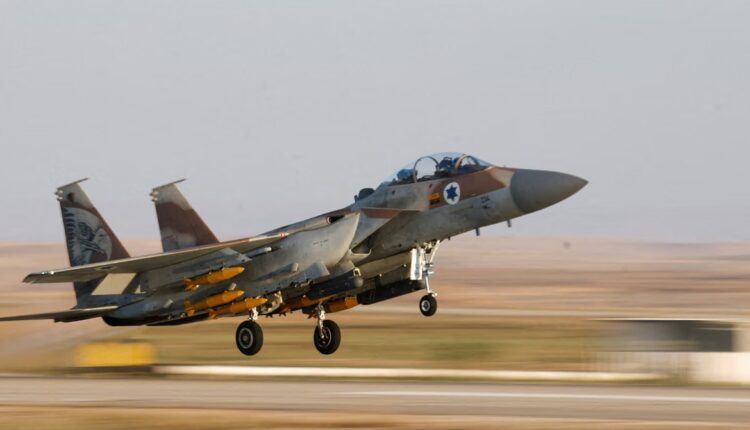
(DEFENCE SECURITY ASIA) — Israel is reportedly examining military options against Turkish forces or Turkish-linked infrastructure inside Syria, calculating that such operations could remain outside NATO’s geographically defined Article 5 collective-defence protections.

This interpretation does not confirm an Israeli decision to attack Turkey, yet it reveals how treaty geography, military basing, force posture, and escalation thresholds are entering Jerusalem’s operational calculations concerning Ankara.
The reported assessment emerged after Israel struck Syria’s Abu al-Duhur military airbase on August 18, targeting infrastructure allegedly being prepared to support a deeper Turkish military presence in post-Assad Syria.
Israeli aircraft reportedly delivered eight strikes against the runway, storage facilities and hangars, damaging reconstructed infrastructure without killing Turkish personnel, causing reported casualties, or destroying operational Syrian combat aircraft.
Prime Minister Benjamin Netanyahu subsequently warned Turkey, saying “Don’t,” while his office maintained that Damascus was approaching a breach of a security understanding by permitting Turkish troops to deploy near Aleppo.
Defence Minister Israel Katz separately warned Ankara against “dangerous adventures,” reinforcing Israel’s determination to prevent Turkish bases, air defences, radars, aircraft and logistics networks from restricting Israeli freedom of action.
Israeli analysis characterizes the operation as “denial before emplacement,” whereby infrastructure is destroyed before foreign personnel arrive, transforming the target from a politically protected deployment into vulnerable Syrian military property.
Independent strategist Shay Gal argued that “a Turkish uniform” does not transport NATO territory abroad and that Article 5 provides neither automatic intervention nor portable immunity for Turkish forces positioned inside Syria.
However, Gal’s Israel Hayom article represents strategic commentary rather than an official operational directive, meaning claims that Israel has definitively decided to attack Turkish forces remain unverified and require careful qualification.
The development nevertheless exposes a consequential battlespace calculation: Israel may believe it can confront Turkish expansion inside Syria while remaining below the legal threshold compelling NATO’s collective-defence machinery.
That perceived opening could reshape regional deterrence by making Turkish advisers, air-defence batteries, engineering detachments, logistics hubs and reconstructed airfields potential targets within an increasingly contested Syrian security environment.
(CLICK HERE): Israel vs Turkey Over the F-35: Why Tel Aviv’s Technology ‘Red Line’ Could Reshape NATO Airpower
Israeli Planners Examine the NATO Article 5 Gap
Article 5 of the North Atlantic Treaty declares that an armed attack against one covered ally will be considered an attack against all, but assistance does not automatically require collective military intervention.
Each NATO member determines what action it considers necessary, potentially ranging from diplomatic and logistical support to intelligence assistance or armed force, while substantive Alliance decisions generally require political consensus.
Article 6 defines the geographic boundaries governing Article 5, covering member territories and specified forces, vessels or aircraft operating within designated areas, including Turkey and parts of the Mediterranean security zone.
Turkish ground forces deployed inside Syria would not automatically qualify under those territorial provisions, creating a legal separation between attacking sovereign Turkish territory and striking Turkish units operating across the border.
That distinction appears central to Israeli calculations because Syrian territory cannot be converted into NATO-protected space merely through the arrival of Turkish uniforms, equipment, advisers or military command structures.
The same interpretation emerged during earlier Turkish operations in Idlib, when attacks against Turkish troops inside Syria did not generate an Article 5 invocation despite substantial losses and serious tensions with Damascus.
Israel may therefore judge that a tightly confined strike against Turkish forces in Syria would remain a bilateral confrontation, rather than legally becoming an armed attack against the entire Atlantic Alliance.
Nevertheless, legal exclusion would not prevent Turkey from requesting consultations under Article 4, mobilizing allied political support, retaliating independently, or receiving voluntary intelligence, logistics and air-defence assistance.
NATO geography consequently offers Israel no guaranteed immunity from strategic consequences, because Washington and European capitals could impose diplomatic, military or economic costs without formally activating collective defence.
The alleged calculation concerns escalation management rather than consequence-free warfare, giving Israel a possible operational pathway while leaving Turkish retaliation, American involvement and broader Alliance pressure dangerously unpredictable.
Abu al-Duhur Reveals Israel’s Pre-Emptive Strike Doctrine
Abu al-Duhur airbase, situated approximately 45 to 70 kilometres from Turkey’s border, occupies a sensitive corridor connecting Aleppo and Hama, making it potentially valuable for logistics, training and aviation operations.
The facility had remained largely inactive following years of civil war, but reconstruction after Bashar al-Assad’s fall created opportunities for renewed Syrian Air Force use and possible Turkish-supported military activity.
Syrian authorities described the project as rehabilitation of war-damaged infrastructure for national forces, while Turkey maintained that its cooperation involved training and technical assistance rather than permanent basing arrangements.
Syrian Foreign Minister Asaad al-Shaibani acknowledged that Turkish officers visited the installation but denied plans for a Turkish base, permanent deployment or transfer of operational control to Ankara.
Turkey’s Defence Ministry separately denied having personnel present during the attack, leaving Israeli intelligence claims, Syrian explanations and Ankara’s account unresolved within a highly contested information environment.
Israel maintained that Damascus was preparing to violate a security status quo by allowing Turkish troops to deploy, although no independently verified evidence established an imminent permanent Turkish presence at Abu al-Duhur.
Destroying the installation before personnel arrived enabled Israel to attack runways, warehouses and hangars without causing Turkish casualties that could compel retaliation, emergency NATO consultations or American crisis intervention.
Runway denial also obstructs air mobility, combat-aircraft dispersal, drone operations, logistical resupply and emergency reinforcement, demonstrating how infrastructure attacks can suppress future capability before combat formations become operational.
The absence of casualties indicates calibrated coercion rather than unrestricted escalation, with Israel delivering a warning to Ankara and Damascus while preserving space for denials, negotiation and controlled deconfliction.
Abu al-Duhur therefore provides the clearest practical demonstration of Israel’s apparent doctrine: destroy Turkish-enabled military infrastructure early, before deployment creates tactical deterrence, political protection and greater escalation costs.
Turkish Force Posture Could Constrain Israeli Air Superiority
Turkey emerged as the principal external supporter of Syria’s interim administration after Assad’s December 2024 collapse, supplying training, expertise, intelligence cooperation and institutional assistance to the reconstituted Syrian armed forces.
Ankara seeks a stable and centralized Syrian government capable of securing borders, countering hostile Kurdish organizations, managing refugee returns and preventing renewed disorder from threatening Turkish territory.
Military cooperation advances those objectives by embedding Turkish influence within Syrian defence institutions, potentially giving Ankara access to airfields, logistical corridors, command relationships and future procurement decisions.
Israel views the same architecture as a possible strategic threat because permanent Turkish facilities could restrict Israeli air operations, protect Syrian assets and establish another capable military actor near Israeli approaches.
Turkish radar networks could expand situational awareness across northern and central Syria, detecting Israeli aircraft, unmanned systems and stand-off weapons before they reach sensitive targets or designated launch positions.
Surface-to-air missile deployments would further complicate Israeli planning by requiring suppression operations, electronic warfare, decoys, longer flight routes, additional escorts and increased reliance upon expensive stand-off munitions.
Even without firing, Turkish air defences could alter Israel’s operational risk calculations by raising expected aircraft losses, exposing mission profiles and reducing the predictability of uncontested Syrian airspace.
A permanent logistics footprint could sustain fighter detachments, drones, advisers and air-defence units through nearby Turkish supply routes carrying fuel, ammunition, spare parts, engineering equipment and secure communications systems.
These capabilities would transform individual Turkish deployments into an integrated force posture, enabling Ankara to influence Syrian airspace while providing Damascus with greater military resilience and political backing.
Israel’s reported strike planning consequently targets the military mechanism supporting Turkish entrenchment, not merely symbolic facilities, because logistics, sensors and air defences could permanently change the regional airpower balance.
A Strike on Turkish Forces Could Trigger Direct Confrontation
If Israel attacked Turkish personnel inside Syria, the immediate response would depend less upon NATO treaty language than Ankara’s casualty assessment, domestic political pressures and perception of Israeli intent.
Turkey could retaliate against Israeli aircraft, supporting platforms, intelligence assets or regional infrastructure, transforming a geographically limited strike into sustained exchanges between two technologically advanced military powers.
Both countries operate modern fighters, airborne surveillance systems, precision weapons, electronic-warfare capabilities and integrated command networks, making any encounter tactically sophisticated and exceptionally difficult to control.
An attempted Turkish interception could force Israeli escorts to manoeuvre, jam radars or launch defensive weapons, allowing a brief identification failure to trigger aircraft losses and politically irreversible escalation.
American envoy Tom Barrack warned that Turkish forces might have scrambled aircraft during the Abu al-Duhur operation because Ankara lacked precise knowledge of Israel’s target and operational intentions.
Barrack described the strike as an “unnecessary escalation,” illustrating Washington’s concern that incomplete notification could ignite confrontation among Israel, Turkey and Syria before diplomatic channels understood what occurred.
The United States is pursuing a deconfliction mechanism involving the three governments, potentially incorporating protected communications, geographic coordination, emergency contacts and advance notification for militarily sensitive activity.
Such arrangements can reduce accidental engagements but cannot resolve competing red lines, particularly when Israel rejects Turkish military entrenchment while Ankara regards cooperation with Damascus as legitimate sovereign activity.
Turkey could also invoke NATO’s Article 4 consultation mechanism, placing Israeli conduct before the Alliance and generating coordinated political pressure even when Article 5’s geographic requirements remained unsatisfied.
Israel therefore might avoid automatic collective defence yet still confront Turkish military retaliation, NATO consultations, American mediation and European pressure, demonstrating the narrow difference between legal permissibility and strategic sustainability.
(CLICK HERE): Israel Blitzes Syrian Bases to Block Turkish Military Takeover in Post-Assad Power Clash
Israel-Turkey Rivalry Is Redrawing the Post-Assad Battlespace
The emerging confrontation reflects wider deterioration in Israel-Turkey relations involving Gaza, Hamas, northern Cyprus, Libya, the Eastern Mediterranean and competing claims to regional political and military leadership.
Turkey has supported Hamas politically and condemned Israeli operations, while Jerusalem accuses Ankara of enabling Islamist networks and pursuing an expansive regional strategy through military, diplomatic and economic influence.
Post-Assad Syria concentrates those rivalries within a single battlespace where Turkish state-building objectives collide directly with Israel’s demand for air superiority and unrestricted action against perceived threats.
Israeli assessments increasingly portray a Turkish-aligned Syria as a long-term security challenge, although comparisons between Turkey and Iran overlook major differences involving NATO membership, capabilities, objectives and relations with Washington.
Neither government publicly seeks direct war, creating incentives for controlled coercion through infrastructure strikes, intelligence signalling, force repositioning, diplomatic warnings and narrowly negotiated arrangements governing sensitive Syrian facilities.
However, repeated Israeli attacks could encourage Turkey to deploy stronger protection, including fighter patrols, mobile air defences, hardened shelters, dispersed logistics, deception measures and Syrian-operated systems supported indirectly by Ankara.
Israel could answer with expanded intelligence collection, electronic attack, stand-off weapons and earlier pre-emption, producing an action-reaction cycle that militarizes Syrian reconstruction and steadily compresses decision-making time.
The decisive uncertainty is whether Israel Hayom’s analysis reflects wider official planning or an independent interpretation of Israel’s emerging doctrine, because no confirmed operational order against Turkish forces has surfaced.
What is verifiable is that Israel has already attacked infrastructure associated with suspected Turkish expansion and publicly warned Ankara that military entrenchment threatening Israeli security will not be tolerated.
For defence planners, the strategic message is unmistakable: NATO may not automatically protect Turkish troops inside Syria, but any Israeli strike could still transform contested infrastructure into a regional military crisis.
