
Israel vs Turkey Over the F-35: Why Tel Aviv’s Technology ‘Red Line’ Could Reshape NATO Airpower
Israeli Deputy Foreign Minister Sharren Haskel declares Israeli-developed F-35 technologies off-limits to Ankara, exposing deep strategic rifts as Washington weighs Turkey’s return to the Joint Strike Fighter programme
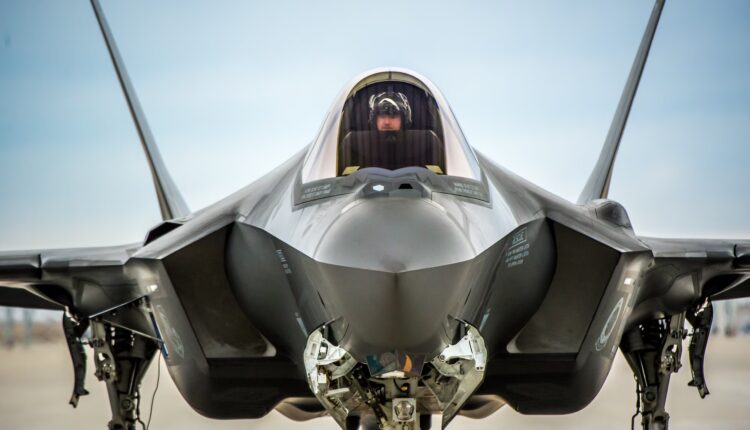
(DEFENCE SECURITY ASIA) — In a declaration that crystallises the widening strategic fault lines now shaping the Middle East and the Eastern Mediterranean, Israeli Deputy Foreign Minister Sharren Haskel has drawn what she explicitly described as a non-negotiable “red line,” stating that advanced Israeli-developed technologies embedded within the Lockheed Martin F-35 Lightning II stealth fighter will categorically not be shared with Turkey, even if the United States ultimately authorises the sale of the aircraft to Ankara, a position that underscores Israel’s prioritisation of qualitative military superiority over diplomatic accommodation.
Speaking amid intensifying signals from Washington that Turkey’s re-entry into the F-35 Joint Strike Fighter programme is once again under active consideration, Haskel made clear that Israel views the potential transfer of sensitive technologies to Ankara as an unacceptable strategic risk, stating, “We have our reservations [regarding a possible sale] … A lot of the technology inside the airplane is technology produced by Israel. And obviously this is not something that we will share with them,” a statement that carries profound implications for alliance politics, industrial cooperation, and regional deterrence stability.
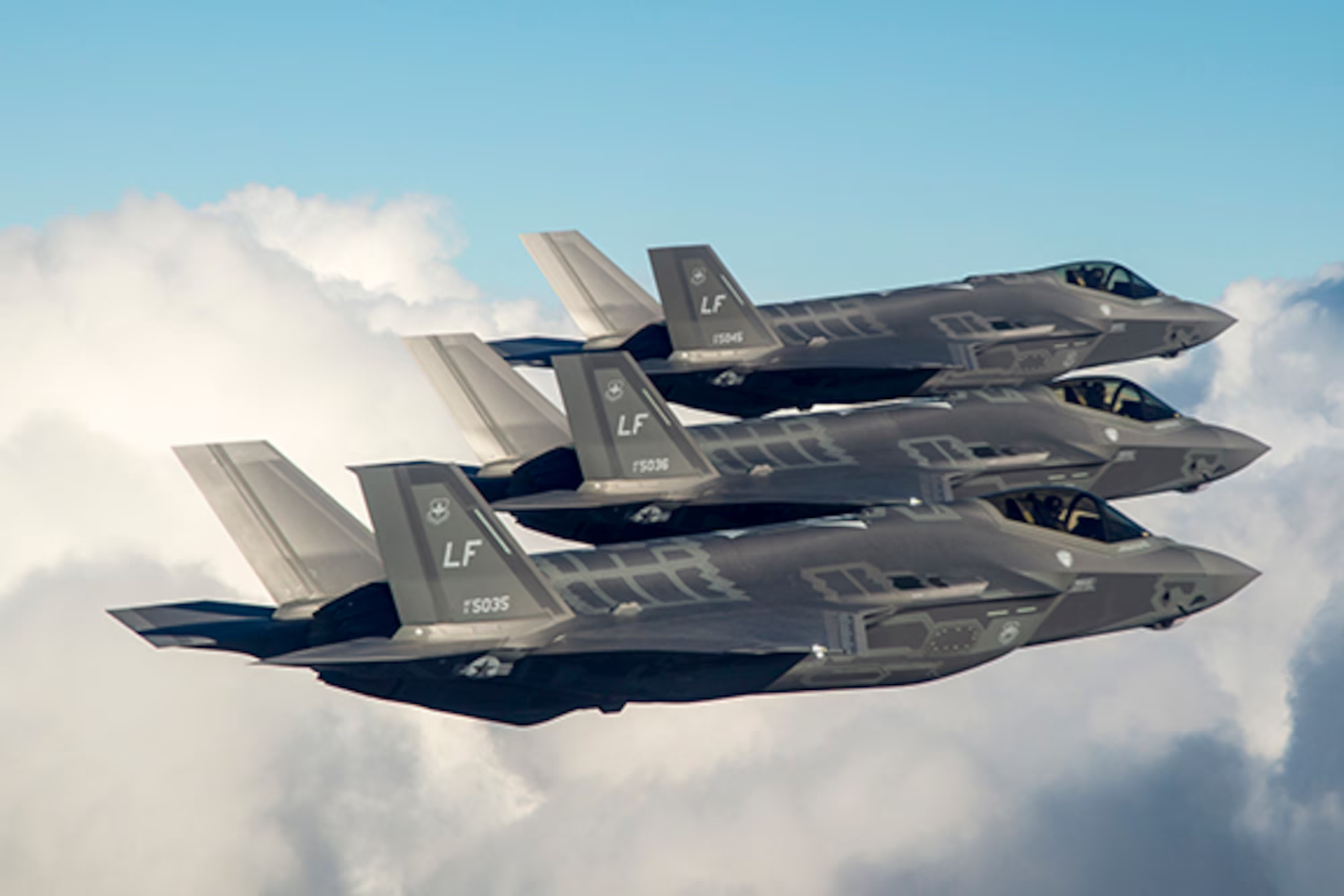
Haskel further underscored Israel’s deep unease with recent remarks by US President Donald Trump, who confirmed he is “very seriously considering” approving an F-35 sale to Turkey, stressing that Israeli-origin systems would remain excluded “even if they do get those airplanes,” thereby signalling that Tel Aviv intends to exercise its substantial leverage within the F-35 ecosystem to ring-fence its most sensitive innovations regardless of Washington’s final decision.
The timing of these remarks is strategically significant, as they follow renewed high-level engagements between Trump and Israeli Prime Minister Benjamin Netanyahu, during which defence industrial cooperation and future arms transfers reportedly featured prominently, reinforcing the perception that Israel is proactively shaping the parameters of any US-Turkey defence rapprochement before it crystallises into policy.
At a deeper level, Israel’s stance reflects a convergence of threat perceptions stemming from Turkey’s continued acquisition of Russian defence systems, its increasingly confrontational rhetoric towards Israel, and Ankara’s open political support for Hamas, all of which have eroded the residual trust that once underpinned Israeli-Turkish security cooperation in the early 2000s.
The declaration therefore does not merely address a technical issue of export controls, but rather signals Israel’s determination to preserve its strategic edge in an era where fifth-generation combat aircraft are no longer standalone platforms, but nodes within highly sensitive, data-driven warfare architectures whose compromise could reverberate across multiple theatres.
From Washington’s perspective, Israel’s unambiguous red line complicates any attempt to use the F-35 as a diplomatic incentive to reanchor Turkey firmly within NATO’s Western orbit, raising the prospect that any future sale could be politically, operationally, and technologically constrained from the outset.
Israel’s position also reflects an acute awareness that the F-35’s true strategic value lies not in its airframe or stealth coatings alone, but in its tightly integrated software, electronic warfare libraries, and real-time data-sharing architecture, where even partial exposure to an actor with divergent strategic alignments could degrade Israel’s long-term operational advantage across multiple conflict scenarios.
Moreover, by publicly articulating this red line at an early stage, Tel Aviv is effectively shaping the decision-making environment in Washington, signalling that any attempt to bypass Israeli concerns risks triggering downstream friction within the broader US–Israel security relationship, which remains foundational to American power projection and deterrence credibility in the Middle East.
In this context, the F-35 debate is increasingly emblematic of a larger structural shift in alliance politics, where access to next-generation military technology is no longer governed solely by formal treaty obligations, but by dynamic assessments of political alignment, strategic trust, and the perceived durability of shared threat perceptions in an era of accelerating geopolitical fragmentation.
The Roots of the F-35 Crisis: Turkey’s Expulsion and the Collapse of Strategic Trust
To fully grasp the strategic weight of Israel’s intervention, it is essential to revisit Turkey’s turbulent trajectory within the F-35 Joint Strike Fighter programme, a multinational initiative launched in the early 2000s to field a common fifth-generation combat aircraft capable of air superiority, deep strike, intelligence fusion, and electronic warfare across allied air forces.
Turkey joined the programme in 2002 as a Level 3 partner, committing approximately US$1.4 billion—equivalent to around RM6.58 billion—and signalling its intent to acquire up to 100 aircraft, while integrating Turkish defence firms into the global supply chain for critical components, including airframe structures and engine sub-assemblies.
This arrangement initially positioned Ankara as a core industrial stakeholder in what would become the world’s most expensive weapons programme, with cumulative lifecycle costs exceeding US$1.7 trillion globally, while simultaneously anchoring Turkey’s air power modernisation firmly within NATO’s technological ecosystem.
However, this alignment unravelled decisively in 2019 when Turkey proceeded with the acquisition of the Russian-made S-400 “Triumf” long-range air defence system, a deal valued at approximately US$2.5 billion, or about RM11.75 billion, despite repeated warnings from Washington and NATO allies regarding the system’s incompatibility with allied command-and-control architectures.
The core concern articulated by US defence planners was that the S-400’s advanced radar and signal-processing capabilities could be exploited to collect sensitive data on the F-35’s radar cross-section, electronic emissions, and flight profiles, potentially undermining the aircraft’s stealth advantages across the entire alliance.
Invoking the Countering America’s Adversaries Through Sanctions Act, Washington imposed sanctions on Turkey’s Presidency of Defence Industries and formally expelled Ankara from the F-35 programme, terminating its industrial participation and freezing delivery of aircraft already produced for the Turkish Air Force.
President Recep Tayyip Erdogan has consistently characterised this decision as “unjust,” arguing that Turkey turned to the S-400 only after prolonged delays in the delivery of US Patriot systems, and asserting Ankara’s sovereign right to diversify its defence procurement in an increasingly multipolar security environment.
Despite this, Turkey’s removal from the F-35 programme resulted in the loss of both its planned aircraft fleet and its sunk investment of US$1.4 billion, while also severing Turkish firms from a supply chain generating billions of dollars in long-term contracts.
Although Ankara has since accelerated indigenous projects such as the KAAN fifth-generation fighter, powered by US-approved General Electric F110 engines as of late 2025, the operational maturity, sensor fusion, and alliance interoperability offered by the F-35 remain unmatched, sustaining Turkish interest in re-entry despite political obstacles.

Why Israel Holds a Unique Veto: Its Deep Integration into the F-35 Ecosystem
Israel’s ability to draw a credible red line on F-35 technology transfer is rooted in its uniquely deep integration into the programme, which extends far beyond that of any other international participant and grants Tel Aviv exceptional leverage over the aircraft’s operational architecture.
Since joining the programme in 2003 as a Security Cooperative Participant, Israel has invested more than US$4 billion—approximately RM18.8 billion—and secured unprecedented permissions to modify both hardware and software components of the aircraft to meet its specific operational requirements.
The Israeli Air Force currently operates 39 F-35I “Adir” aircraft, with plans to expand the fleet to as many as 75 units, forming the backbone of Israel’s long-range strike, intelligence, and air superiority capabilities.
Israeli defence firms occupy critical positions within the F-35 industrial base, with Israel Aerospace Industries producing the outer wing sets for every F-35 delivered worldwide, manufacturing over 800 sets annually in contracts exceeding US$2.5 billion in cumulative value.
Elbit Systems, working alongside US partners, supplies the helmet-mounted display system that provides pilots with full spherical situational awareness, fusing sensor data into a single augmented-reality interface that is central to the aircraft’s lethality and survivability.
Beyond these visible components, Israel has embedded proprietary electronic warfare suites, cyber-resilience layers, and mission-specific software that allow the F-35I to operate independently of US-controlled update cycles, a capability no other operator enjoys.
These modifications have enabled the F-35I to conduct long-range strike missions across contested airspace, including operations over Syria and Iran, while maintaining a mission-capable rate reportedly exceeding 90 percent, far above the US Air Force average.
From Israel’s perspective, allowing even a diluted transfer of this technological ecosystem to Turkey introduces unacceptable risks of leakage, replication, or inadvertent exposure, particularly given Ankara’s ongoing defence cooperation with Moscow.
Washington’s Re-Engagement Calculus and the Political Minefield Ahead
The revival of discussions surrounding Turkey’s potential return to the F-35 programme reflects Washington’s broader strategic dilemma as it seeks to balance alliance cohesion with the realities of diverging national interests within NATO.
In late 2025, US officials described renewed talks with Ankara as “the most fruitful in nearly a decade,” framing the potential re-engagement as a means of reinforcing NATO’s southern flank amid escalating instability across the Middle East, the Black Sea, and the Eastern Mediterranean.
President Trump has portrayed the possible sale as both a strategic and commercial opportunity, with each F-35 unit priced at approximately US$80–90 million, translating to roughly RM375–420 million per aircraft, excluding sustainment and weapons packages.
However, US law continues to mandate that Turkey divest itself of the S-400 system before any re-entry into the programme, a condition Ankara has thus far rejected, citing sovereignty and strategic autonomy.
Proposals ranging from mothballing the S-400 to relocating it outside Turkey remain politically contentious and operationally ambiguous, leaving the core impasse unresolved.
Compounding these challenges is congressional resistance driven by concerns over Turkey’s human rights record, regional assertiveness, and increasingly transactional foreign policy posture.
Israel’s explicit red line adds another constraint, signalling that any sale proceeding without Tel Aviv’s consent risks fracturing one of Washington’s most critical regional partnerships.
Regional Reactions and the Shifting Balance of Power
Turkey’s calibrated official response to Israel’s declaration, while outwardly restrained, reflects a calculated strategic posture in which defence planners and influential commentators signal that Ankara has long internalised the political risks of dependence on Western-controlled high-end military technology and has therefore structured its force-modernisation roadmap around scenarios involving partial exclusion, downgraded access, or politically conditioned capability ceilings.
Within Turkey’s strategic community, the emphasis on indigenous fighter development, electronic warfare suites, avionics, and precision-guided munitions is not merely a nationalist industrial aspiration, but a deliberate effort to insulate operational readiness from geopolitical vetoes that can abruptly reshape access to software updates, mission data files, and sustainment pipelines during periods of political friction.
In Greece, Israel’s firm stance has been interpreted not only as a diplomatic signal but as a structural reinforcement of Athens’ emerging deterrence architecture, as the parallel acquisition of 20 F-35 aircraft—integrated with expanding Israeli-Greek defence cooperation—reshapes the Aegean airpower balance by narrowing Turkey’s margin for escalation while enhancing Greece’s situational awareness, first-day survivability, and deep-strike credibility.
Other regional actors, most notably the United Arab Emirates, have quietly demonstrated that Israeli sensitivities can be managed through tightly compartmentalised technology-sharing frameworks, reinforcing a growing precedent in which access to fifth-generation capabilities is increasingly modular, selectively gated, and politically tiered rather than uniformly distributed among nominal allies.
Across NATO, the dispute is increasingly regarded as a bellwether for alliance cohesion under stress, exposing the structural tension between collective defence principles and the accelerating trend of member states pursuing autonomous strategic hedging strategies that dilute traditional assumptions of interoperability, trust, and shared threat perception.
Strategic Implications: Technology, Trust, and the Future of Alliances
Israel’s refusal to permit the transfer of its F-35 technologies to Turkey reverberates far beyond bilateral relations, striking at the foundational logic of modern alliance warfare, where technological integration is inseparable from political alignment and where access to capability increasingly functions as a mechanism of strategic discipline.
At the core of this dispute is not the physical aircraft itself, but the integrity of a network-centric combat ecosystem whose decisive advantages derive from secure data fusion, adaptive electronic warfare libraries, encrypted mission systems, and trusted software supply chains that can be fatally compromised by even indirect exposure to actors with divergent strategic loyalties.
For Israel, the decision serves as a forceful reaffirmation of its Qualitative Military Edge doctrine, ensuring that no regional power—particularly one perceived as ideologically hostile or strategically unpredictable—can narrow the asymmetric gap that underwrites Israel’s deterrence posture and operational freedom of action.
For Turkey, the episode starkly illustrates the cumulative strategic costs of policy divergence, as sustained friction with Western defence ecosystems risks accelerating Ankara’s pivot toward indigenous platforms and alternative suppliers while simultaneously deepening structural fractures within NATO’s southern flank.
For the United States, the impasse exposes the limitations of transactional diplomacy in a security environment where advanced military technology is no longer a neutral commodity, but a trust-dependent instrument whose transfer reshapes alliance hierarchies, operational dependencies, and long-term geopolitical alignment.
As the F-35 continues its global proliferation as the backbone of Western airpower, the fundamental question raised by Israel’s red line is likely to echo across future arms negotiations: who ultimately controls the software-defined battlespace, who governs access to the data that enables it, and who possesses the authority to draw—and enforce—the strategic red lines of the twenty-first century. — DEFENCE SECURITY ASIA
