
‘Bad Decision’ — Ex-IAF Chief Slams Tejas Mk1A Radar Reversal
A former Indian Air Force chief challenges HAL’s decision to retain Israel’s EL/M-2052 AESA radar as delayed Tejas Mk1A deliveries squeeze India’s fighter force.
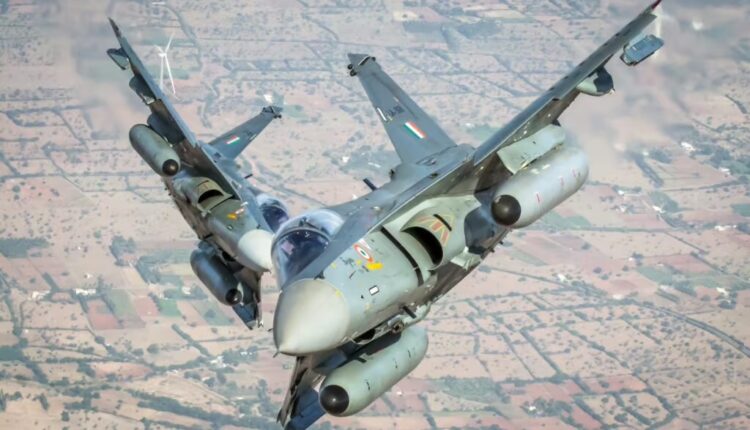
(DEFENCE SECURITY ASIA) — Former Indian Air Force chief Air Chief Marshal (Retd) RKS Bhadauria called HAL’s decision to defer Uttam AESA radar integration on the Tejas Mk1A a “bad decision,” reopening a dispute over how India will rebuild its depleted fighter force.
Hindustan Aeronautics Limited retained Israel’s EL/M-2052 radar configuration for the initial Tejas procurement programme, abandoning a planned mid-order transition designed to give the Indian Air Force new fighters while bringing an indigenous fire-control radar into production.
The criticism renewed scrutiny because the first Mk1A handover, originally due in early 2024, was unconfirmed, leaving the schedule advantage HAL sought by keeping the familiar Israeli configuration unproven as the air force waited for new aircraft.
For HAL, retaining the Israeli radar and associated electronic warfare equipment reduced the immediate risk of qualifying a new combination of systems as the programme contended with late GE F404 engines, software integration and outstanding weapons work.
The Defence Research and Development Organisation (DRDO) maintained that Uttam had reached production readiness and proposed pairing it temporarily with imported electronic warfare equipment, separating introduction of the Indian radar from certification of the full indigenous package.

The split matters because permission to manufacture radar hardware, clearance to fly it in a test aircraft and acceptance of a production fighter are distinct milestones, with different implications for factory output, aircraft availability and the date a squadron can deploy.
Bhadauria cited National Flight Test Centre data to argue that Uttam demonstrated longer detection range than the radar selected for the Mk1A, questioning the choice’s operational value while leaving the trial conditions and wider performance comparison unresolved.
The fleet consequences extend beyond sensors because the Indian Air Force was operating about 29 fighter squadrons against a sanctioned strength of roughly 42, making the pace of fighter induction a factor in sustaining air defence across competing fronts.
The radar reversal also changes the fleet’s long-term logistics, because operating two sensor configurations can divide stocks of spares, maintenance training and software support even if the aircraft retain common airframe and propulsion components across both orders.
India’s September 2025 follow-on order for 97 Tejas aircraft gives Uttam a larger route into service, while HAL’s subsequent purchase of antenna assemblies tests whether India can turn that commitment into repeatable radar production and qualified deliveries.
For Israel, the original order preserves a role for ELTA Systems in fighter modernisation, while the later Uttam order signals New Delhi’s intent to bring equipment governing radar modes, maintenance and future integration under domestic control.
The immediate measure of success is whether HAL can deliver fighters that the air force can accept and sustain, while the strategic measure is whether the 97-aircraft programme can field Indian sensors quickly enough to restore combat strength.
(READ) India Races to Field First Tejas Mk1A Squadron by March 2027 as Airpower Gap Widens
How HAL Reversed the Tejas Mk1A Radar Plan
The February 2021 contract, worth approximately US$6.6 billion, covered 73 Tejas Mk1A fighters and 10 Mk1 trainers, tying India’s effort to replace ageing combat aircraft to a production programme that must supply frontline aircraft and trainers.
The planned change around the 41st aircraft gave the EL/M-2052 a production run while Uttam completed development, dividing risk between the near-term delivery schedule and India’s longer-term objective of designing and supporting its own fighter sensors.
HAL’s experience with Israeli radar dated to the mechanically scanned EL/M-2032 on the Tejas Mk1, while co-production of the EL/M-2052 and its link to the Jaguar DARIN-III upgrade offered a more established supply route for early Mk1A production.
By the 2021 award, Uttam had accumulated roughly 230 to 250 flight-test hours on development aircraft and a flying testbed, giving India test data while leaving work on weapons, operating modes and production qualification before fleet introduction.
Then DRDO Chairman Sateesh Reddy said in 2021 that Uttam had performed better than anticipated and that DRDO had signed an integration agreement with HAL, expressing confidence in the radar while series installation still depended on aircraft-level clearance.
Uttam’s technology transfer to HAL in July 2023 and its export clearance advanced domestic production and sales prospects, while the November 2024 tender for 43 radars indicated HAL was preparing for the change within the first order.
HAL reversed course by late June 2025, issuing ELTA a letter of intent for additional EL/M-2052 radars and associated Scorpius-SP electronic warfare equipment, keeping the initial programme on the Israeli configuration and shifting Uttam to the follow-on order.
Keeping the same radar configuration throughout the initial programme reduced the number of variants HAL had to qualify concurrently, allowing engineers to concentrate on one set of interfaces and faults as the factory moved completed airframes towards customer acceptance.
The two orders distribute integration risk differently, with the initial programme carrying the remaining work of qualifying its configuration and the follow-on aircraft absorbing the work of introducing Uttam and more Indian mission equipment into production under New Delhi’s Atmanirbhar Bharat self-reliance drive.
The schedule gain HAL sought by keeping the EL/M-2052 remains unproven, because the missed handover date and Uttam’s subsystem milestones leave open when a different combination of radar and electronic warfare equipment would have entered service.
(READ) India’s Tejas Mk1A Crisis Deepens: IAF May Waive Electronic Warfare Automation as Delays Threaten Regional Airpower Balance

Why Uttam’s Flight Trials Did Not Settle Certification
HAL said the indigenous radar and especially the Swayam Raksha Kavach electronic warfare suite were “not fully certified for production,” estimating that their integration could add 12 to 18 months to a programme already running well behind its original delivery schedule.
DRDO maintained that Uttam had been cleared for production in 2023, a position that narrowed the dispute to the scope of the clearance and whether radar production could begin before qualification of the complete fighter configuration.
In April 2025, the Centre for Military Airworthiness and Certification advised HAL and DRDO to begin subsystem production after Uttam completed four stages of flight trials and hardware qualification, strengthening the case for manufacturing while leaving the scope of final aircraft clearance unresolved.
Then DRDO chief Samir V Kamat expressed confidence that Uttam could still enter from the 41st aircraft, a prospect that depended on whether radar production and aircraft integration could advance in parallel without disrupting work at HAL.
DRDO’s proposed hybrid configuration would have paired Uttam with an imported electronic warfare suite, protecting the indigenous radar’s production slot while deferring Swayam Raksha Kavach and creating a separate configuration requiring compatibility testing on the aircraft.
That compatibility matters because a fighter’s radar and defensive electronics must work in close proximity, with installation, emissions and software interfaces affecting whether the pilot can maintain a useful picture while the aircraft’s self-protection equipment operates under demanding conditions.
A bridge configuration could also have added a third support standard across the two orders, potentially requiring separate test documentation, software baselines and maintainer training if the mixed equipment fit persisted once the fully indigenous package entered service.
The gap between HAL’s estimate and DRDO’s confidence matters because the public record does not show how much radar qualification could have overlapped with engine shortages, weapons trials or software work, and how much would have extended the delivery schedule.
Critics have questioned whether HAL’s commercial interest in continued EL/M-2052 co-production influenced the decision, but that production relationship alone cannot establish motive or show how HAL weighed commercial interests against aircraft certification and delivery pressures.
The technical dispute hinges on dates for subsystem release, integration approval and customer acceptance under each configuration, because those milestones would show where the proposed switch added work and whether it fell on the critical path.
Uttam vs EL/M-2052 and the Limits of Radar Range Claims
Uttam and EL/M-2052 both use active electronically scanned array technology, but for a Tejas pilot, the comparison is how each installation sustains track quality, updates multiple contacts and supports weapons employment within the aircraft’s available electrical power and cooling.
Bhadauria’s account of longer range in trials matters because earlier detection can give pilots more time to classify a target and manoeuvre, although its value depends on whether that contact becomes a stable track suitable for engagement.
The reported Uttam detection of a Tejas-sized target at about 140 kilometres describes a trial result, while figures approaching 200 kilometres for the EL/M-2052 include instrumented range claims that do not establish comparable fighter detection under the same test conditions.
Target aspect, radar cross-section, altitude and electronic interference can change detection distances, so a useful comparison would hold target and flight geometry constant and disclose when each radar detected, maintained and passed a track to the fighter’s weapons system.
Published figures suggest roughly 912 to 980 transmit and receive modules for Uttam Mk1 and about 900 for the Tejas EL/M-2052, but uncertainty over configurations and differences in signal processing prevent module counts from establishing an advantage in usable detection range.
Claims that Uttam can track more than 100 targets and that the EL/M-2052 can track up to 64 also need common test definitions, since displayed contacts and continuously updated tracks suitable for weapons cueing can impose different demands on the radar.
Uttam’s reported low sidelobes could help reduce susceptibility to some forms of off-axis jamming, while the combat value of that characteristic would depend on jammer geometry, the radar’s operating mode and how effectively its processing preserves a target track under interference.
The established EL/M-2052 offers mature multimode software and experience across air-to-air, surface and mapping tasks, an advantage for integration planning whose relevance depends on which modes, mission functions and weapon pairings are actually cleared on the Indian fighter at handover.
Later gallium nitride variants of Uttam could improve power and efficiency over its gallium arsenide baseline, but the antenna order alone leaves open which standard enters service first and how the aircraft’s cooling and electrical systems would support any subsequent change.
Beyond-visual-range combat ultimately depends on a reliable chain from search through track and missile support, which is why aircraft-level validation with weapons such as Astra carries more operational weight than isolated range figures for either radar under undisclosed conditions.
Tejas Delivery Delays and India’s Fighter Squadron Gap
The retirement of the MiG-21 Bison in 2025 left the Indian Air Force with approximately 29 fighter squadrons, reducing its margin to rotate units through training and maintenance while sustaining air defence commitments across the country’s western and northern approaches.
Air Chief Marshal Amar Preet Singh, speaking as chief of the air staff, put the induction requirement at 36 to 40 fighters annually, a figure that reflects the need to offset retirements before additional deliveries can begin to rebuild overall squadron strength.
Projected withdrawals of Jaguars, MiG-29s and Mirage 2000s towards the end of the decade add pressure because any replacement shortfall can narrow the mix of available missions and force remaining units to carry a greater share of training, alert and operational tasks.
Completed airframes give HAL a starting point for catching up, but delayed GE F404 engines and outstanding integration work limit conversion of factory inventory into flyable, accepted aircraft that can support pilot conversion and generate operational sorties at an air base.
The handover bottleneck therefore has several components, because improved engine availability can release aircraft for testing while radar software, electronic warfare performance and weapons certification still determine which capabilities the air force can accept and employ once those aircraft reach units.
A fighter squadron also requires trained maintainers, qualified pilots and enough spare equipment to sustain flying, so even an acceleration in deliveries would rebuild combat power in stages as aircraft progress from acceptance through unit training to routine operational tasking.
The 10 trainers in the original procurement matter for that transition because dual-seat aircraft support pilot conversion, while training throughput and the arrival of mission-ready single-seaters jointly determine how fast a receiving unit can develop enough crews to maintain operational coverage.
In a contingency involving both Pakistan-facing and China-facing sectors, a smaller fighter inventory could reduce India’s flexibility to sustain simultaneous patrols or replace aircraft temporarily withdrawn for servicing, with the impact on local air power depending on available crews, basing and serviceability.
For regional planners, repeated delays can reduce the immediate significance of announced fighter orders, while a sustained rise in accepted aircraft and qualified crews would carry more weight as a signal of India’s ability to reinforce multiple sectors during a crisis.
The logistics burden extends beyond the number of engines delivered because radars, defensive electronics and weapons need their own spares and support, making the serviceability of each aircraft dependent on the least available item required for the mission it must fly.
The 97-Aircraft Order Moves Uttam into Series Production
The September 2025 contract for 97 additional Tejas aircraft, valued at about US$7 billion, gives India a route to field Uttam with Swayam Raksha Kavach and links the credibility of its domestic fighter programme to suppliers’ ability to deliver qualified mission systems in volume.
HAL’s July 2026 order for Uttam active antenna array units and interface frames from Astra Microwave takes production beyond flight-test hardware, giving the follow-on programme a supplier commitment that must translate into accepted assemblies at a pace the factory can use.
Series production introduces challenges that successful prototypes cannot settle on their own, because each antenna must meet acceptance tolerances and integrate consistently with aircraft wiring, cooling and mission computers if HAL is to deliver interchangeable equipment and predictable performance across the fleet.
The scale of the follow-on order could make domestic repair and replenishment more viable by giving Indian suppliers a larger installed base, provided production, test equipment and access to replacement modules can support both new construction and squadron demands.
Keeping both radar configurations in service could require different spares, fault diagnosis tools and software support, increasing the logistics footprint if aircraft from both batches concentrated at one location or rotated through bases with limited stocks and specialist personnel.
Basing aircraft by configuration could simplify maintenance and training at units, although that approach would also affect how readily the service could move aircraft between bases or replace unserviceable fighters with available airframes during an operational surge.
Domestic radar design could give India greater control over upgrades, weapons integration and responses to new forms of electronic interference, but the pace of such changes will still depend on software access, flight testing and resources for recertification.
Local co-production of the Israeli radar already gives India an industrial role in the first order, while the GE F404 supply delays show how an aircraft with an Indian airframe and sensor can still depend on overseas production for a critical component.
For prospective Tejas customers, Uttam’s export clearance and the domestic antenna order support an Indian sensor option, but export credibility will also depend on delivery records, access to engines and weapons, and support after handover.
The force posture implied by the two orders will become clearer when HAL delivers the initial EL/M-2052-equipped fighters at a sustained rate and qualifies Uttam-equipped aircraft for service, milestones showing whether India can expand fleet numbers and domestic support together.
