
Israel’s $119 Billion Airpower Surge: F-35I ‘Adir’ and F-15IA Expansion Signals Strategic Reset for Future Middle East Wars
Massive expansion of F-35I Adir stealth fighters and F-15IA strike jets under the $119 billion Magen Israel plan signals a decisive shift toward long-range air dominance, multi-domain warfare readiness, and future high-intensity conflict scenarios beyond Iran.
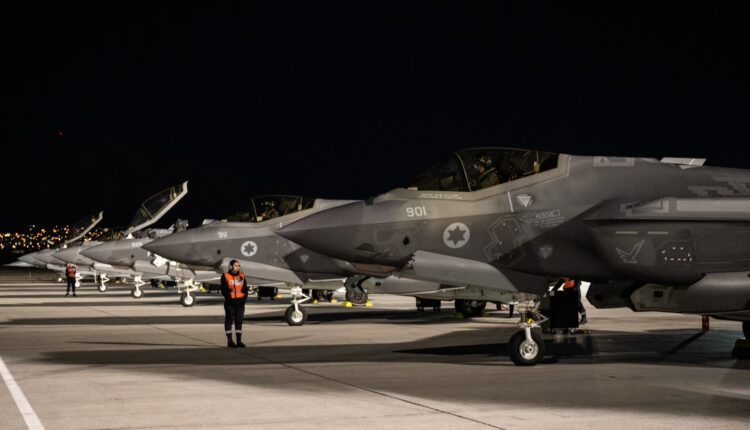
(DEFENCE SECURITY ASIA) — The approval of Israel’s largest-ever airpower expansion under the “Magen Israel” force buildup plan signals a decisive strategic recalibration that extends beyond immediate threats, reflecting a long-term preparation for a radically altered Middle Eastern security architecture emerging toward the mid-2030s.
The acquisition of additional F-35I Adir and F-15IA aircraft introduces a force posture shift that prioritizes deep-strike survivability, long-range payload capacity, and sustained multi-domain dominance in contested environments increasingly shaped by peer-level adversaries.
Israeli Defence Minister Israel Katz and the ministry’s Director General Amir Baram framed the procurement as essential for maintaining qualitative military edge (QME) during a “demanding decade,” yet the scale, timing, and capability mix indicate preparations for conflicts beyond current Iranian and proxy threats, raising questions about emerging strategic competitors.

The approved procurement includes a fourth squadron of stealth-capable F-35I fighters and a second squadron of heavy-strike F-15IA aircraft, forming a complementary operational architecture that integrates low-observable penetration capabilities with high-payload, long-endurance strike platforms designed for sustained air campaigns.
Valued at tens of billions of shekels and embedded within a broader ₪350 billion (approximately US$119 billion / RM452 billion) defence expansion through 2035, the program reflects a systemic transformation of Israeli airpower doctrine emphasizing autonomy, logistics resilience, and deep operational reach across multiple theatres.
While official Israeli statements continue to frame the procurement around generalized “future threats,” the strategic ambiguity surrounding potential adversaries has triggered intense analytical speculation about shifting threat hierarchies in a post-Iran conflict environment.
This ambiguity functions as a deliberate deterrence mechanism, enabling Israel to signal readiness against multiple high-end adversaries without committing to a fixed threat designation that could constrain operational flexibility or provoke premature escalation.
The scale of investment in stealth penetration platforms and heavy-strike aircraft indicates a doctrinal prioritization of offensive counter-air and deep interdiction missions against advanced state-level militaries rather than irregular or proxy forces.
Moreover, the integration of long-range strike enablers within this procurement suggests a forward-looking posture designed to project power across extended theatres, including scenarios requiring independent operational reach beyond immediate regional airspace constraints.
Collectively, these developments position the Israeli Air Force as a future-ready force optimized for high-intensity, multi-domain warfare against technologically sophisticated adversaries, while preserving strategic ambiguity regarding the identity and timing of potential conflicts.
READ: Israel vs Turkey Over the F-35: Why Tel Aviv’s Technology ‘Red Line’ Could Reshape NATO Airpower
Strategic Architecture: Building a Dual-Layer Air Superiority Doctrine
The integration of stealth-focused F-35I aircraft with heavily armed F-15IA platforms reflects a deliberate doctrinal shift toward layered air dominance, enabling Israel to conduct simultaneous suppression of enemy air defenses (SEAD) and high-volume strike operations across extended ranges.
The F-35I fleet expansion toward approximately 100 aircraft effectively doubles Israel’s stealth penetration capacity, significantly enhancing its ability to operate in contested airspace against advanced integrated air defence systems (IADS) deployed by technologically capable adversaries.
In parallel, the expansion of the F-15IA fleet to approximately 50 aircraft introduces a high-payload strike capability optimized for delivering large quantities of precision-guided munitions over long distances without reliance on forward basing.
This dual-platform strategy allows Israel to exploit the F-35I’s sensor fusion and electronic warfare capabilities to degrade enemy defenses, while leveraging the F-15IA’s payload capacity to conduct follow-on strikes against hardened, high-value targets.
The combination effectively reduces dependence on external logistical support, aligning with Israel’s broader objective of minimizing operational vulnerabilities associated with foreign supply chains and access constraints.
Operationally, this architecture enables sustained campaign endurance, allowing Israel to maintain high sortie generation rates even in protracted conflicts involving peer-level adversaries with advanced denial capabilities.
The emphasis on logistics integration, spare parts provisioning, and sustainment within the procurement package further underscores the strategic focus on long-duration warfare scenarios rather than short, high-intensity engagements.
This approach reflects lessons derived from recent conflicts involving Iran, where sustained air operations and rapid response cycles proved critical in achieving operational objectives under dynamic threat conditions.

Post-Iran Threat Recalibration: Expanding the Strategic Horizon
Israel’s official rationale for the procurement highlights lessons from recent Iran-related operations, yet the scale of investment indicates preparation for adversaries capable of matching or exceeding Iran’s military sophistication in the coming decade.
The concept of a “demanding decade” implicitly acknowledges the likelihood of emerging regional powers filling strategic vacuums created by shifts in Iran’s capabilities or geopolitical position.
Analytical discourse within Israeli media has identified potential future competitors, including regional powers with expanding military-industrial bases and ambitions to project influence beyond traditional boundaries.
However, it is critical to distinguish between official policy and speculative interpretation, as no Israeli government or IDF document has explicitly identified specific states such as Turkey, Saudi Arabia, or Pakistan as designated targets of this procurement.
The absence of explicit naming suggests a deliberate strategy of maintaining ambiguity, allowing Israel to preserve strategic flexibility while avoiding escalation through overt signalling.
At the same time, the procurement’s emphasis on long-range strike capability and high-end air dominance aligns with scenarios involving adversaries possessing advanced air forces, layered air defence systems, and strategic depth.
Such capability requirements extend beyond the operational profile of non-state actors or current proxy forces, indicating preparation for potential state-level conflicts involving technologically advanced opponents.
The scale and timeline of the program, extending toward the mid-2030s, further reinforce the interpretation that Israel is positioning itself for a future strategic environment characterized by intensified great-power competition within the Middle East.
Turkey Factor: Strategic Competitor or Analytical Projection?
Speculation linking the procurement to a potential future conflict with Turkey has gained traction within analyst circles, particularly in light of Ankara’s expanding military capabilities and assertive regional posture under President Recep Tayyip Erdoğan.
Turkey’s involvement in Syria, its support for Hamas, and its pursuit of independent defence capabilities have contributed to perceptions of Ankara as a potential long-term strategic competitor to Israel.
Additionally, Turkey’s ambitions in the Eastern Mediterranean, particularly regarding energy resources and maritime boundaries, introduce potential flashpoints that could escalate into broader confrontation scenarios.
However, it is essential to note that the specific narrative of a planned mid-2030s conflict with Turkey originates primarily from social media commentary attributed to unnamed “Israeli military sources,” rather than verifiable official statements.
This distinction underscores the importance of separating analytical interpretation from confirmed doctrine, particularly in a highly fluid geopolitical environment where threat perceptions evolve rapidly.
While Turkey’s past attempt to acquire F-35 aircraft—blocked partly due to Israeli technological concerns—highlights underlying tensions, it does not constitute evidence of imminent or planned military confrontation.
Nevertheless, the capabilities being acquired by Israel align with requirements for countering a technologically advanced air force such as Turkey’s, which operates modern fighter aircraft and increasingly sophisticated air defence systems.
The convergence of capability development and geopolitical friction creates a strategic ambiguity that fuels speculation while remaining within the realm of contingency planning rather than declared intent.
Saudi Arabia and Pakistan: Strategic Variables in a Fluid Alignment Landscape
The inclusion of Saudi Arabia and Pakistan in speculative threat frameworks reflects broader concerns about shifting alliances and the emergence of new regional power blocs.
Pakistan’s nuclear capability introduces a strategic dimension that extends beyond conventional military balance, making it a factor in long-term deterrence calculations despite geographic distance.
Saudi Arabia’s position is more complex, as ongoing normalization discussions with Israel have been disrupted by geopolitical developments, particularly related to Gaza and broader regional tensions.
While some analytical models propose the emergence of a Turkey–Saudi–Pakistan axis, such alignments remain hypothetical and lack concrete evidence of coordinated military intent against Israel.
Israel’s procurement strategy does not explicitly account for these configurations but instead emphasizes maintaining superiority against any combination of emerging threats.
This approach reflects a doctrine of capability-based planning rather than threat-specific planning, ensuring readiness across a wide spectrum of potential adversaries and scenarios.
The integration of long-range strike platforms such as the F-15IA further supports this strategy, enabling Israel to project power beyond immediate regional boundaries if required.
Ultimately, the inclusion of Saudi Arabia and Pakistan in threat narratives highlights the uncertainty of future alliances rather than established adversarial relationships.
Logistics, Sustainment, and Strategic Signalling
A defining feature of the procurement is its comprehensive inclusion of logistics, sustainment, and integration components, transforming the acquisition from a platform purchase into a full-spectrum capability enhancement.
The focus on supply chain resilience and reduced foreign dependence reflects lessons from recent conflicts, where access to critical components and support infrastructure became potential vulnerabilities.
By embedding sustainment within the procurement framework, Israel aims to ensure operational continuity even under conditions of supply disruption or geopolitical isolation.
This approach aligns with broader trends in modern warfare, where logistics and sustainment are increasingly recognized as decisive factors in long-duration conflicts.
The procurement also serves as a strategic signal to both allies and potential adversaries, demonstrating Israel’s commitment to maintaining overwhelming air superiority in an evolving threat environment.
From a deterrence perspective, the scale and sophistication of the acquisition reinforce Israel’s ability to project power and respond decisively to emerging challenges.
However, the ambiguity surrounding specific targets ensures that the signal remains generalized, avoiding unnecessary escalation while preserving strategic uncertainty.
This balance between capability demonstration and strategic ambiguity is a hallmark of Israel’s defence posture, allowing it to adapt to shifting geopolitical dynamics without committing to fixed threat narratives.
READ: Israel’s F-35I “Adir” to Get TR-3, Block 4 Upgrades in Major Modernization Deal
Capability Over Intent in an Uncertain Strategic Future
Israel’s expansion of its F-35I and F-15IA fleets represents a fundamental shift toward long-term strategic preparedness, prioritizing capability development over explicit threat designation in a rapidly evolving Middle Eastern security landscape.
While speculation about targeting Turkey or other regional powers reflects genuine geopolitical tensions, the absence of official confirmation underscores the importance of distinguishing between analytical interpretation and established doctrine.
The procurement’s emphasis on air superiority, long-range strike capability, and logistics resilience positions Israel to maintain its qualitative military edge regardless of how regional power dynamics evolve over the next decade.
In this context, the program should be understood not as preparation for a specific conflict but as a strategic hedge against uncertainty, ensuring that Israel remains capable of confronting any emerging adversary with decisive airpower advantage.
