
Iran’s Missile Barrage Could Force Historic US Retreat From Persian Gulf
Iranian missile and drone attacks have exposed critical vulnerabilities across America’s Persian Gulf bases, compelling the Pentagon to consider a westward force-posture shift that could transform Middle East deterrence and redirect scarce military resources toward China.
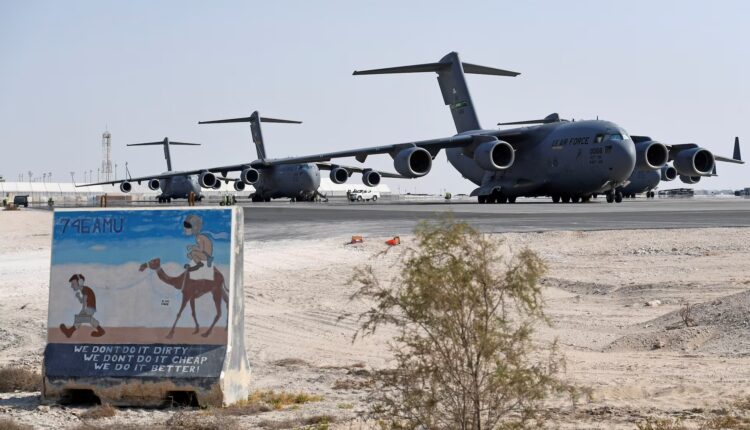
(DEFENCE SECURITY ASIA) — The Pentagon is assessing whether to withdraw or reposition American forces from the Persian Gulf after Iranian missiles and drones damaged critical bases, potentially overturning the force posture underpinning United States power across the Middle East.
According to a report by The Washington Post, the deliberations could shift troops, aircraft, air-defence systems and command infrastructure westward, replacing concentrated installations near Iran with a distributed military network extending through Jordan, Israel and Saudi Arabia’s Red Sea coast.

Although no formal review or final decision has been announced, the assessment reflects “prudent planning” over whether damaged facilities should be reconstructed, reduced or abandoned after their wartime vulnerability became operationally and financially undeniable.
Approximately 40,000 American personnel normally operate across nearly 20 locations spanning 1,500 miles from Jordan to Oman, while the 2026 wartime surge increased the regional deployment beyond 50,000 troops.
The strategic dilemma reaches beyond troop numbers because Bahrain hosts the US Fifth Fleet headquarters, while Kuwait, Qatar and neighbouring states accommodate major air, ground, logistics, intelligence and missile-defence capabilities.
Iranian attacks damaged or destroyed more than 200 structures and equipment items across approximately 15 American military sites, striking hangars, accommodation, fuel storage, radars, satellite communications and air-defence systems.
Six American service members were killed at Port Shuaiba in Kuwait during March, while a later Iranian attack in Jordan demonstrated that moving forces westward would reduce exposure without eliminating Tehran’s missile reach.
American forces expended more than 1,000 sophisticated Patriot and Terminal High Altitude Area Defense interceptors protecting personnel and infrastructure, revealing how sustained saturation attacks could erode strategically scarce missile-defence inventories.
The war therefore transformed basing from an administrative question into a battlespace-survivability problem, where fixed installations, predictable logistics hubs and concentrated command nodes become increasingly vulnerable to precision ballistic missiles and one-way attack drones.
CENTCOM commander Admiral Bradley Cooper reportedly supports deliberations about repositioning forces farther west, giving the proposal operational significance because he commanded regional naval forces and subsequently directed the campaign against Iran.
A former US ambassador said the conflict “really did highlight the vulnerability” of American forces, although he cautioned that greater distance from Iran “wasn’t a perfect solution” against longer-range weapons.
Any restructuring would affect deterrence against Iran, protection of Gulf allies, maritime security around the Strait of Hormuz and Washington’s capacity to redirect scarce military resources toward strategic competition with China.
(READ): [VIDEO] Iran Strikes US Military Bases Across Gulf: Missile Barrage on Qatar, Bahrain, UAE Signals Dangerous Power Shift in Middle East
Iranian Strikes Shatter the Sanctuary of America’s Gulf Bases
Large Persian Gulf installations historically generated combat power through scale, established runways, fuel infrastructure, maintenance facilities, ammunition storage and command connectivity, but those same concentrations created lucrative target complexes for Iranian surveillance and strike systems.
Before hostilities began in February 2026, CENTCOM evacuated numerous installations judged too vulnerable to sustain normal staffing, indicating commanders had already concluded that layered missile defences could not guarantee protection against prolonged saturation.
Personnel were reportedly dispersed into hotels, offices and more distant locations, demonstrating how force preservation required decentralisation even before Iranian attacks converted theoretical vulnerability into casualties, infrastructure losses and disrupted operations.
One person familiar with the repositioning said, “Iran thinks we are in the traditional places, and we are not,” reflecting an operational effort to complicate Tehran’s targeting without revealing alternative deployment locations.
At least 228 structures or equipment items were reportedly damaged or destroyed, including assets in Kuwait, Bahrain, Qatar, Saudi Arabia, the United Arab Emirates, Jordan and Oman.
Naval Support Activity Bahrain, Al Udeid Air Base, Al Dhafra Air Base, Prince Sultan Air Base and multiple Kuwaiti installations formed a regional architecture whose predictability allowed efficient operations but simplified adversary targeting.
Successful strikes against radar, communications and air-defence equipment were especially consequential because disabling sensors or command links can create temporary corridors through which subsequent missiles and drones reach higher-value targets.
The damage demonstrated that interception rates alone cannot measure defensive success, because a comparatively small number of penetrating weapons can disable runways, fuel systems or command facilities needed to sustain high-tempo combat operations.
Iran consequently imposed costs without matching American conventional power platform-for-platform, using comparatively expendable missiles and drones to threaten expensive infrastructure, exhaust interceptors and compel defensive dispersal across an enormous theatre.
Rebuilding the same bases without hardened shelters, redundant communications, distributed logistics and deception measures could restore physical infrastructure while reproducing the operational vulnerabilities exposed during the conflict.
Westward Repositioning Could Redraw the US Middle East War Map
Moving forces toward Jordan, Israel or Saudi Arabia’s Red Sea coast would increase distance from Iranian launch areas, potentially expanding warning time while reducing exposure to shorter-range missiles and one-way attack drones.
Prince Sultan Air Base near Riyadh has emerged within policy discussions as a possible consolidation point, although concentrating personnel there could eventually create another predictable target requiring extensive air defence, hardening and logistical redundancy.
Israel’s Ovda Air Base offers access to established military infrastructure and previously accommodated pre-positioned F-22 fighters, but an expanded American presence could introduce political sensitivities and unresolved counterintelligence concerns.
Jordan provides geographic depth and access to the Levant, yet Iranian strikes on Muwaffaq Salti Air Base demonstrated that westward movement cannot place American forces beyond every ballistic-missile or drone threat.
Red Sea locations could reduce immediate exposure to launches from Iran while supporting maritime operations, but greater distance would lengthen tanker requirements, aircraft transit times, sustainment routes and response timelines into the Persian Gulf.
This trade-off means repositioning must balance survivability against combat responsiveness, because aircraft preserved far from Iranian missiles may deliver fewer sorties unless supported by aerial refuelling, forward arming points and resilient communications.
Distributed basing could complicate Iranian targeting by forcing Tehran to allocate reconnaissance and strike assets across more locations, while mobile command posts and decoy systems would further dilute the effectiveness of pre-planned attacks.
However, dispersion also increases the American logistics footprint, requiring additional transport aircraft, protected fuel distribution, maintenance teams, ammunition nodes and host-nation access arrangements across multiple sovereign jurisdictions.
A westward network would therefore represent more than withdrawal, potentially becoming a redesigned force posture combining smaller sites, rotational deployments, expeditionary logistics and rapidly relocatable air and missile-defence capabilities.
The decisive question is whether Washington can preserve credible combat power around the Persian Gulf while reducing fixed exposure, rather than merely transferring vulnerable concentrations from one host nation to another.
Patriot and THAAD Depletion Exposes a Strategic Cost Imbalance
The expenditure of more than 1,000 Patriot and THAAD interceptors revealed the industrial and operational consequences of defending permanent bases against repeated salvos combining ballistic missiles, cruise threats and one-way attack drones.
Advanced interceptors are costly, production-constrained and demanded across several theatres, meaning every missile launched over the Persian Gulf potentially reduces available protection for allies, deployed forces or contingencies elsewhere.
Iran exploited this imbalance by forcing American commanders to choose which incoming threats warranted interception, while simultaneous attacks could overload sensors, command networks and individual launcher magazines despite technically capable defensive systems.
Patriot provides terminal defence against aircraft, cruise missiles and ballistic threats, whereas THAAD protects a wider area against higher-altitude ballistic missiles, but neither system creates an impermeable shield over dispersed regional infrastructure.
A layered architecture also depends upon airborne warning, satellite detection, terrestrial radar and secure command links, making sensor and communications resilience as strategically important as the number of available interceptor missiles.
The attacks therefore highlighted magazine depth as a central measurement of deterrence, because an adversary may achieve strategic effects by surviving longer than the defender’s interceptor inventory rather than defeating each system technically.
Repositioning farther from Iran could reduce engagement demand by placing some facilities beyond shorter-range weapons, allowing scarce interceptors to protect essential command nodes, airfields and logistics hubs instead of every legacy installation.
Nevertheless, Iran’s demonstrated ability to strike Jordan means distance alone cannot resolve the problem, particularly if Tehran retains longer-range ballistic missiles capable of manoeuvring, deploying countermeasures or attacking from unexpected trajectories.
Future force protection would require hardening, dispersal, rapid runway repair, passive defence, electronic warfare and counter-drone weapons that cost substantially less than interceptors designed primarily for ballistic-missile engagements.
The campaign’s central lesson is that missile defence must protect a resilient operational system, because defending fragile concentrations indefinitely can consume strategic inventories without guaranteeing continuous combat effectiveness.
Gulf Allies Face a Deterrence Vacuum and Sovereignty Dilemma
Gulf governments have relied upon visible American deployments as both military reinforcement and political assurance, making any substantial drawdown potentially more consequential than the number of troops physically relocated.
A smaller American presence could leave regional partners more exposed during the years required to expand domestic missile defence, intelligence, hardened infrastructure and long-range deterrent capabilities against future Iranian attacks.
Former National Security Council official Allison Minor argued that arms sales and intelligence sharing could continue with fewer deployed troops, while stressing that regional consultations must address broader security relationships rather than troop numbers alone.
That distinction matters because an offshore or remotely supported partnership may provide technology and intelligence without delivering the immediate combat mass, political commitment or rapid reinforcement associated with permanent American bases.
Gulf frustration reportedly increased after partners believed they were inadequately consulted before the conflict, creating a political risk that Washington’s subsequent repositioning could be interpreted as unilateral disengagement following avoidable exposure.
Iran may portray an American pullback as evidence that missile pressure expelled US forces, although repositioning could instead strengthen survivability and complicate Tehran’s ability to neutralise American combat power through concentrated attacks.
Regional governments could respond by deepening independent defence programmes, pursuing alternative security partners or diversifying relationships with China and other powers, potentially weakening Washington’s traditional influence over Gulf security architecture.
Conversely, permanently reducing prominent American bases might lower the likelihood that host nations become immediate Iranian targets during future confrontations initiated beyond their direct control or without their political approval.
The resulting sovereignty dilemma places Gulf states between dependence on American protection and exposure created by hosting American forces, especially when installations support operations against a neighbouring regional power.
Washington must therefore distinguish strategic redistribution from abandonment through credible reinforcement plans, interoperable missile defence, persistent intelligence sharing and transparent consultation with governments carrying the physical risks of American basing.
(READ) Iran Threatens Ground Invasion of Kuwait to Seize US Military Bases, Take American Troops Hostage
China Competition and War Costs Drive Pentagon’s Force-Posture Choice
The Pentagon estimated the conflict would cost approximately US$37.5 billion through September 2026, excluding reconstruction, while an independent assessment placed repairs to damaged bases near US$5 billion.
Those figures intensify debate over whether rebuilding legacy installations offers strategic value when the same funding could strengthen homeland defence, replenish interceptors or reinforce deterrence against China in the Indo-Pacific.
More than 13,000 strikes against Iran required warships, combat aircraft, strategic bombers, tankers, surveillance platforms and precision munitions, demonstrating how a prolonged Middle Eastern campaign can absorb forces needed for other priorities.
The regional surge also involved scarce air-defence systems and carrier strike groups, creating opportunity costs because these assets cannot simultaneously support Indo-Pacific contingencies, European deterrence and protection of the American homeland.
Admiral Cooper described the USS Abraham Lincoln deployment as “one of the most operationally intense and consequential of the modern era,” underscoring the tempo imposed on crews, maintenance cycles and naval readiness.
Supporters of continued regional intervention may argue that permanent access enables rapid deterrence, maritime security and partner reassurance, while retrenchment advocates will cite Iranian strikes as proof that concentration creates unsustainable liabilities.
The June peace arrangement subsequently collapsed, and sporadic exchanges continued, showing why reconstruction decisions cannot assume a stable post-war environment or that damaged installations will enjoy sanctuary during lengthy rebuilding programmes.
Defence Secretary Pete Hegseth has not ordered a formal posture review, making current deliberations exploratory, while permanent changes would require senior approval, host-nation negotiations and detailed operational analysis.
The most credible outcome may be selective reconstruction combined with dispersal, where indispensable headquarters and logistics functions remain regionally accessible but vulnerable personnel and equipment rotate through smaller, hardened locations.
Whether labelled retreat or transformation, the assessment signals that Iranian precision strike capabilities have altered American basing calculations, forcing Washington to reconcile Gulf deterrence, force protection and Indo-Pacific priorities within finite resources.
Major US Military Bases Near the Persian Gulf and Estimated Troop Strength
| Country | Base or facility | Estimated US personnel | Principal role |
|---|---|---|---|
| Bahrain | Naval Support Activity Bahrain | 7,000–8,000 | Headquarters of US Naval Forces Central Command, US Fifth Fleet and Combined Maritime Forces. |
| Bahrain | Sheikh Isa Air Base | Several hundred | Expeditionary aviation, maritime patrol and logistics operations. |
| Bahrain | Muharraq Airfield | Not publicly disclosed | Air mobility and aviation support. |
| Estimated Bahrain total | About 8,000–9,000 | Primarily naval personnel and Fifth Fleet supporting units. | |
| Kuwait | Camp Arifjan | Several thousand | US Army Central forward headquarters, logistics, sustainment and pre-positioned equipment. |
| Kuwait | Camp Buehring | Several thousand | Training, staging and onward deployment into Iraq, Syria and the wider region. |
| Kuwait | Ali Al Salem Air Base | Approximately 1,000–3,000 | Tactical airlift, aviation support, intelligence and expeditionary air operations. |
| Kuwait | Ahmed Al Jaber Air Base | Hundreds to about 1,000 | Combat-aircraft and regional air operations. |
| Kuwait | Camp Patriot/Kuwait Naval Base | Several hundred | Maritime security, port support and northern Gulf logistics. |
| Kuwait | Port Shuaiba | Rotational; generally hundreds | Strategic sealift and movement of personnel, vehicles, ammunition and equipment. |
| Estimated Kuwait total | About 13,000–15,000 | The largest established US ground-force presence among Gulf states. | |
| Qatar | Al Udeid Air Base | About 8,000–10,000 | Major regional air hub, Combined Air Operations Center and CENTCOM forward command functions. |
| Estimated Qatar total | About 8,000–10,000 | Almost entirely concentrated at Al Udeid. | |
| United Arab Emirates | Al Dhafra Air Base | About 3,000–3,500 | Combat aviation, aerial refuelling, ISR and air-defence operations. |
| UAE | Jebel Ali Port | No permanent garrison publicly identified | Frequent US Navy port-of-call and naval logistics facility. |
| Estimated UAE total | About 3,000–3,500 | Primarily stationed at Al Dhafra. | |
| Saudi Arabia | Prince Sultan Air Base | About 2,000–2,700 | Air operations, command-and-control and Patriot or THAAD missile defence. |
| Estimated Saudi total | About 2,000–2,700 | Numbers can rise sharply during regional crises. | |
| Oman | Duqm Port and Airfield | Rotational; dozens to hundreds | Naval logistics, strategic-aircraft access and contingency support. |
| Oman | Thumrait Air Base | Rotational; dozens to hundreds | Expeditionary aviation and logistics access. |
| Oman | Masirah Air Base | Rotational; limited presence | Air mobility, staging and contingency operations. |
| Oman | Al Musannah Air Base | Rotational; limited presence | Airlift and logistics access. |
| Estimated Oman total | Usually several hundred or fewer | Predominantly rotational access rather than a large permanent garrison. |
Estimated Gulf-wide total
Under a normal pre-surge posture, these Gulf states collectively host approximately 35,000–40,000 US military personnel.
The wider CENTCOM presence—including Iraq, Jordan, Syria, naval forces at sea and temporary reinforcements—has commonly stood around 40,000–50,000 personnel, but wartime deployments can push it substantially higher.
These figures should not be added mechanically at the individual-base level because several estimates represent rotating units, temporary deployments or country totals whose precise distribution remains undisclosed.
Al Udeid was reported to host roughly 10,000 troops in early 2026, while older US government assessments placed Kuwait at up to 15,000 and the UAE near 3,000.

It is time for Iran’s neighbors that has been attacked by Iran to put on their big boy pants and strike back along with the US and rid IRAN and the region
of the evil IRGC once and for all!!!
The Persian Gulf states that have been attacked by Iran need to join the US forces and stop Iran before it’s to late and they obtain a nuclear weapon if allowed to obtain one they will absolutely use it to hold the world and the region hostage to inflict their will why in the world would not want to stop that from happening
The Zionists in the comment section are urging the Arab countries to join Western terrorist activities against Iran, without understanding that it is the West that is the enemy of the Arabs and not Iran. The Arabs know very well how evil the West is and that they are next to be bombed after Iran. Another thing these Zionists do not understand is that Iran will destroy all the oil facilities in the Arab countries if the Arabs help the white terrorists and child murderers in attacking Iran.
We started the war over isreali lies,we underestimated Irans missile capability,and we have totally incompetent leadership thinking through air power alone they can achieve their goals when history dictates no war has ever been won on air power alone.But what should we expect from a low IQ president that believes there was airports in the 1700’s. The dropping of 2 atomic bombs over 2 Japanese cities is the only exception to this and this was done primarily to avoid the projected 800,000 deaths of american soldiers invading Japan to bring about they’re surrender.Oddly enough today we are faced with the same dilemma because the only way to achieve the desired result it to invade and control the nation to secure its nuclear material.That will cause the deaths of countless american soldiers,and what is the low IQ president talking about doing….You quessed it,using nuclear weapons.
Article written by the IRGC themselves lol. Iran will never have a nuclear weapon, they don’t seem to understand yet