
Singapore’s Third Invincible-Class Submarine Returns Home, Giving Singapore the Most Advanced Undersea Fleet in Southeast Asia
The return of RSS Illustrious gives Singapore a third Type 218SG submarine and accelerates the Republic of Singapore Navy’s drive to dominate undersea surveillance, deterrence and sea-lane protection across the Strait of Malacca and South China Sea.
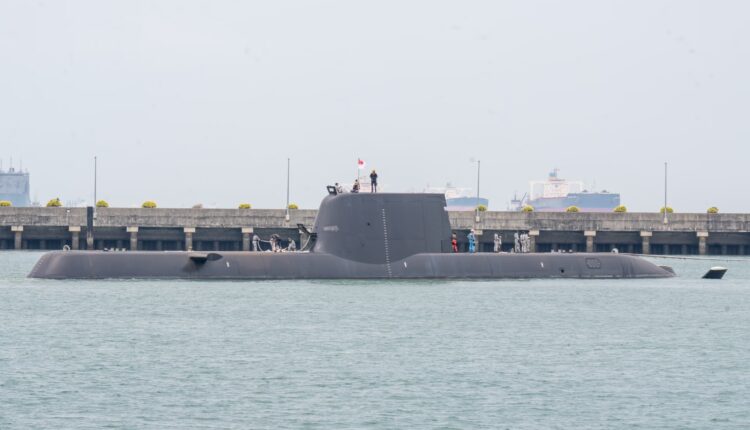
(DEFENCE SECURITY ASIA) — Singapore has moved significantly closer toward establishing the most technologically advanced submarine fleet in Southeast Asia after RSS Illustrious returned home, expanding the Republic of Singapore Navy’s operational reach across the Strait of Malacca and South China Sea.
The arrival of Singapore’s third Invincible-class submarine comes as regional naval competition intensifies, commercial shipping lanes face mounting geopolitical pressure, and undersea deterrence increasingly shapes military calculations throughout the Indo-Pacific.
By returning Illustrious to Changi Naval Base while neighbouring states continue relying upon older diesel-electric platforms, Singapore is accelerating an undersea capability transition capable of altering regional maritime surveillance and crisis-response dynamics.

During the homecoming ceremony at RSS Singapura – Changi Naval Base, Fleet Commander Rear Admiral Kwan Hon Chuong, senior naval officers and submariners highlighted Illustrious as another decisive milestone within Singapore’s long-term naval modernisation programme.
Launched in Kiel, Germany, on 13 December 2022 by ThyssenKrupp Marine Systems, Illustrious completed extensive sea trials before beginning a strategic transit toward Singapore for final work-ups and eventual commissioning.
Singapore expects Illustrious to enter formal service in the near future, while current programme timelines indicate the submarine should achieve full operational status around 2028 after completing local integration requirements.
The return of Illustrious also demonstrates that Singapore’s wider Type 218SG acquisition programme remains firmly on schedule despite continuing industrial delays and procurement disruption affecting several major naval programmes globally.
Singapore currently operates RSS Invincible and RSS Impeccable, both commissioned during September 2024, meaning the Republic of Singapore Navy now possesses three advanced submarines either operationally available or approaching service entry.
Two additional Invincible-class submarines were ordered during 2025, ensuring Singapore’s future fleet will ultimately comprise six boats and creating a significantly larger undersea force than previously anticipated.
That expansion gives Singapore an increasingly credible capacity to maintain persistent submarine patrols simultaneously across multiple strategic waterways without overstretching crews, logistics networks, maintenance cycles, or operational readiness.
The accelerating expansion of Singapore’s submarine fleet is occurring at a moment when the Strait of Malacca and adjoining South China Sea have become increasingly contested corridors linking Indo-Pacific trade, energy flows, and naval force projection.
Once all six Invincible-class submarines enter service, Singapore will possess an undersea force capable of sustaining continuous deterrent patrols, covert intelligence collection, and sea-lane protection across some of the world’s most strategically important maritime chokepoints.
READ:Singapore Secures US$2.3 Billion P-8A Poseidon, Torpedoes Deal from US in Major Boost to Regional Anti-Submarine Warfare Capability
Built Specifically for Singapore’s Maritime Environment
Unlike conventional export submarines adapted from existing European designs, the Invincible-class was custom-built specifically for Singapore’s shallow tropical waters, congested shipping routes, and geographically constrained operating environment.
Singapore required a submarine capable of manoeuvring effectively through narrow littoral waters surrounding the Strait of Malacca while remaining sufficiently survivable for longer deployments inside the South China Sea.
The resulting Type 218SG design incorporates an X-rudder configuration, allowing sharper manoeuvrability, improved depth control, and safer navigation within shallow channels crowded by commercial shipping and fishing activity.
That design is especially relevant because Singapore’s surrounding waters contain some of the world’s busiest sea lanes, creating an environment where conventional submarine manoeuvring becomes considerably more difficult.
The submarine measures approximately 70 metres in length and displaces around 2,200 tonnes submerged, placing it between smaller coastal submarines and larger long-range ocean-going attack boats.
Singapore selected this intermediate size because it provides sufficient endurance and payload capacity without sacrificing the agility necessary for confined littoral operations close to strategically important chokepoints.
The Invincible-class therefore reflects a force-design philosophy centred upon maritime denial, intelligence collection, and sea-lane security rather than expeditionary naval operations far beyond Southeast Asia.
Strategically, Singapore is building an undersea fleet optimised to protect national survival interests because nearly all trade, energy imports, and military logistics remain dependent upon uninterrupted maritime access.
Endurance and Automation Create a Different Kind of Deterrent
The Invincible-class derives much of its strategic significance from combining air-independent propulsion, proton exchange membrane fuel cells, and lithium-ion battery technology within a single integrated platform.
Together, those technologies enable submerged endurance between 28 and 42 days, representing roughly fifty percent greater underwater persistence than Singapore’s previous Challenger-class and Archer-class submarines.
Longer submerged endurance increases survivability because submarines can remain concealed for extended periods without exposing themselves through repeated snorkeling or routine battery-charging procedures.
That capability matters profoundly in a crisis because a submarine remaining undetected for several weeks can complicate adversary planning and impose disproportionate uncertainty upon surface fleet movements.
Singapore has simultaneously invested heavily in automation, allowing the submarine to operate with a crew of approximately twenty-eight personnel despite carrying considerably more sophisticated onboard systems.
Instead of two exhausting twelve-hour watch cycles common aboard older submarines, the Invincible-class uses three eight-hour shifts with roughly ten personnel continuously on duty.
That smaller crew reduces manpower requirements and lifecycle costs, while also increasing operational sustainability because submariners can maintain better performance during extended underwater deployments.
For a small state with limited demographic depth, the combination of automation and endurance provides Singapore with a force multiplier capable of generating greater combat effect from fewer sailors.
Payload, Special Operations Capability and Undersea Strike Potential
Although Singapore has publicly emphasised deterrence and sea-lane security, the Invincible-class possesses significantly greater payload flexibility than earlier Republic of Singapore Navy submarines.
Each submarine carries eight 533-millimetre torpedo tubes and reportedly retains provision for two additional 650-millimetre tubes, creating space for heavier weapons or specialised mission packages.
The larger internal volume also supports a multi-purpose airlock capable of deploying special operations forces, combat divers, underwater reconnaissance teams, or covert maritime surveillance equipment.
That capability could become increasingly important because regional security scenarios now frequently involve grey-zone coercion, sabotage threats, and disputed maritime infrastructure rather than conventional fleet engagements.
Singapore has not publicly confirmed any intention to arm the Invincible-class with submarine-launched cruise missiles, yet the design architecture appears technically compatible with future strike integration.
If such weapons were eventually introduced, Singapore would gain a significantly expanded capacity to threaten hostile naval forces, coastal infrastructure, or military facilities from concealed positions.
Even without cruise missiles, however, the larger payload capacity substantially increases the submarine’s ability to carry heavyweight torpedoes, mines, and intelligence collection systems simultaneously.
That multi-role flexibility strengthens Singapore’s deterrence posture because potential adversaries cannot easily predict whether an individual submarine is conducting surveillance, strike preparation, or special operations support.
Human Factors Matter as Much as Machinery
Singapore designed the Invincible-class not only around advanced technology but also around the physical realities and endurance limitations experienced by modern submarine crews.
Unlike older submarines requiring hot-bunking, every crew member aboard the Invincible-class receives an individual sleeping space equipped with entertainment systems and significantly improved onboard living conditions.
The submarines also include dedicated facilities for female submariners, reflecting Singapore’s effort to broaden recruitment and maximise the available talent pool within the armed forces.
Enhanced air-conditioning systems were integrated specifically because tropical deployments impose greater physiological stress upon crews operating for prolonged periods inside confined underwater environments.
Those seemingly minor changes possess major operational implications because crew fatigue, poor sleep quality, and excessive heat directly reduce submarine effectiveness during extended submerged patrols.
Singapore’s emphasis upon ergonomics also reflects the reality that the Invincible-class was tailored for Asian body dimensions rather than simply adopting European crew standards.
That approach allows Singapore to sustain longer deployments with smaller crews because submariners remain more effective, healthier, and psychologically resilient throughout demanding operational cycles.
The resulting advantage is difficult to quantify publicly, yet modern submarine warfare increasingly depends upon human endurance, concentration, and cognitive performance as much as technical capability.
A Six-Boat Fleet Will Transform Singapore’s Strategic Posture
RSS Invincible and RSS Impeccable are already fully operational, while Illustrious is now completing pre-commissioning activities and RSS Inimitable continues sea trials following its 2024 launch.
Singapore expects Inimitable to return from Germany before approximately 2028, while two additional submarines ordered during 2025 remain proceeding through the production pipeline.
Once all six submarines become operational, Singapore will possess sufficient numbers to maintain continuous patrol coverage despite maintenance periods, training commitments, and unexpected technical requirements.
A six-boat fleet could theoretically allow Singapore to sustain multiple submarines simultaneously at sea, one near the Strait of Malacca and another inside the South China Sea.
That posture would significantly strengthen Singapore’s ability to monitor hostile naval movements, protect commercial shipping, and contribute intelligence during regional contingencies involving major powers.
The force would also provide Singapore with greater strategic autonomy because a larger submarine fleet reduces dependence upon allied maritime surveillance and external security guarantees.
Regional governments will inevitably interpret Singapore’s expanding undersea capability through different political lenses, yet the programme remains fundamentally defensive in both doctrine and declared purpose.
Nevertheless, the return of RSS Illustrious signals that Singapore is no longer building merely a modest coastal submarine force, but an advanced undersea fleet designed for persistent strategic influence.
