
13 U.S. Bases in Middle East Nearly Uninhabitable After Iran Missile Strikes — CENTCOM Forced to Disperse Troops as War Reshapes American Force Posture
Missile and drone attacks by Iran and pro-Iran groups damage key U.S. installations across Kuwait, Qatar, Bahrain and Saudi Arabia, forcing troop relocation and remote operations during the escalating 2026 U.S.–Israel–Iran war.
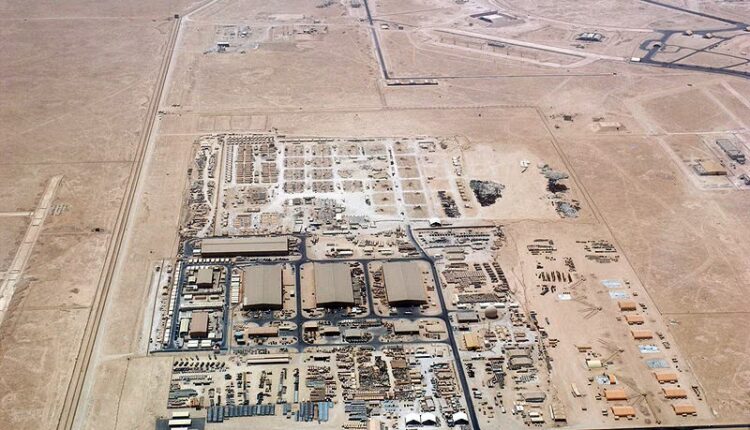
(DEFENCE SECURITY ASIA) — The operational stability of the United States military presence across the Middle East has been severely disrupted after Iranian and pro-Iran missile and drone strikes rendered many of the 13 American bases in the region nearly uninhabitable, forcing emergency dispersal of personnel and restructuring of CENTCOM force posture during the ongoing U.S.–Israel–Iran war.
Reports by the New York Times indicated that many of the bases used by American troops are now considered impractical for sustained habitation after repeated strikes damaged buildings, communications systems, radar facilities, and support infrastructure, with Kuwait suffering the most severe impact due to its proximity to Iran and the concentration of U.S. forces there.
The situation has forced thousands of U.S. personnel to relocate to alternative locations including hotels, temporary office facilities, and overseas sites while air operations continue from remaining functional runways, creating a hybrid operating model in which much of the land-based military presence is effectively functioning remotely rather than from hardened installations.

The widespread damage across multiple installations has transformed what was previously a stable network of forward operating bases into a fragmented and partially displaced force posture, increasing logistical complexity and reducing the efficiency of command, control, and support functions across the CENTCOM theatre.
Military planners now face the challenge of sustaining high-tempo strike operations against Iranian targets while simultaneously managing degraded infrastructure, dispersed personnel, and vulnerable communications networks, a combination that places additional strain on readiness and response timelines.
The requirement to relocate personnel away from damaged facilities has also increased reliance on temporary accommodation and improvised command locations, reducing protection levels and forcing greater dependence on mobile systems to maintain operational continuity under threat.
Repeated missile and drone attacks on radar, satellite communications, and tactical coordination centers have demonstrated that Iranian retaliation is focused not only on symbolic targets but on the operational backbone that enables U.S. power projection in the Middle East.
As a result, the current phase of the conflict has turned base survivability into a central strategic concern, with the condition of U.S. installations across Kuwait, Qatar, Bahrain, Saudi Arabia, the UAE, Iraq, and Jordan now directly influencing the tempo, reach, and sustainability of American military operations.
READ: [VIDEO] Iran Strikes US Military Bases Across Gulf: Missile Barrage on Qatar, Bahrain, UAE Signals Dangerous Power Shift in Middle East
Damage to U.S. Base Network Alters CENTCOM Operational Footprint
Approximately 40,000 American troops were deployed across the Middle East when the conflict escalated in late February 2026, but missile and drone attacks forced Central Command to disperse thousands of personnel away from primary installations to reduce vulnerability to further strikes.
Satellite imagery analysis, verified video evidence, and official statements identified at least 17 damaged U.S. military, diplomatic, and air-defense sites across the region, including at least 11 American bases or installations, meaning nearly half of the fixed U.S. military footprint in the theatre has suffered direct impact.
Several installations were struck multiple times, indicating deliberate targeting of operational infrastructure rather than symbolic attacks, with communications nodes, radar systems, maintenance facilities, and troop housing repeatedly hit in ways that degraded sustained operational capability.
The strikes did not completely destroy the bases but caused structural damage severe enough to make normal living and working conditions impractical, forcing relocation of personnel even while combat operations continued from surviving facilities.
Central Command has maintained operations by redistributing units across a wider geographic area, a move that reduces concentration risk but increases logistical complexity, coordination difficulty, and dependence on temporary infrastructure.
This dispersal has effectively transformed the regional U.S. posture from fixed-base dominance to a more fragmented network of operating sites, complicating command and control while increasing reliance on mobile communications and remote coordination.
The need to sustain air operations despite damaged ground infrastructure has forced prioritization of flight crews, maintenance teams, and strike coordination units over support elements, further stressing operational efficiency.
Military planners now face the challenge of maintaining strike tempo against Iran while simultaneously protecting vulnerable bases that were originally designed for lower-intensity regional contingencies rather than sustained missile warfare.
The strikes demonstrate that even heavily defended installations can be degraded through repeated low-cost drone and missile attacks, altering assumptions about the survivability of forward-deployed forces in high-intensity conflict.
This shift in operational reality has turned base survivability into a central strategic variable rather than a background logistical concern, forcing reconsideration of how the United States sustains power projection in the Middle East.

Kuwait Bases Suffer Most Severe Infrastructure Damage
Kuwait, which hosts roughly 13,500 U.S. troops and lies closest to Iranian territory, experienced some of the heaviest damage, with multiple installations struck by missiles and drones during retaliatory attacks following U.S. and Israeli operations against Iranian targets.
At Ali Al Salem Air Base, roofs collapsed on several structures and communications systems were damaged, reducing the ability to coordinate operations and forcing personnel to relocate from affected buildings.
Camp Buehring was hit by drone strikes inside the perimeter, with video evidence showing impacts on fuel storage and maintenance areas, raising concerns about vulnerability of logistical facilities supporting regional operations.
Camp Arifjan suffered damage to a tactical operations center and satellite communications equipment, degrading command connectivity and forcing temporary relocation of key coordination functions.
A drone strike also hit a structure housing personnel at the Shuaiba port complex, damaging the main building and reportedly causing casualties, highlighting the risk posed by low-cost unmanned systems against fixed facilities.
The concentration of U.S. forces in Kuwait made the country a high-value target for Iranian retaliation, and repeated strikes created cumulative damage that reduced the ability to sustain normal base operations.
Infrastructure damage across multiple Kuwaiti sites forced U.S. forces to move personnel to alternative accommodation, including civilian facilities, while continuing to operate from remaining usable runways and support areas.
The requirement to maintain readiness while operating from partially damaged installations has increased logistical strain, forcing reliance on temporary repairs, dispersed storage, and improvised command locations.
These conditions have effectively turned Kuwait from a stable forward operating hub into a contested operating environment, with base survivability now dependent on constant defensive readiness rather than assumed protection.
The scale of damage in Kuwait illustrates how geographic proximity to Iran has translated directly into operational vulnerability for U.S. forces stationed there.
Regional Bases Hit Including Qatar, Bahrain, Saudi Arabia, UAE, Iraq and Jordan
Damage was not limited to Kuwait, with multiple U.S. installations across the region struck during the early weeks of the conflict, indicating a coordinated effort to pressure the entire American base network rather than a single location.
At Al Udeid Air Base in Qatar, the largest U.S. installation in the region, strikes damaged early-warning radar systems, affecting detection capability and complicating air defense coordination during ongoing operations.
In Bahrain, communications radomes at the U.S. Navy Fifth Fleet headquarters were hit in a strike that reportedly caused around USD200 million (RM760 million) in damage, demonstrating the high cost of even limited infrastructure losses.
Prince Sultan Air Base in Saudi Arabia suffered damage to communications equipment and aircraft-related facilities, affecting operational readiness and forcing adjustments to sortie planning.
Additional installations in the United Arab Emirates, Iraq, and Jordan, including air bases, ports, and radar sites such as Al Dhafra, Erbil, and Muwaffaq Salti, were also reported damaged, expanding the geographic scope of the disruption.
The widespread nature of the strikes forced the United States to distribute personnel across multiple alternative locations, reducing concentration risk but increasing the difficulty of maintaining coordinated operations.
Repeated impacts on radar and communications systems have forced reliance on backup networks, increasing the risk of degraded situational awareness during periods of heavy missile and drone activity.
The damage pattern suggests targeting of operational enablers rather than purely symbolic facilities, indicating an attempt to complicate U.S. force projection rather than simply inflict casualties.
Such strikes highlight the vulnerability of fixed infrastructure even when defended by layered air-defense systems, especially when attacks occur across multiple countries simultaneously.
The regional spread of damage has turned the entire U.S. Middle East posture into a contested network rather than a secure staging area, forcing constant adaptation by commanders.
Casualties, Financial Losses and Infrastructure Costs Mount
Missile and drone strikes in Kuwait caused multiple casualties among U.S. personnel, with several incidents reported at Camp Arifjan and Shuaiba, demonstrating that attacks have affected not only infrastructure but also troop safety.
Estimates of damage to bases and military infrastructure in the first weeks of the war exceeded USD800 million (RM3.04 billion), with some assessments suggesting even higher losses when equipment damage is included.
Costs have included destruction of communications systems, radar installations, maintenance facilities, buildings, and support equipment essential for sustained operations.
Financial losses alone do not fully capture the operational impact, as damage to key nodes can slow coordination, reduce sortie rates, and increase vulnerability to further attacks.
Repeated strikes have also forced the United States to invest additional resources in repairs, defensive systems, and relocation efforts, further increasing the logistical burden of the war.
The need to protect dispersed personnel has increased demand for air-defense coverage, surveillance, and rapid repair capability across multiple countries simultaneously.
Infrastructure damage has therefore become both a financial and operational challenge, forcing commanders to balance offensive operations against the requirement to defend vulnerable bases.
Loss of hardened facilities reduces the ability to sustain long-term deployments, increasing reliance on temporary structures that offer less protection against future strikes.
These costs accumulate even when bases remain technically operational, because degraded infrastructure reduces efficiency and increases risk.
The financial and operational toll underscores how sustained missile warfare can erode forward presence without requiring complete destruction of installations.
Bases Still Operating but Under Constant Threat
Although many bases have been severely damaged, U.S. operations have not stopped, with air strikes against Iranian targets continuing while personnel operate from dispersed and improvised locations.
Strikes have slowed compared with the early phase of the conflict, but the threat remains, and Iranian statements calling for reporting of dispersed troop locations indicate continued targeting intent.
The shift toward operating from alternative sites, including civilian facilities and locations outside the region, shows how the conflict has forced a more flexible but less secure posture.
Air crews continue flying missions even as ground infrastructure remains partially damaged, highlighting the priority placed on maintaining strike capability despite logistical difficulties.
Operating from fragmented locations increases the complexity of command, control, and coordination, especially when communications systems have been damaged.
The requirement to protect multiple temporary sites also stretches defensive resources, creating new vulnerabilities even as original bases are repaired.
The current situation shows that forward deployment in the Middle East now carries higher risk than in previous conflicts, with missile and drone threats capable of degrading even major installations.
The transformation of fixed bases into contested environments has forced the United States to adapt its operating model while still maintaining pressure on Iranian targets.
This balance between continued offensive operations and damaged infrastructure defines the current phase of the conflict, with neither side able to eliminate the other’s ability to strike.
As the war continues, the condition of U.S. bases across the region remains a critical factor shaping both military strategy and the overall trajectory of the conflict.
