
Saudi Wing Loong II UCAV Shot Down Al-Bayda Yemen: Houthi Air Defences Neutralize Chinese Drone Shifting Middle East Air Superiority Balance
How the Dawn Interception of a Royal Saudi Air Force Wing Loong-2 Drone Over Al-Bayda Governorate by Evolving Houthi Guided Missiles Completely Redefines Anti-Access Battlespace Dynamics and Triggers a Major Cross-Border Geopolitical Escalation

(DEFENCE SECURITY ASIA) –In a major escalation, the Houthi-aligned Yemeni Armed Forces shot down a Royal Saudi Air Force Chinese-built Wing Loong-2 unmanned combat aerial vehicle at dawn during a hostile mission over the central Al-Bayda Governorate.
According to an official military statement broadcasted by Brigadier General Yahya Saree on July 14, 2026, the Chinese-built medium-altitude long-endurance platform was successfully neutralized at dawn while conducting hostile reconnaissance operations inside sovereign Yemeni territorial airspace.
This highly volatile aerial engagement marks a dramatic collapse of the fragile de facto ceasefire that had previously suppressed open cross-border military confrontations between Riyadh and the Houthi-led coalition since the initial UN-mediated truce expired.
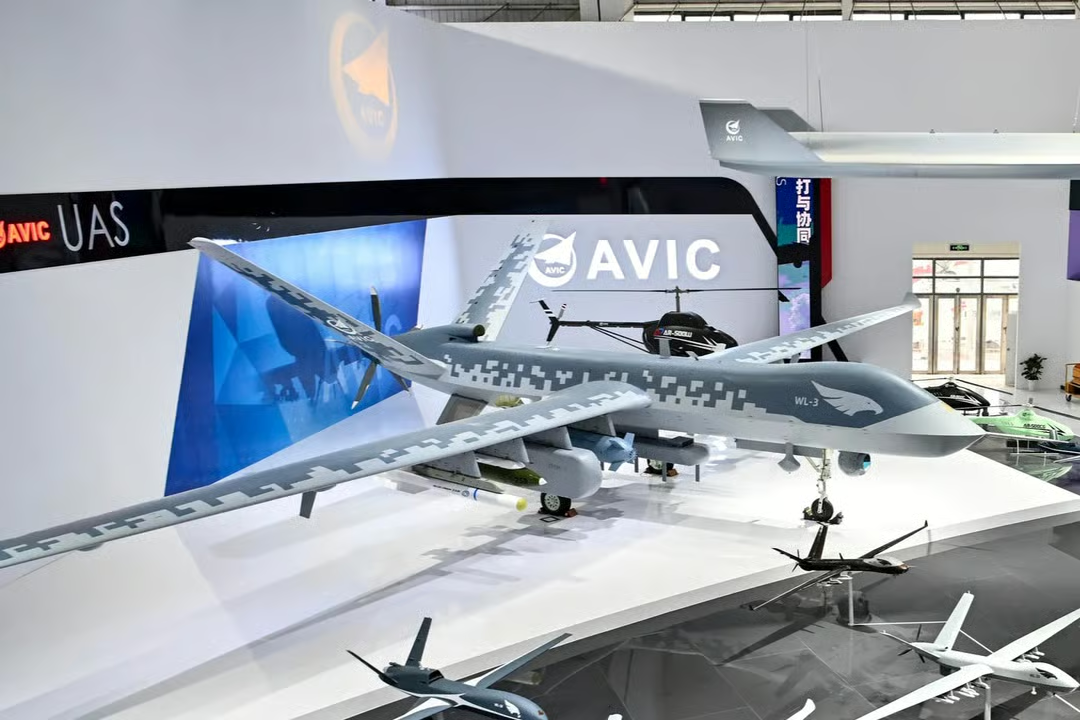
The kinetic destruction of the multi-million dollar unmanned platform immediately followed a series of aggressive retaliatory strikes, including localized geopolitical flare-ups targeting Sanaa International Airport and subsequent ballistic missile volleys directed against Abha International Airport.
Military observers note that the weapon system utilized to down the combat drone represents a highly advanced iteration of irregular anti-aircraft technology, highlighting Iran’s persistent technological footprint within the evolving theater of the Arabian Peninsula.
By projecting credible denial capabilities over the strategically pivotal Al-Bayda province, the Yemeni Armed Forces have effectively challenged the undisputed aerial hegemony long maintained by coalition forces across the central sectors of the war-torn country.
The financial implications of this shootdown remain substantial for regional defense procurement, considering each advanced CAIG Wing Loong II platform commands a significant unit export valuation estimated around USD 3,000,000 or approximately RM 11,400,000.
As global defense planners scrutinize the wreckage configurations for electronic warfare signatures, this combat loss underscores the inherent vulnerabilities facing modern medium-altitude unmanned platforms when operating within heavily contested anti-access environments without dedicated escort assets.
The official Houthi declaration emphasized that their national defense elements remain highly vigilant against foreign incursions, vowing that any subsequent violations of domestic airspace will meet immediate, lethal neutralization via appropriate domestic missile networks.
While the Royal Saudi Air Force has maintained its traditional policy of operational silence regarding unmanned losses, independent open-source intelligence networks are actively cross-referencing telemetry data to verify the specific variant of the weapon used.
This localized aerial clash carries immense broader geopolitical weight, particularly as international maritime trade routes along the Bab al-Mandeb strait remain deeply entangled with the overarching military posturing of the regional Houthi command structure.
Ultimately, the degradation of coalition aerial assets over central Yemen forces a comprehensive re-evaluation of asymmetric air defense doctrines, signaling a dangerous escalation phase that could fundamentally redefine the parameters of the wider Middle Eastern conflict.
Battlespace Dynamics: The Strategic Interception Over Al-Baydah
The downing of the Saudi Wing Loong II UCAV over the central Al-Bayda governorate demonstrates a calculated shift in the geographical deployment of advanced Yemeni air defense networks away from traditional northern strongholds like Saada.
Al-Bayda occupies a vital operational nexus connecting northern Houthi-controlled territories with southern provinces, making the assertion of radar coverage and active air defense envelopes over this specific airspace a top priority for military planners.
By successfully denying freedom of maneuver to Royal Saudi Air Force reconnaissance assets, the Yemeni Armed Forces are actively shielding their subterranean logistics infrastructure and strategic troop movements from persistent high-resolution orbital and aerial surveillance.
The specific timing of the dawn interception reveals a high level of operational readiness, indicating that Houthi early-warning radar teams were actively tracking the low-RCS signature of the Chinese-manufactured platform through the darkness.
This calculated defense posture directly undermines the efficacy of Saudi long-endurance intelligence operations, which rely heavily on unhindered loitering capabilities to identify and pre-emptively strike mobile ballistic missile launch positions before deployment.
As the tactical parameters of this engagement become clearer, the loss of this asset underscores the shifting risk calculus for coalition commanders operating medium-altitude long-endurance platforms in contested environments across central Yemen.
The successful integration of passive optical tracking systems alongside active radar guidance has allowed Yemeni forces to minimize their electronic emissions, thereby circumventing the advanced suppression of enemy air defenses doctrines used by the coalition.
Consequently, the Al-Bayda interception serves as a stark warning to regional adversaries that the Yemeni Armed Forces possess the technical capability to establish localized anti-access bubbles over historically permissive interior operating areas.
This transformation of the battlespace alters the broader balance of power, forcing coalition forces to either accept higher operational risks or commit expensive manned fighter escorts to safeguard their remaining fleet of reconnaissance drones.
Therefore, the neutralization of the Saudi UCAV represents more than an isolated tactical victory, marking instead the strategic expansion of a highly lethal and resilient multi-layered air defense network across the central Yemeni theater.

Technical Breakdown: CAIG Wing Loong II vs. Asymmetric Air Defense Systems
Engineered by the Chengdu Aircraft Industry Group, the Wing Loong II functions as a sophisticated platform optimized for precision strikes and long-endurance surveillance, boasting an estimated market value of USD 3,000,000 or roughly RM 11,400,000 per unit.
Despite its advanced sensor suites and capacity to deploy precision-guided munitions like the Blue Arrow-7 missile, the platform remains highly vulnerable to surface-to-air missiles due to its slow operational speed and limited evasive maneuverability.
Open-source defense intelligence suggests the Yemeni Armed Forces likely utilized a loitering surface-to-air missile, such as the Iranian-designed Saqr-1 or Type-358 system, which is specifically engineered to target medium-altitude loitering unmanned aircraft with high precision.
These unique loitering munitions operate by flying into a designated patrol zone under low-emission parameters before utilizing an electro-optical infrared seeker to home in on the thermal signature of a drone’s turbo-propeller engine.
The integration of such sophisticated asymmetric counter-UAS technology neutralizes the traditional electronic warfare countermeasures embedded within the Wing Loong II, as passive infrared homing mechanisms emit no detectable radar signals prior to kinetic impact.
Furthermore, the physical destruction of the airframe provides critical telemetry data for Houthi engineers, allowing them to reverse-engineer and adapt their strike doctrines against specific vulnerabilities inherent to Chinese-designed composite materials and communication linkages.
This technological interplay highlights a broader global trend where low-cost, innovative air defense assets are successfully neutralizing expensive, state-of-the-art combat drones, rewriting the traditional economic calculus of modern aerial warfare within asymmetric conflicts.
The structural vulnerability of the Wing Loong II under these highly specific engagement conditions raises critical questions regarding the future utility of unescorted medium-altitude long-endurance platforms in modern high-intensity electronic warfare environments.
As defense firms globally monitor these operational outcomes, the loss highlights the absolute necessity of integrating advanced directed-energy weapons or active missile counter-measures onto existing unmanned combat aerial vehicle fleets to survive dense threat envelopes.
Ultimately, the engineering duel between Chinese aerospace manufacturing and Iranian-derived asymmetric missile technology underscores a highly dynamic paradigm shift, where defense innovation is rapidly democratizing advanced anti-access capabilities for non-state actors.
Geopolitical Escalation: The Breakdown of the Fragile Saudi-Houthi Ceasefire
The kinetic interception over Al-Bayda cannot be viewed in isolation, as it represents a direct escalation following targeted airstrikes against the Houthi-controlled Sanaa International Airport, which severed critical diplomatic and logistical pathways earlier this week.
In immediate retaliation for the airport strikes, the Yemeni Armed Forces launched a coordinated barrage of ballistic missiles and explosive drones targeting Abha International Airport, effectively shattering the prolonged period of relative calm across the border.
This rapid cycle of kinetic escalation signals a profound breakdown in backchannel diplomatic negotiations between Riyadh and Sanaa, which had previously sought to formalize a permanent exit strategy for Saudi forces from the protracted conflict.
The rekindling of direct military hostilities threatens to plunge the southern Arabian Peninsula back into an active state of total war, destabilizing regional security frameworks and complicating international efforts to secure vital trade corridors.
By targeting a high-value asset belonging to the Royal Saudi Air Force, the Houthi command structure is signaling its absolute unwillingness to accept unilateral coalition enforcement of airspace restrictions over sovereign territory under their administrative control.
Riyadh now faces a complex strategic dilemma, balancing the imperative to project military deterrence against the immediate necessity of protecting its multi-billion dollar domestic economic infrastructure projects from devastating retaliatory drone and missile attacks.
The geopolitical fallout extends across the Gulf region, as neighboring states closely monitor the potential re-emergence of deep-theater strikes that could disrupt global energy markets and undermine investor confidence within the broader Middle East.
International mediators are scrambling to de-escalate the worsening situation, yet the deep-seated mistrust between the warring factions remains exacerbated by the introduction of increasingly lethal defense systems into the operational theater.
The collapse of this fragile de facto ceasefire underscores the volatile nature of proxy dynamics in the region, where localized tactical incidents can rapidly catalyze wider conventional military responses with systemic international security implications.
As both sides reinforce their frontline deployments, the Al-Bayda shootdown stands as a definitive turning point, effectively terminating the era of relative restraint and initiating a highly unpredictable phase of cross-border military brinkmanship.
Logistical and Intelligence Posturing: Countering Coalition Air Superiority
The sustained capacity of the Yemeni Armed Forces to deploy active air defense units like the Saqr missile system highlights the resilience of their covert logistics and underground assembly networks despite years of strict coalition blockades.
These sophisticated systems are frequently smuggled into the country as disassembled components before being reassembled within secure underground facilities, showcasing an advanced industrial distribution model that resists traditional kinetic interdiction campaigns.
Furthermore, the successful execution of this ambush relies heavily on highly integrated intelligence-gathering networks capable of predicting Royal Saudi Air Force flight paths and scheduling radar activations to avoid detection by coalition electronic intelligence assets.
By maintaining a highly dispersed and mobile force posture, the Houthi air defense units can rapidly reposition their launch platforms across rugged terrain, making it exceptionally difficult for coalition forces to achieve permanent suppression.
This structural agility forces a reallocation of Saudi intelligence, surveillance, and reconnaissance resources, diverting critical assets away from offensive operations to conduct intensive, time-consuming searches for elusive surface-to-air missile batteries.
The operational degradation of the Saudi Wing Loong II fleet also impacts the coalition’s broader tactical awareness, creating temporary blind spots in their coverage that the Yemeni Armed Forces can exploit for covert troop maneuvers.
Additionally, the technical support infrastructure required to operate these advanced Chinese drones means that every airframe lost inflicts an immediate strain on Saudi maintenance pipelines and specialized pilot training frameworks.
This logistical friction is amplified by the high financial cost of maintaining continuous combat air patrols, especially when balanced against the relatively cheap production costs of the asymmetric missiles deployed by the Yemeni defense forces.
As a result, the ongoing war of attrition in the skies over Yemen continues to favor the defender, demonstrating how innovative logistics can effectively counter the conventional technological advantages of a well-funded state military force.
The systemic resilience of these Houthi deployment models highlights a profound shift in modern conflict, where decentralized logistics networks can consistently overmatch centralized, high-technology military architectures within protracted territorial engagements.
Indo-Pacific and Global Security Implications: The Proliferation of Anti-Access Envelopes
The combat performance of Chinese-manufactured unmanned combat aerial vehicles in the highly contested airspace of Yemen provides invaluable data points for defense analysts monitoring potential conflict flashpoints across the Indo-Pacific region.
State actors like China have widely exported the Wing Loong II platform to numerous nations across Asia and Africa, marketing them as highly cost-effective alternatives to American-made platforms like the General Atomics MQ-9 Reaper.
However, the recurrent neutralization of these UCAVs by non-state actors using asymmetric anti-aircraft weapons exposes significant structural vulnerabilities that could undermine China’s defense export strategies and regional power projection capabilities globally.
Indo-Pacific military planners are closely examining how these relatively inexpensive loitering missiles can be deployed to counter the massive fleets of reconnaissance drones that Beijing intends to use during any potential cross-strait maritime contingency.
The democratization of precision air defense technologies means that smaller nations can now establish highly effective, low-cost anti-access/area-denial zones, fundamentally altering the calculus for larger powers relying on uncontested aerial dominance.
This global proliferation of advanced surface-to-air capabilities forces a comprehensive redesign of future unmanned platforms, driving the urgent development of stealth-optimized designs and autonomous electronic countermeasure suites for next-generation systems.
Furthermore, the operational success of these irregular defense networks provides a clear blueprint for other asymmetric actors worldwide, potentially accelerating the spread of dangerous anti-aircraft capabilities to highly volatile strategic maritime choke points.
As the strategic utility of traditional medium-altitude long-endurance platforms continues to diminish in the face of modern threats, the global defense industry must pivot toward more resilient, attritable drone architectures.
The lessons derived from the Al-Baydah interception will undoubtedly reverberate through international defense acquisition circles, shaping procurement priorities and doctrine formulation for major militaries operating across the Indo-Pacific and beyond.
Ultimately, this tactical engagement in central Yemen serves as an early indicator of a highly contested global aerial battlespace, where the proliferation of advanced asymmetric denial capabilities will redefine the rules of modern power projection.
