Russian Cargo Flights to Iran Signal Delivery of Mi-28 “Havoc” Attack Helicopters, Deepening Moscow–Tehran Military Axis
Sustained Russian heavy cargo flights into Iranian airspace are increasingly assessed as the operational signature of Mi-28 “Havoc” attack helicopter deliveries, marking a new phase in Moscow–Tehran military cooperation amid regional and global conflict.
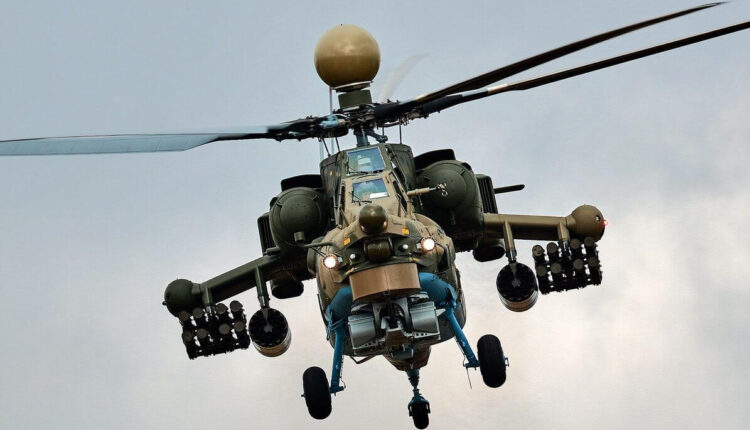
(DEFENCE SECURITY ASIA) — Defence observers increasingly assess that the recent pattern of repeated Russian heavy cargo flights into Iran is not coincidental, but instead reflects a deliberate logistics effort linked to the airlift of Mil Mi-28 “Havoc” attack helicopters purchased by Tehran.
This assessment is reinforced by the close alignment between the types of transport aircraft employed, the sustained tempo and routing of the flights, and the distinctive logistical footprint typically associated with transferring disassembled rotary-wing combat platforms, mission equipment, and supporting systems.
Taken together with prior official disclosures regarding Iran’s planned acquisition of Russian attack helicopters, these indicators now constitute the clearest operational signal that the long-anticipated Moscow–Tehran Mi-28 deal has progressed beyond political commitment and into physical execution.
Iranian Deputy Defence Minister Brigadier General Mahdi Farahi had previously stated that “plans have been finalised for Sukhoi Su-35 fighter jets, Mil Mi-28 attack helicopters, and Yak-130 jet trainers to join the combat units of Iran’s Army in the near future,” a declaration that now appears materially substantiated as Russian Il-76 and Il-96 strategic transport aircraft executed sustained logistics sorties into Iranian airspace during early January 2026 under conditions of heightened regional and strategic tension.
The concentration, routing, and tempo of these Russian cargo flights—mirroring earlier delivery patterns associated with Yak-130 trainers and other high-value defence systems—strongly suggest a deliberate activation of a pre-planned military airlift corridor designed to bypass Western surveillance chokepoints while rapidly transferring sensitive combat aviation assets into Iran.
This development unfolds against the backdrop of Russia’s protracted war in Ukraine and Iran’s parallel confrontation with Israel and US regional forces, binding the two sanctioned states through an increasingly explicit barter-driven military dependency in which Tehran supplies unmanned aerial systems and ballistic missiles while Moscow compensates with advanced conventional strike platforms long denied to Iran under international embargo regimes.
From a force-structure perspective, the Mi-28 represents a decisive qualitative leap for Iran’s Army Aviation, replacing ageing AH-1J SeaCobras with a heavily armoured, all-weather, night-attack platform optimised for precision anti-armour warfare, deep strike interdiction, and close air support in environments saturated with electronic warfare and man-portable air-defence threats.
Senior defence analysts note that the helicopter’s introduction materially enhances Iran’s ability to project force along its western borders, conduct high-tempo counter-insurgency and conventional manoeuvre support operations, and impose credible battlefield costs on adversary ground formations, particularly in contingencies involving Israeli or US expeditionary forces across the Levant and the Persian Gulf littoral.
Rob Lee previously observed that “Iranian Deputy Defense Minister General Mahdi Farahi confirmed the purchase of Russian Mi-28 helicopters, Su-35 fighters, and Yak-130 training aircraft,” underscoring that the current airlift indicators align with a broader, sequenced force-modernisation roadmap rather than an isolated or opportunistic transfer.
While official contract values remain undisclosed, comparable Mi-28 export packages suggest a unit cost of approximately US$18–22 million, meaning that even a limited initial batch of six helicopters would represent a transfer valued at US$120–132 million, equivalent to roughly RM565–622 million, excluding weapons, spares, training, and long-term sustainment support.
Strategically, the apparent willingness of Moscow to conduct sustained heavy airlift operations into Iran signals a calculated acceptance of further diplomatic and sanctions exposure in exchange for preserving Tehran as a reliable rear-area industrial and munitions partner amid tightening Western export controls on Russia’s defence sector.
Taken together, the repeated Russian cargo flights—now widely assessed as linked to the Mi-28 delivery—do not merely hint at arms transfers, but instead represent the most visible operational manifestation to date of an emergent Eurasian security alignment in which sanctioned powers convert political agreements into deployable combat capability beneath the threshold of formal confirmation.
Why the Mi-28 “Havoc” Fundamentally Alters Iran’s Battlefield Aviation Capability
The Mil Mi-28 “Havoc” fundamentally reshapes Iran’s rotary-wing combat capability by introducing a purpose-built, survivable attack helicopter optimised for high-intensity mechanised warfare rather than the counter-insurgency-oriented platforms that have historically defined Tehran’s Army Aviation inventory.
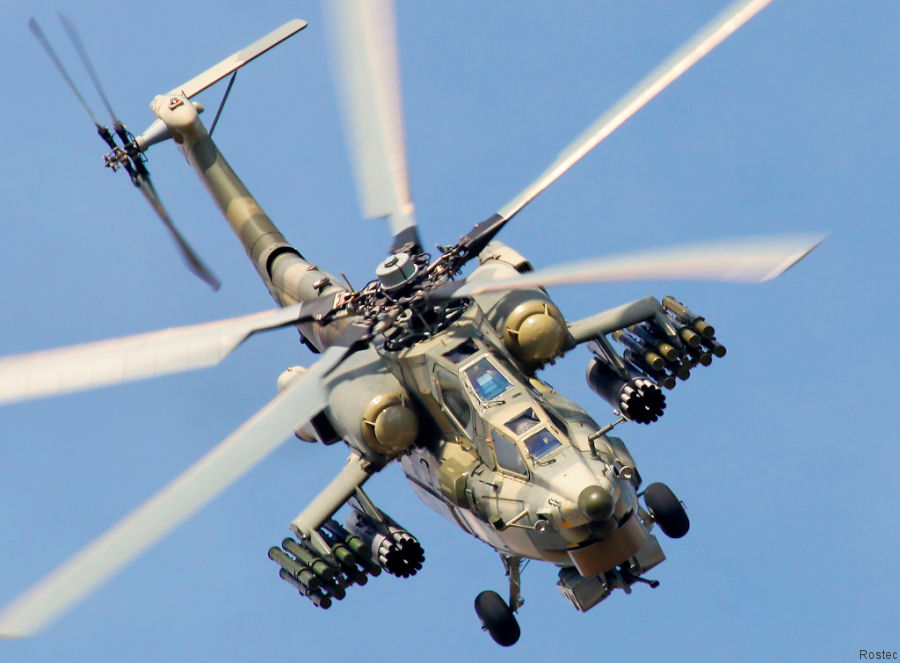
Unlike Iran’s legacy AH-1J SeaCobras, which lack modern avionics, sensor fusion, and night-fighting resilience, the Mi-28 integrates a mast-mounted millimetre-wave radar, thermal imaging systems, and digital battlefield management architecture that enables target acquisition, engagement, and re-attack cycles in degraded visibility and electronic warfare environments.
Armed with a 30-millimetre Shipunov 2A42 autocannon and capable of carrying up to sixteen Ataka or Khrizantema anti-tank guided missiles, the Mi-28 provides Iran with a precision strike platform able to neutralise modern main battle tanks, hardened positions, and mobile missile launchers at stand-off ranges exceeding eight kilometres.
From an operational standpoint, the helicopter’s twin-engine configuration, armoured cockpit, and redundant flight-control systems significantly enhance survivability against small-arms fire, heavy machine guns, and near-miss fragmentation, a critical consideration given the proliferation of battlefield drones and loitering munitions across Middle Eastern theatres.
Russian combat employment of the Mi-28 in Syria and Ukraine has demonstrated its effectiveness in coordinated hunter-killer formations, particularly when paired with unmanned reconnaissance assets that cue targets in real time, a doctrinal approach Iran is increasingly adopting across its land forces.
Although vulnerabilities to advanced MANPADS have been observed, including the April 2022 shootdown of a Mi-28 by a UK-supplied Starstreak system, Iranian planners are likely to mitigate these risks through altitude management, electronic countermeasures, and layered air-defence integration rather than viewing them as disqualifying limitations.
Stephen Mutoro previously remarked that “Russia is rearming Iran in plain sight—because when you’re isolated, you don’t look for peace… you look for partners in chaos,” a characterisation that captures how the Mi-28 fits into Tehran’s broader deterrence-by-capability strategy rather than a quest for air dominance.
Economically, the Mi-28 offers Iran a cost-effective pathway to modernisation, delivering near-peer attack helicopter capability at a fraction of the lifecycle cost associated with Western alternatives, particularly when sustainment is bundled within broader Russo-Iranian defence cooperation frameworks.
At the tactical level, the helicopter’s integration will enable Iranian ground commanders to execute combined-arms manoeuvre with greater speed, precision, and lethality, compressing adversary decision-making timelines in border clashes or expeditionary contingencies.
In strategic terms, the Mi-28’s arrival complicates operational planning for Israel and the United States by introducing a credible, mobile strike asset capable of exploiting terrain, masking, and surprise in regions previously dominated by fixed-wing airpower.
Ultimately, the Mi-28 does not merely replace ageing airframes but elevates Iran’s battlefield aviation from a defensive adjunct into an offensive force multiplier embedded within a maturing, network-centric warfighting doctrine.
The Strategic Logic Behind Russia’s Cargo Airlift Corridor to Iran
The sustained pattern of Russian heavy cargo aircraft flights into Iranian airspace in early January 2026 reflects not ad hoc logistics activity but the maturation of a deliberately engineered military airlift corridor designed to bypass Western surveillance chokepoints while sustaining a high-tempo transfer of sensitive combat systems, including Mi-28 attack helicopters, associated ground support equipment, weapons packages, and technical personnel critical for rapid operational integration.
The repeated appearance of Il-76 and Il-96 strategic transport aircraft executing non-stop sorties along Caspian Sea air routes underscores Moscow’s reliance on air corridors shielded from NATO-controlled radar coverage, enabling the discreet movement of outsized military hardware without exposure to interception risks or diplomatic disruption from transit-state overflight denials.
This logistical architecture mirrors earlier Russian airlift patterns observed during deliveries of Yak-130 advanced jet trainers and electronic warfare systems in 2024, reinforcing assessments that the Mi-28 transfer is part of a rolling, modular supply chain rather than a single discrete shipment.
An observer previously stated that “Russia is sending a ‘NONSTOP flow’ of IL-96 cargo planes to IRAN, each dropping off heavy military hardware,” a remark that captures the operational tempo and strategic intent behind the air bridge rather than merely its visibility on flight-tracking platforms.
From a systems-integration standpoint, the use of repeated airlift cycles suggests that helicopters were likely transported in partially disassembled configurations, accompanied by spare engines, avionics modules, ground test equipment, and weapons interfaces necessary to accelerate assembly timelines at Iranian military airbases.
Financially, the airlift itself represents a substantial investment, with each Il-76 sortie costing an estimated US$400,000–500,000 in operational expenses, translating to roughly RM1.88–2.35 million per flight, a cost Moscow appears willing to absorb in exchange for strategic depth and Iranian battlefield contributions elsewhere.
The choice of airlift over maritime shipment also reflects heightened concerns over interdiction risks in the Persian Gulf and Red Sea, where Western naval presence and Israeli intelligence coverage would significantly complicate covert maritime transfers of high-value combat aviation assets.
Operationally, the compressed delivery timeline implied by five heavy transport flights within a single week indicates an urgency likely driven by concurrent Middle Eastern escalation dynamics, including Israeli strike activity against Iranian-linked targets and heightened US force posture adjustments across CENTCOM’s area of responsibility.
Defence planners note that such airlift surges typically coincide with pre-planned force activation windows, suggesting that Tehran intends to transition the Mi-28 fleet from acceptance testing to limited operational readiness within months rather than years.
In aggregate, the Russian cargo airlift corridor represents a critical enabler of the Moscow–Tehran military axis, transforming political agreements into deployable combat power while demonstrating both states’ capacity to sustain strategic logistics under sanctions pressure and contested global airspace conditions.
The Mi-28’s Military Impact on Iran’s Regional Deterrence and Warfighting Doctrine
The introduction of the Mi-28 “Havoc” into Iran’s Army Aviation inventory materially strengthens Tehran’s capacity to execute high-intensity ground-attack operations, enabling a doctrinal shift from largely defensive rotary-wing employment toward offensive manoeuvre support, deep interdiction, and rapid battlefield shaping across multiple potential theatres.
Unlike Iran’s legacy helicopter fleet, which was constrained by limited night-fighting capability and vulnerability to modern air defences, the Mi-28’s sensor fusion, thermal imaging, and hardened avionics allow Iranian forces to contest the battlespace after dark, historically a domain dominated by Western and Israeli airpower.
In practical operational terms, the helicopter enhances Iran’s ability to conduct precision strikes against armoured formations, forward operating bases, and logistics convoys, particularly in border regions where terrain masking and short engagement distances favour rotary-wing platforms over fast jets.
The Mi-28’s integration also aligns with Iran’s evolving combined-arms doctrine, which increasingly emphasises the coordination of drones, artillery, ballistic missiles, and manned attack aircraft within a single targeting and command architecture designed to overwhelm adversary defences through saturation and tempo.
Mahdi Farahi’s earlier declaration that “plans have been finalised for Sukhoi Su-35 fighter jets, Mil Mi-28 attack helicopters, and Yak-130 jet trainers to join the combat units of Iran’s Army in the near future” now assumes operational significance, as the Mi-28 serves as the connective tissue between ground manoeuvre forces and fixed-wing airpower.
From a deterrence perspective, the helicopter complicates Israeli and US operational planning by introducing a survivable, mobile strike platform capable of exploiting low-altitude penetration routes, particularly in scenarios involving pre-emptive strikes or rapid escalation along Iran’s periphery.
Analysts caution that while the Mi-28 does not negate Israel’s air superiority, it increases the cost of sustained ground operations and expands Iran’s menu of retaliatory options below the threshold of strategic missile employment.
Economically, the Mi-28 represents a relatively efficient force multiplier, with a fully equipped helicopter costing an estimated US$22–25 million, equivalent to RM103–118 million, delivering disproportionate battlefield impact compared to similarly priced fixed-wing assets.
The helicopter’s arrival also accelerates Iran’s institutional learning curve in operating modern Russian combat aviation systems, laying groundwork for smoother absorption of Su-35 fighters and more advanced network-centric warfare concepts.
Collectively, the Mi-28’s deployment signals Iran’s transition from compensating for sanctions through asymmetric warfare alone toward fielding increasingly conventional, high-lethality platforms capable of shaping regional conflict dynamics in Tehran’s favour.
Mil Mi-28 “Havoc” – Technical Specifications
| Category | Specification |
|---|---|
| Manufacturer | Mil Moscow Helicopter Plant (Russia) |
| Type | Dedicated attack helicopter |
| Crew | 2 (pilot + weapons systems officer) |
| Length | 17.91 m |
| Rotor Diameter | 17.2 m |
| Height | 3.82 m |
| Maximum Take-Off Weight (MTOW) | ~11,700 kg |
| Empty Weight | ~8,090 kg |
| Engines | 2 × Klimov TV3-117VMA or VK-2500 turboshaft engines |
| Engine Power | ~2,200–2,400 shp per engine |
| Maximum Speed | ~300 km/h |
| Cruise Speed | ~260–270 km/h |
| Combat Radius | ~200–250 km |
| Ferry Range | ~1,100 km (with auxiliary fuel tanks) |
| Service Ceiling | ~5,700 m |
| Rate of Climb | ~13.6 m/s |
| Primary Gun | 30 mm Shipunov 2A42 autocannon (nose-mounted) |
| Gun Ammunition | ~250 rounds |
| Hardpoints | 4 wing pylons |
| Maximum Weapons Load | ~2,300 kg |
| Air-to-Ground Missiles | 9M120 Ataka, 9M123 Khrizantema (up to 16 missiles) |
| Rockets | 80 mm or 122 mm unguided rocket pods |
| Air-to-Air Missiles | Igla-V (short-range) |
| Avionics | Integrated digital cockpit, helmet-mounted sight |
| Targeting Sensors | EO/IR sensors, laser rangefinder/designator |
| Radar | Mast-mounted millimetre-wave radar (Mi-28N/NM variants) |
| Survivability Features | Armoured cockpit, redundant flight systems, crash-worthy seats |
| Countermeasures | Radar warning receiver, missile approach warning, flares/chaff |
| Operational Capability | All-weather, day/night combat operations |
— DEFENCE SECURITY ASIA