
Top Eight Iranian Weapons That Could Shut the Strait of Hormuz Indefinitely — Inside Tehran’s A2/AD Arsenal Threatening Global Oil Supply and Naval Power Balance
Layered anti-access strategy using mines, missiles, submarines and swarm boats could keep the world’s most critical oil chokepoint closed for months, forcing insurers, tanker fleets and navies into high-risk operations.
(DEFENCE SECURITY ASIA) — Iran’s ability to shut down the Strait of Hormuz indefinitely rests on a deliberate anti-access/area-denial (A2/AD) force posture designed to raise operational risk to commercial shipping to levels that insurance markets reject, forcing tanker rerouting and triggering global energy disruption with immediate geopolitical consequences.
Rather than relying on a single decisive strike, Tehran’s doctrine emphasises a layered, low-cost, high-volume arsenal capable of sustaining long-duration denial operations in confined maritime terrain where clearance is slow, costly, and vulnerable to follow-on attack.
Public assessments of Iranian capabilities indicate that even limited activation of mines, missiles, submarines, drones, and swarm craft could produce an effective closure lasting weeks or months, because reopening the waterway requires complex mine-countermeasure and anti-submarine operations under persistent threat.

Strategic analysis of the Iranian inventory shows that the closure scenario depends not on overwhelming firepower but on the cumulative effect of multiple denial layers operating simultaneously across the surface, subsurface, and air domains.
Military planners note that the narrow geometry of the Strait of Hormuz — approximately 21 miles wide at its tightest point — allows mobile coastal systems, submarines, and fast-attack craft to threaten virtually every shipping lane with relatively limited resources.
Economic modelling further indicates that insurers suspending war-risk coverage alone can halt commercial traffic even before physical damage occurs, making psychological and financial pressure a central component of the Iranian closure strategy.
Operational studies of past Gulf crises show that mine clearance, escort operations, and anti-submarine patrols require sustained multinational deployments, creating a time advantage for the defender and reinforcing Tehran’s ability to maintain denial without total naval superiority.
Recent analyses consistently conclude that the Iranian approach is designed to make reopening the strait slower and more dangerous than closing it, ensuring that even partial disruption can translate into prolonged strategic impact on global oil markets.
Below is the expanded assessment of the eight weapons systems that form the backbone of Iran’s layered denial capability and explain why planners consider an “indefinite” shutdown of the Strait of Hormuz technically achievable.
READ: Iran’s Abu Mahdi Anti-Ship Missile: 1,000km AI-Powered ‘Game-Changer’ Threatens U.S. Navy Dominance in the Arabian Sea
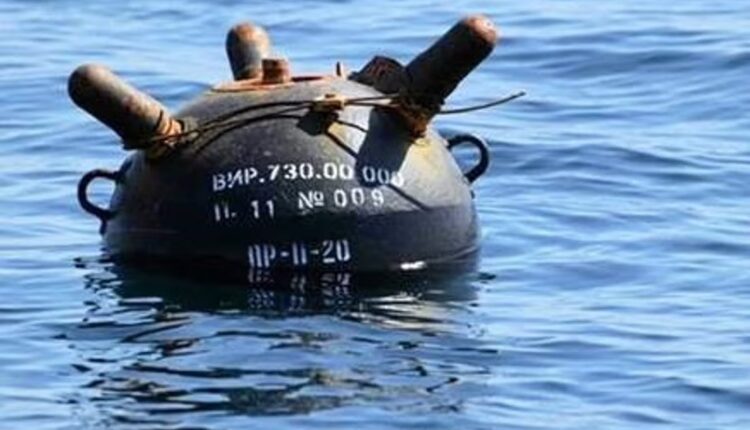
Naval Mines — The Foundation of Iran’s Persistent Maritime Denial Strategy
Iran maintains an estimated inventory of roughly 5,000–6,000 naval mines, making it one of the largest mine stockpiles in the world and giving Tehran the ability to rapidly transform the narrow Strait of Hormuz into a high-risk transit zone for commercial shipping.
The mine inventory reportedly includes contact mines, drifting mines, moored hull-impact mines, acoustic and magnetic influence mines, and limpet mines designed to attach directly to ship hulls, creating multiple detection and clearance challenges for naval forces.
Small boats capable of carrying only two or three mines at a time can deploy large numbers rapidly, allowing widespread seeding of shipping lanes without requiring large naval vessels vulnerable to air or missile strikes.
Midget submarines can also lay mines covertly in shallow waters, enabling Iran to place explosive devices directly inside high-traffic transit corridors where detection is extremely difficult before detonation occurs.
Even the discovery of a single mine forces full mine-countermeasure procedures, including divers, underwater robots, and helicopter-borne detection systems, significantly slowing shipping operations regardless of whether additional mines are present.
Clearance operations are inherently slow because each suspected object must be individually investigated, meaning that a relatively small number of mines can create delays lasting weeks or months under contested conditions.
Past Gulf crises have demonstrated that insurers typically suspend war-risk coverage immediately after mine incidents, which alone can halt tanker traffic even if naval escorts remain available.
Military analysts emphasise that the true effect of Iranian mining is not mass destruction but the creation of uncertainty, forcing shipping companies to avoid the region rather than risk catastrophic loss.
This makes naval mines the lowest-cost and most strategically efficient tool in Iran’s arsenal for achieving long-duration denial without requiring sustained combat operations.

Noor Anti-Ship Missiles — Saturation Strike Capability Along the Iranian Coast
The Noor anti-ship missile, derived from the Chinese C-802 design, provides Iran with a widely produced, mobile, sea-skimming cruise missile capable of threatening vessels across the entire Strait of Hormuz from concealed coastal launch sites.
With a baseline range of approximately 120 km, extending to around 170 km in upgraded variants, the missile allows Iranian batteries positioned along the southern coastline to cover nearly all shipping approaches to the strait.
The missile flies at roughly Mach 0.9 and descends to an altitude of only a few meters above the water in the terminal phase, reducing radar detection time and complicating interception by ship-based air-defence systems.
Guidance combines inertial navigation with active radar homing, enabling the missile to track moving maritime targets and increasing hit probability during coordinated salvo attacks.
A high-explosive semi-armor-piercing warhead weighing approximately 165 kilograms is sufficient to severely damage or disable commercial tankers even without sinking them, which is often enough to halt traffic.
Launch platforms include mobile coastal trucks, fast-attack boats, and naval vessels, giving Iran the flexibility to disperse launchers and reduce vulnerability to pre-emptive strikes.
Because the missile is relatively inexpensive and produced in large numbers, Iran can employ saturation tactics designed to overwhelm shipboard defensive systems through volume rather than precision alone.
The ability to fire salvos from multiple directions simultaneously complicates defensive planning and increases the probability that at least one missile reaches its target.
In a closure scenario, the Noor’s primary role is not long-range strike but persistent harassment that keeps commercial shipping at risk even after initial attacks.
Qader Missiles — Extended-Range Coastal Coverage Across the Gulf Approaches
The Qader missile represents an extended-range evolution of the Noor family, reportedly capable of reaching between 200 and 300 kilometres while maintaining the same sea-skimming cruise profile designed to evade radar detection.
This increased range allows Iranian coastal launchers to threaten not only the Strait of Hormuz itself but also the Gulf of Oman approaches, expanding the denial zone beyond the immediate chokepoint.
The missile retains turbojet propulsion and low-altitude flight characteristics, enabling it to approach targets at high subsonic speed while remaining difficult to track until late in the engagement.
An upgraded warhead estimated at around 200 kilograms increases the destructive potential against tankers, escorts, or mine-countermeasure vessels operating in confined waters.
Mobile launchers can be hidden along the coastline and moved frequently, making pre-emptive neutralisation extremely difficult without continuous surveillance.
Iranian doctrine emphasises using the Qader in combination with shorter-range systems, creating layered missile coverage that forces defending ships to engage multiple threats simultaneously.
The extended reach also allows Iran to target naval forces attempting to clear mines or escort tankers before they even enter the strait.
From an operational perspective, this pushes defending fleets farther away from Iranian shores, reducing the effectiveness of close-in protection for commercial vessels.
The Qader therefore expands the denial envelope and increases the geographic scale of any clearance operation required to reopen the waterway.
Abu Mahdi Cruise Missiles — Long-Range Maritime Strike Beyond Hormuz
The Abu Mahdi cruise missile extends Iran’s maritime strike capability to ranges exceeding 1,000 kilometres, enabling Tehran to threaten naval forces and commercial shipping far beyond the Strait of Hormuz itself.
Reports describe the missile as turbojet-powered and capable of low-altitude sea-skimming flight, allowing it to approach targets while remaining difficult to detect on radar.
Advanced guidance systems, including claimed adaptive navigation features, are intended to improve accuracy against moving maritime targets.
The missile can reportedly be launched from land, sea, or air platforms, increasing the number of potential firing points and complicating defensive planning.
With this range, Iranian forces could threaten shipping in the Arabian Sea or deeper Indian Ocean, forcing escort fleets to operate at greater distances from the strait.
This transforms a local denial scenario into a theatre-wide maritime risk environment, increasing the logistical burden on any coalition attempting to secure oil routes.
Long-range capability also allows Iran to strike support vessels, tankers waiting offshore, or naval staging areas rather than only ships transiting the chokepoint.
The psychological effect of such reach can be as significant as the physical threat, encouraging shipping companies to avoid the region entirely.
In the A2/AD framework, the Abu Mahdi system serves as the outer layer that keeps pressure on naval forces even outside the immediate closure zone.
Khalij Fars Anti-Ship Ballistic Missile — High-Speed Terminal Threat to Naval Forces
The Khalij Fars anti-ship ballistic missile introduces a high-speed, manoeuvring threat designed to complement cruise missiles by forcing defenders to counter both ballistic and low-altitude targets simultaneously.
Derived from the Fateh-110 family, the missile reportedly has a range of around 300 kilometres and uses solid fuel, allowing rapid launch from mobile road-based platforms.
During the terminal phase the missile descends at speeds estimated between Mach 3 and Mach 5, significantly reducing reaction time for shipboard defensive systems.
A steep dive profile combined with manoeuvring capability makes interception difficult, particularly when multiple missiles are launched in sequence.
The warhead, estimated at roughly 650 kilograms, is large enough to inflict severe damage on warships or commercial vessels even without direct penetration.
Road-mobile launchers allow Iranian units to reposition quickly along the coastline, complicating targeting by air or missile strikes.
The system is specifically designed to hit moving maritime targets, which increases its value against escort ships protecting tankers.
By forcing defending fleets to handle high-speed ballistic threats at the same time as cruise missiles and swarm boats, the missile increases defensive complexity.
Within the layered denial concept, the Khalij Fars acts as the high-end threat that raises the risk for naval forces attempting to reopen the strait.
IRGC Fast-Attack Craft Swarm Fleet — Close-Range Saturation and Harassment
The Islamic Revolutionary Guard Corps Navy operates hundreds to more than one thousand small high-speed boats capable of reaching speeds exceeding 50 knots, providing a flexible tool for swarm tactics in confined waters.
Many of these craft are less than 15 metres long and can be armed with rockets, short-range missiles, machine guns, or naval mines, allowing them to perform multiple roles in denial operations.
Swarm doctrine emphasises dispersed attacks from multiple directions rather than large formations, making it difficult for defending ships to track every threat simultaneously.
Fast-attack boats can also lay mines rapidly during combat operations, increasing uncertainty about safe transit routes.
Because the vessels are inexpensive and numerous, losses do not significantly reduce overall capability, allowing Iran to sustain harassment over long periods.
Hidden bases, coves, and small ports along the coastline provide concealment and rapid launch points.
Hit-and-run tactics can target tankers, escorts, or mine-clearance vessels, slowing reopening operations.
Close-range attacks are particularly dangerous in narrow waterways where large ships have limited manoeuvring space.
The swarm fleet therefore forms the inner layer of the denial envelope, ensuring that even ships that survive missile attacks remain at risk.
Ghadir-Class Midget Submarines — Stealth Ambush in Shallow Waters
Iran operates more than twenty Ghadir-class midget submarines designed specifically for shallow, noisy waters such as those in the Persian Gulf.
Each submarine is relatively small, displacing around 120 tons, and equipped with torpedo tubes capable of launching anti-ship weapons or deploying mines.
Their compact size and diesel-electric propulsion make them difficult to detect, especially in warm waters where sonar performance is degraded.
The submarines can remain submerged for extended periods, surfacing only briefly, which complicates tracking.
Mine-laying capability allows covert placement of explosives directly inside shipping lanes.
The vessels can also support special operations divers, adding another layer of risk to clearance missions.
Even the possibility of submarine presence forces escort fleets to allocate significant anti-submarine warfare resources.
This slows mine-clearance operations and reduces the number of ships available for escort duty.
The Ghadir fleet therefore adds a persistent subsurface threat that prolongs any closure scenario.
Shahed Drones and Explosive USVs — Continuous Surveillance and Precision Strikes
Iran’s use of Shahed-family drones provides persistent reconnaissance and targeting capability across the strait, enabling real-time coordination of missile, mine, and swarm attacks.
Loitering munitions and reconnaissance UAVs allow Iranian forces to track ship movements and adjust strikes accordingly.
Explosive unmanned surface vessels, often disguised as civilian boats, can approach targets without immediate detection.
These USVs can carry large warheads and be used in suicide attacks against tankers or escorts.
Because they are cheap and expendable, large numbers can be deployed simultaneously.
Their small radar signature makes them difficult to distinguish from normal maritime traffic.
Combined with drone surveillance, they allow continuous pressure on shipping.
This ensures that threats remain active even when missile launches pause.
The drone-USV combination forms the final layer that maintains round-the-clock denial capability.
Conclusion
Together, mines, missiles, submarines, swarm craft, drones, and unmanned boats form a layered A2/AD envelope that can make commercial shipping through the Strait of Hormuz economically and operationally impossible for extended periods.
Military planners assess that reopening the strait would require sustained, high-risk mine-countermeasure and anti-submarine operations under continuous threat, meaning that even partial activation of these systems could keep the world’s most critical oil chokepoint effectively closed for months.
