Speculation Swirls as Russia’s IL-76 Touches Down in Tehran — Advanced Jets, Missiles, or Drones ?
Unverified Il-76 landings highlight growing Russia-Iran military axis as Tehran seeks to plug its air defence gaps and drone losses in a volatile Middle East.


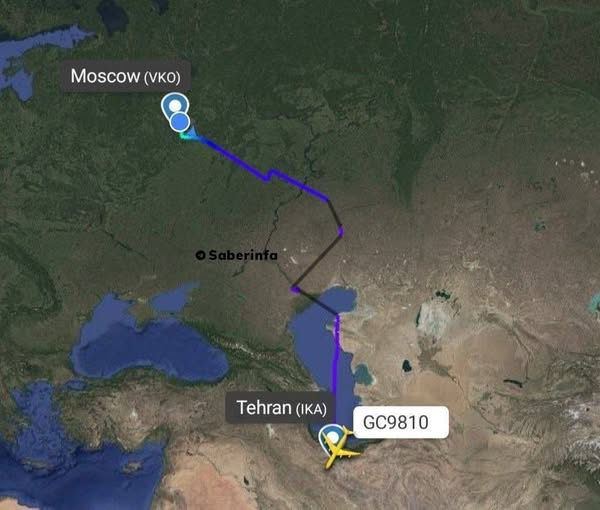
A Russian Ilyushin Il-76 transport aircraft, long synonymous with Moscow’s clandestine military airlifts, has once again drawn the world’s attention after it was tracked landing briefly in Tehran before returning to Russian airspace — fuelling intense speculation over what it might have delivered to its embattled Middle Eastern ally.
According to multiple regional defence analysts, the Il-76’s fleeting presence in the Iranian capital is widely believed to have involved offloading cargo of an undisclosed nature, though no official or independent confirmation has yet emerged to substantiate what precisely was on board.
This latest sighting taps into a broader pattern of similar Il-76 sorties documented throughout 2024, during which Russian airlifters were spotted touching down at Mehrabad Airport for short periods before departing back to Moscow, each visit igniting chatter of covert weapons transfers that have yet to be proven with hard evidence.
Open-source intelligence (OSINT) trackers, now a critical tool for following these shadowy flights, have repeatedly correlated these landings with sudden surges in Iranian air defence readiness, new anti-air deployments near its western border with Israel, or the movement of heavy assets toward sensitive military zones.
While speculation ranges from deliveries of advanced fighter jet components to cutting-edge air defence radars or even stockpiles of Shahed-series drones, veteran security experts warn that the narrative remains riddled with gaps given the lack of satellite imagery or leaked customs manifests to validate claims.
Iran’s longstanding frustration over Moscow’s repeated delays in fulfilling the high-profile sale of Sukhoi Su-35 multirole fighters has only added to the intrigue, with Tehran’s leadership reportedly issuing stark warnings to the Kremlin that further stalling risks eroding trust at a moment when the Islamic Republic’s air combat edge is under relentless Israeli pressure.
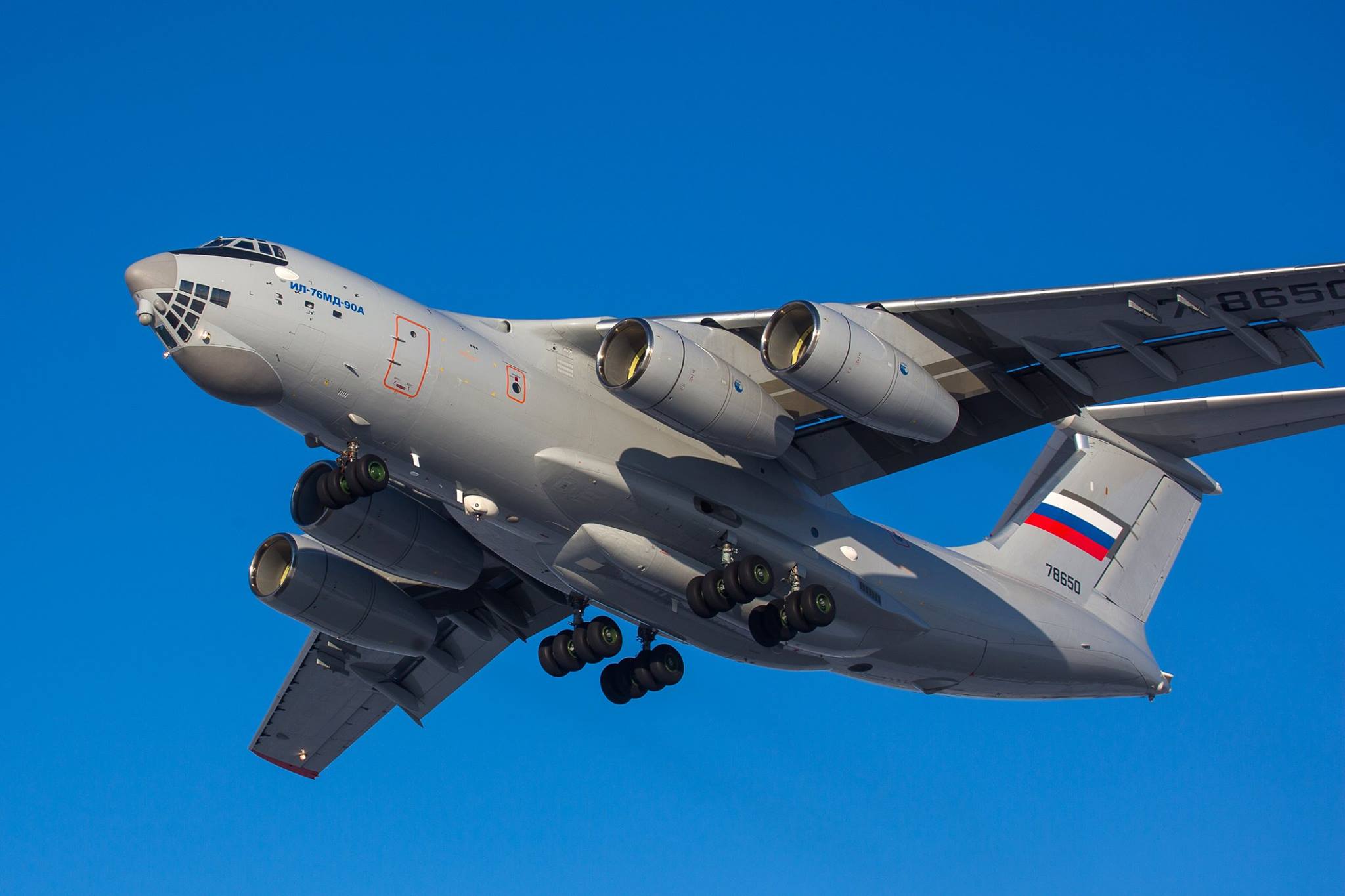
The Il-76, an icon of Soviet-era military lift operations, is prized for its ruggedness and ability to ferry up to 50 tonnes of cargo — including tanks, missile systems, or disaster relief aid — over distances exceeding 4,000 kilometres, even in austere conditions or on unpaved runways.
Originally conceived by the Ilyushin Design Bureau in the late 1960s to serve the Soviet Air Force’s need for a strategic transport aircraft capable of resupplying remote Siberian outposts, the Il-76 made its maiden flight in 1971 and quickly became the backbone of Moscow’s Cold War logistical muscle.
Today, the Il-76 continues to serve as the workhorse for not just Russian forces but also states across Asia, the Middle East and Africa, including Iran, which values its versatility and relative independence from Western sanctions-bound supply chains.
The most recent Tehran touchdown comes at a time when Iran is under mounting pressure to replenish its battered inventory of drones, missile systems, and air defence nodes following devastating precision strikes by Israel during a 12-day flare-up that saw key Quds Force depots and drone assembly sites reduced to rubble.
With much of Iran’s military industry strained by Western sanctions and decades of technology embargoes, Moscow’s ability to step in as a supplier of last resort — whether with Su-35s, S-300 upgrades, or radar enhancements — has become both a lifeline and a source of deepening dependency for Tehran.
Yet this ‘barter-style’ partnership has shown its cracks, with Iran’s defence planners increasingly wary that Russia’s colossal battlefield drain in Ukraine may limit the Kremlin’s capacity to deliver on any new promises, especially high-value systems that are also desperately needed on the Donbas front.
Some military insiders speculate that these Il-76 flights may not be carrying entire weapons platforms but rather crucial spares, replacement radar modules, or electronic warfare (EW) packages designed to maintain Iran’s operational readiness without provoking direct Western retaliation.
Other regional watchers have floated the theory that the flights could also reflect a reciprocal arrangement — with Tehran possibly supplying Moscow with additional batches of Shahed drones or ballistic missiles, re-exporting what it mass-produces to sustain Russia’s embattled forces in Eastern Europe.
This transactional dynamic highlights the murky, high-stakes nature of the Russia-Iran defence axis — a marriage of convenience forged by shared antagonism towards the West, yet frequently tested by mismatched priorities and suspicion over who gains the most from each shipment.
For Israeli strategists, any credible transfer of advanced Su-35 fighters — or even modern long-range air defence systems like the S-400 Triumf — to Tehran would constitute a seismic shift, potentially blunting the Israel Defence Forces’ ability to conduct future precision raids on Iran’s nuclear and missile infrastructure.
This is precisely why the Il-76 landings, however brief, draw the constant gaze of Western satellite constellations and SIGINT units, all hunting for scraps of confirmation that could indicate when a shipment crosses the threshold from spare parts to game-changing hardware.
Yet to date, the absence of ironclad proof means the global defence community must continue to operate in a fog of conjecture, where rumours ripple across social platforms at a pace that often outstrips any ground-truth verification.
For Iran, the urgency could not be more acute — its air defences remain vulnerable, its drone fleet battered by Israeli intercepts, and its aging fighter squadrons increasingly outclassed by regional rivals who benefit from Western next-gen upgrades.
Russia, meanwhile, faces its own constraints, with a defence budget stretched thin by mounting battlefield attrition and the need to maintain credible deterrence along NATO’s eastern flanks, all while sustaining an arms supply pipeline to one of its few dependable partners in the Gulf.
What remains beyond doubt is that these Il-76 sorties, though fleeting, will continue to cast a long shadow over an already volatile Middle East security landscape — a region where every discreet cargo bay and every unverified offload can shift alliances, redraw threat calculations, and fuel the enduring cycle of proxy conflict.
Until satellite imagery, customs leaks, or official disclosures shed light on what lies inside each hold, the Il-76’s roar over Tehran will echo as both a signal of Moscow’s enduring reach and a stark reminder of how fragile, opaque, and transactional modern great-power partnerships have become.
In the months ahead, the question is not only what lands in Iran but whether these hush-hush deliveries translate into meaningful battlefield advantage for Tehran — or whether Iran’s reliance on Moscow, like so many alliances born of sanctions and necessity, proves to be a double-edged sword.
For now, regional capitals from Tel Aviv to Riyadh and intelligence communities in Washington and Brussels will keep scanning the skies for the next flight manifest, because every landing is a clue in the unfolding chess game of Middle Eastern power balances and the ever-evolving Russia-Iran war machine.