
China’s PL-17 Puts Western Tankers and AWACS on Notice
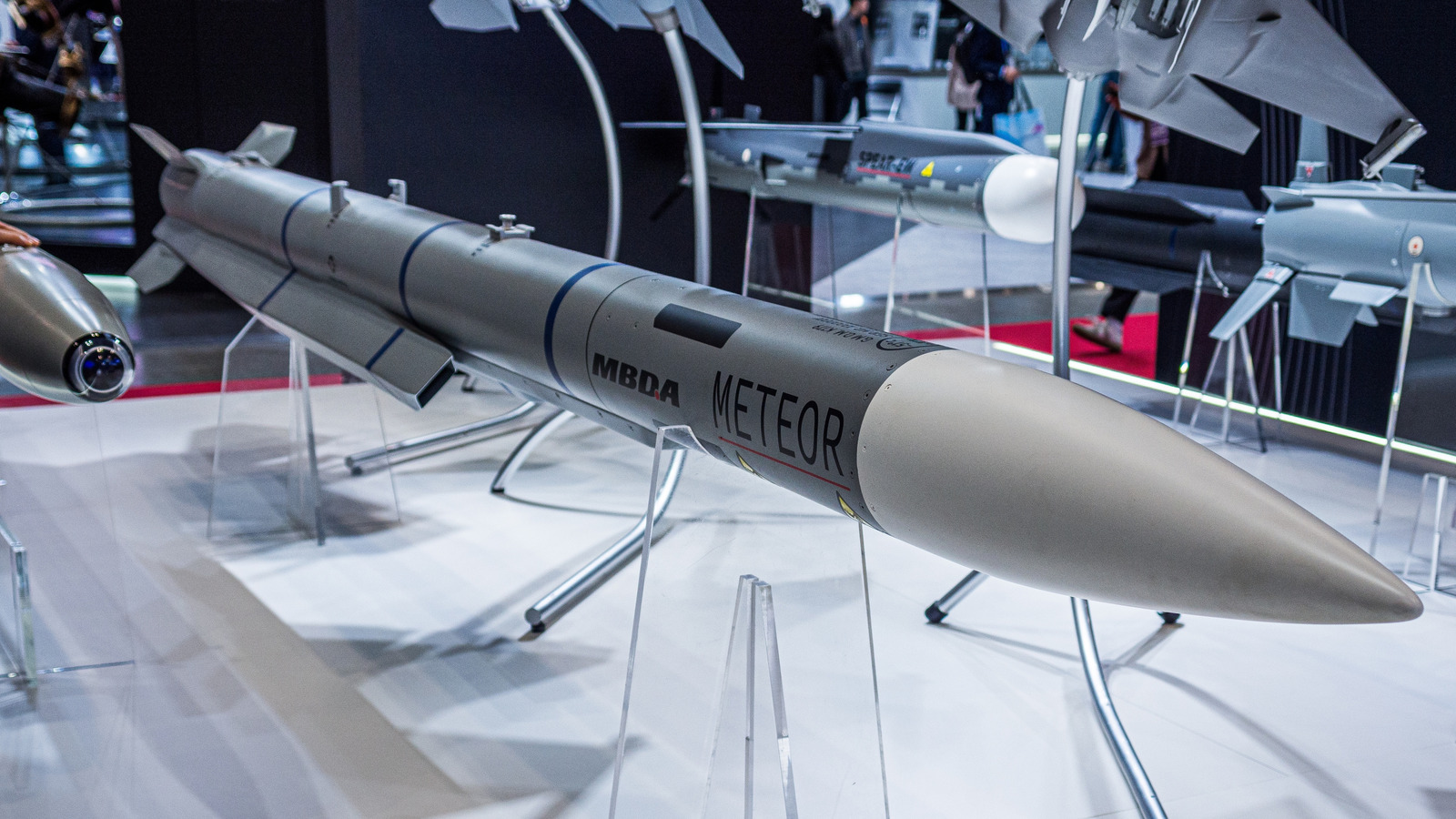
(DEFENCE SECURITY ASIA) — For over a decade, the Meteor developed by six European nations has functioned as the primary long-range air-to-air missile benchmark because its ramjet propulsion equips the Eurofighter Typhoon, Dassault Rafale and Saab Gripen with a large no-escape zone in beyond-visual-range combat.
The throttleable solid-fuel ramjet in the Meteor maintains thrust and energy toward the target, delivering a significantly larger no-escape zone than boost-and-coast missiles such as the AMRAAM or the Chinese PL-15, according to MBDA assessments and analysts.
That advantage has shaped European expectations of air superiority, allowing fighters to threaten manoeuvring aircraft at distances where a conventional missile may have spent much of its energy.
China has now challenged that longstanding advantage through the PL-17, which reportedly reaches past 350 kilometres, and the PL-15, which has entered combat operations, forcing a reassessment of Western air superiority assumptions across the Indo-Pacific.
The PL-17 is designed to threaten tankers and AWACS platforms, critical force multipliers whose loss or withdrawal could alter the logistics footprint required to sustain prolonged air operations in contested theatres.

Even the threat of a long-range launch could push those support aircraft farther from the front line, shortening fighter patrol times and complicating the coordination of air operations across vast maritime distances.
The domestic PL-15 reportedly exceeds 200 kilometres while the export PL-15E reaches approximately 145 kilometres, bringing their stated ranges into comparison with Meteor’s estimated 100–200 kilometre range and changing engagement geometries for regional actors.
The PL-15 achieved its first known combat use in May 2025 during the India-Pakistan confrontation associated with Operation Sindoor, when Pakistani J-10C fighters employed the missile, providing an operational test of Chinese long-range air-to-air technology.
Claims of an approximately 200-kilometre Rafale kill remain disputed, yet the engagement demonstrates how Chinese missile integration on export platforms can rapidly shift local force posture and beyond-visual-range dynamics.
Meteor has undergone extensive testing, including flights involving Brazilian Gripen and F-35B aircraft, but has seen no confirmed combat employment, leaving its performance against peer adversaries unproven in battle.
F-35 integration for Meteor has slipped from mid-decade expectations to the early 2030s amid Block 4 upgrade delays, leaving Western F-35 fleets reliant on AMRAAM for beyond-visual-range engagements in the interim.
The US AIM-260 remains delayed while Russia fields the R-37M, underscoring how long-range air-to-air weapons are becoming central to strategic signalling and operational planning across multiple regions.
Missile range figures alone cannot establish which side holds the advantage, because effective engagements also depend on targeting data, launch conditions, electronic warfare and the missile’s remaining energy as it approaches its target.
On 3 July 2026, the UK Ministry of Defence cancelled the Meteor mid-life upgrade and redirected resources to the Future Air Superiority Effectors programme in a pivot toward a new generation of weapons.
The UK and France launched a 12-month joint successor study under the Lancaster House 2.0 treaty via OCCAR, signalling coordinated European efforts to develop future air superiority effectors and preserve a qualitative edge.
(CLICK): China’s PL-17 Revealed: 400km ‘AWACS-Killer’ Missile Signals Major Shift in Global Airpower Balance
PL-17 Extreme Range Redefines High-Value Airborne Asset Targeting
The PL-17 reaches past 350 kilometres and is engineered to engage tankers and AWACS from standoff distances that keep the launching aircraft outside most opposing engagement envelopes thereby compressing adversary decision cycles in high-intensity scenarios.
This ultra-long reach forces regional air forces to reconsider the protection and dispersal of high-value airborne assets which directly increases the logistics footprint needed to maintain continuous airborne early warning and refuelling coverage across contested airspace.
External carriage of the large PL-17 on platforms such as the J-16 raises the overall radar signature and sustainment demands which alters force posture calculations for operators seeking to maximise standoff capability without internal bay constraints.
The missile’s focus on high-value targets changes the battlespace by enabling pre-emptive disruption of command-and-control networks before close-range fighter engagements even begin thereby reshaping campaign planning assumptions.
Uncertainties remain around the PL-17’s terminal seeker performance and resistance to electronic countermeasures which could limit its effectiveness in heavily jammed electromagnetic environments during high-intensity conflict between peer competitors.
Deployment of the PL-17 represents strategic signalling by China that it now possesses the means to contest Western advantages in long-range air-to-air engagements across the Indo-Pacific region with significant geopolitical consequences.
Adversary planners must now allocate additional resources to counter long-range threats which redistributes budgets away from other capability areas and affects overall force modernisation timelines in multiple theatres.
The PL-17’s range advantage narrows the window for Western support aircraft to operate safely thereby reshaping campaign planning assumptions for sustained air operations in contested airspace across the Indo-Pacific.
This development carries geopolitical impact by encouraging greater emphasis on distributed operations and resilient logistics chains in Indo-Pacific security planning among Western and partner nations.
The emergence of the PL-17 alters the balance of power by extending the reach at which high-value assets can be threatened thereby compressing the decision space available to air campaign planners in future conflicts.
(CLICK): AESA, PL-15E and Electronic Warfare: Why Pakistan’s J-10CE Outpaces Its F-16

PL-15 Combat Debut Validates Chinese Beyond-Visual-Range Integration
The PL-15 achieved its first known combat use in May 2025 during the India-Pakistan Operation Sindoor when Pakistani J-10C fighters launched the missile against Indian aircraft which supplies the initial real-world data on Chinese long-range performance.
Domestic PL-15 variants exceed 200 kilometres while export PL-15E versions reach around 145 kilometres thereby providing range parity or better than the Meteor’s estimated 100-200 kilometre envelope in many engagement scenarios.
This combat employment demonstrates effective integration of Chinese missiles on export fighters and directly shifts local force posture by extending credible beyond-visual-range options for operators previously reliant on shorter-range weapons systems.
Disputed claims of an approximately 200 kilometre Rafale kill illustrate how operational validation of the PL-15 can rapidly alter perceptions of missile credibility even when exact parameters remain contested by involved parties.
The dual-pulse propulsion of the PL-15 supports sustained terminal energy which narrows the kinematic gap with ramjet systems and raises questions about probability of kill in dynamic beyond-visual-range fights.
Combat use of the PL-15 changes the battlespace by supplying empirical evidence that Chinese long-range missiles can function effectively when cued by networked sensors on platforms like the J-10C in real operations.
Regional actors observing the May 2025 engagement must now factor Chinese missile combat performance into their own force posture and training assumptions for potential future conflicts in the Indo-Pacific.
Logistics for the PL-15 benefit from compatibility with existing fighter pylons which reduces the additional sustainment burden compared to larger systems while still extending engagement reach significantly.
The debut provides strategic signalling that Chinese missile technology has reached a level capable of influencing air superiority calculations in the Indo-Pacific and beyond with lasting consequences.
Uncertainties around launch conditions and target reactions in the 2025 engagement leave room for continued analysis of overall system effectiveness under varying electronic warfare conditions in future scenarios.
(CLICK): IAF Rafale Finally Revealed with Meteor Missile During Republic Day 2026 Flypast, Ending Years of Speculation
Meteor Ramjet Propulsion Sustains No-Escape Zone Advantage
The throttleable solid-fuel ramjet in the Meteor maintains thrust and energy all the way to the target which delivers a significantly larger no-escape zone than boost-and-coast designs such as the AMRAAM or PL-15 according to MBDA and analysts.
This sustained propulsion mechanism allows the missile to retain manoeuvring energy against evasive targets at extended ranges where traditional rocket motors have already depleted their boost phase completely.
The ramjet advantage keeps Meteor competitive even as Chinese missiles achieve comparable maximum ranges because terminal-phase energy directly influences probability of kill in beyond-visual-range scenarios.
Integration of the Meteor on Typhoon, Rafale and Gripen platforms supports flexible force posture options that leverage unique energy retention characteristics across multiple European and partner air forces effectively.
Despite range estimates placing Meteor in the 100-200 kilometre class its kinematic performance continues to set the benchmark for Western long-range air-to-air weapons in contested engagements.
The absence of combat employment for Meteor contrasts with the PL-15 debut and leaves its real-world no-escape zone performance dependent on simulation and limited testing data alone.
Logistics for the Meteor involve coordinated sustainment across six European nations which spreads the burden but also requires aligned production and upgrade schedules among partner countries consistently.
The ramjet design reduces the need for oversized missile bodies compared with dual-pulse systems thereby preserving options for internal carriage on future stealth platforms effectively.
Strategic implications of the Meteor’s continued relevance include its role in deterring adversary long-range shots by maintaining credible counter-engagement capability at ranges where boost-and-coast missiles lose energy rapidly.
Justin Bronk assessments note that the Meteor retains a significantly larger no-escape zone which influences how planners balance range against terminal effectiveness when allocating resources between competing systems.
F-35 Integration Delays Expose Western Long-Range Gaps
F-35 integration for the Meteor has slipped from mid-decade targets to the early 2030s linked to Block 4 upgrades which leaves Western F-35 fleets carrying shorter-range AMRAAM during the interim period.
This delay affects overall force posture by limiting the ability of stealth platforms to employ the ramjet missile that currently provides the largest no-escape zone in the Western inventory.
The delayed US AIM-260 and ongoing fielding of Russia’s R-37M demonstrate that the long-range air-to-air category is no longer a Western monopoly and this shift carries implications for strategic signalling in multiple theatres.
Interim reliance on AMRAAM forces F-35 operators to accept reduced engagement envelopes until Meteor or successor systems achieve full integration on stealth platforms.
The slippage in Meteor F-35 compatibility changes logistics planning because aircraft must operate with mixed loadouts that balance stealth requirements against extended-range needs consistently.
Strategic signalling from delayed Western programs contrasts with rapid Chinese fielding of both the PL-17 and PL-15 which influences adversary perceptions of capability timelines in the Indo-Pacific.
Force posture adjustments across NATO and partner nations will likely include accelerated development of alternative long-range options to bridge the integration gap created by the Block 4 timeline.
The extended timeline for Meteor on F-35 compresses the window for maintaining qualitative edges in beyond-visual-range combat against peer competitors equipped with newer Chinese systems.
Uncertainties around final Meteor F-35 software integration and weapons-bay compatibility add programme risk to long-term planning for fifth-generation air superiority missions.
The situation highlights how platform integration challenges can erode the practical benefits of advanced missiles like the Meteor even when underlying propulsion advantages remain intact.
On 3 July 2026 the UK Ministry of Defence cancelled the Meteor mid-life upgrade and redirected investment to the Future Air Superiority Effectors programme in recognition that incremental improvements would no longer suffice against evolving threats.
The decision shifts resources away from extending the current Meteor toward a clean-sheet successor designed to address limitations exposed by Chinese PL-17 and PL-15 developments effectively.
The UK and France launched a 12-month joint successor study under the Lancaster House 2.0 treaty via OCCAR which coordinates European efforts to develop next-generation long-range air-to-air effectors.
This strategic pivot acknowledges that ramjet advantages alone may prove insufficient against missiles optimised for extreme range and high-value asset suppression roles in future conflicts.
Cancellation of the mid-life upgrade affects existing Meteor stockpiles and sustainment planning across Typhoon, Rafale and Gripen operators who continue to rely on the current system.
The move toward Future Air Superiority Effectors carries implications for force posture because new systems must integrate with both crewed and uncrewed platforms in evolving air campaigns.
Logistics considerations for the successor programme include requirements for scalable production and lower per-unit costs compared with the current Meteor which remains relatively expensive to procure and maintain.
The joint study under Lancaster House 2.0 signals strengthened European cooperation on complex weapons while addressing identified gaps in very long-range air-to-air capabilities.
Uncertainties remain around the exact technical specifications and development timelines for the Future Air Superiority Effectors which will determine how quickly qualitative edges can be restored.
The cancellation represents a direct response to Chinese advances that have narrowed previous Western leads in the long-range air-to-air domain across the Indo-Pacific with lasting geopolitical consequences.
This development will influence regional security planning as allies assess how quickly next-generation effectors can re-establish credible no-escape zone advantages against peer missile systems in contested environments.
