
Singapore’s P-8A–G550 Surveillance Shield Changes the Indo-Pacific Balance
Singapore’s four P-8A Poseidons, three G550 maritime-surveillance aircraft and four G550 airborne early-warning jets will create a layered sensor-to-shooter network spanning the Malacca Strait and South China Sea approaches.
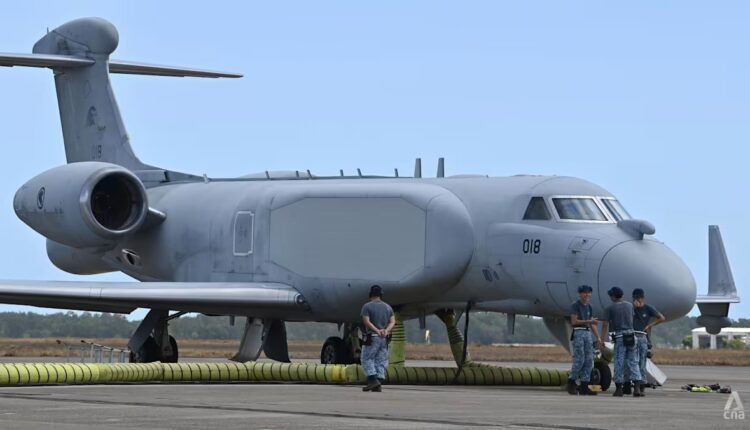
(DEFENCE SECURITY ASIA) — Singapore is constructing one of Southeast Asia’s most sophisticated airborne surveillance architectures, combining four operational G550 airborne early-warning aircraft, three planned G550 maritime-surveillance jets and four P-8A Poseidons into a network designed to detect, classify and prosecute threats.
The eleven-aircraft force represents more than fleet renewal because it connects persistent wide-area sensing, airborne battle management and armed anti-submarine warfare, giving the city-state a layered response mechanism across the congested approaches linking the Malacca Strait and South China Sea.
That architecture replaces the limited reach of Singapore’s ageing Fokker 50 fleet with jet-powered platforms capable of arriving faster, operating higher and remaining farther from base, thereby widening the geographic area that commanders can monitor before suspicious activity reaches critical waterways.
Four G550-AEWs provide the aerial surveillance and command layer, three unarmed G550-MSAs will maintain the surface picture, and four armed P-8As will investigate or prosecute submarine contacts, creating an efficient sensor-to-shooter chain rather than three disconnected aircraft fleets.
The procurement is driven by geography because Singapore’s security and economic survival depend upon uninterrupted sea lines of communication passing through waterways vulnerable to blockade, grey-zone coercion, piracy, submarine activity, undersea-infrastructure disruption and spillover from a wider regional conflict.
Defence Minister Chan Chun Sing has described the approach as combining high-end platforms with complementary systems for persistent coverage at acceptable cost, framing the programme as a force-design decision that reserves expensive combat capacity for missions demanding advanced acoustic sensors or weapons.
Singapore selected four Boeing P-8A Poseidons in September 2025, while the United States approved a $2.316 billion Foreign Military Sale in January 2026 covering aircraft, eight MK 54 Mod 0 torpedoes, mission systems, defensive equipment, training and support.
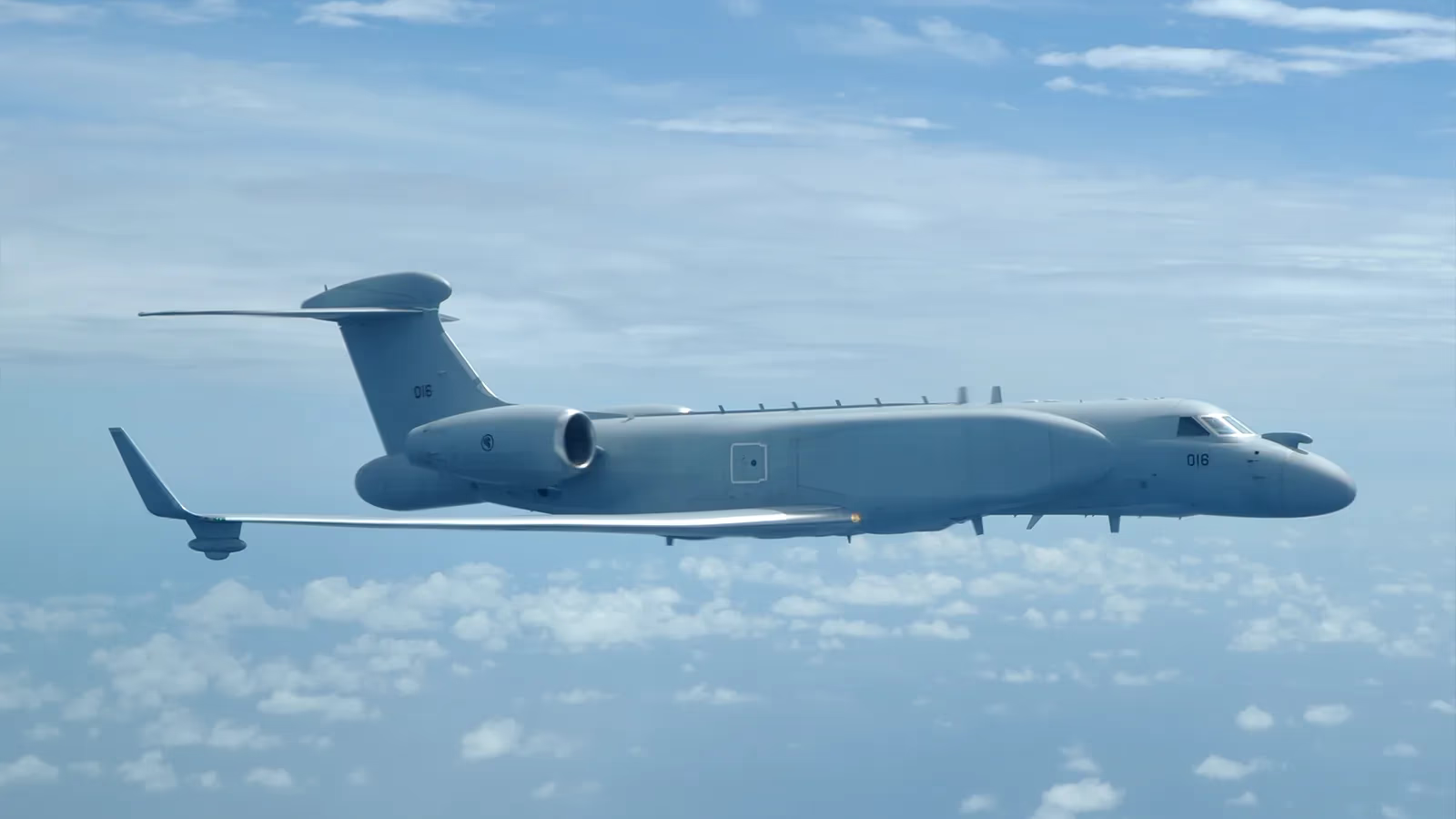
The three-aircraft G550-MSA acquisition, announced on 27 February 2026, adds a persistent but unarmed surveillance tier sharing an airframe with Singapore’s existing AEW fleet, reducing training and sustainment complexity while expanding maritime early warning beyond coastal and shipborne radar horizons.
Together, these investments transform maritime domain awareness from periodic patrol coverage into a continuously refreshed operational picture that can cue fighters, warships, helicopters and unmanned systems, although disclosed information does not establish whether every platform will exchange targeting-quality data under all operational conditions.
The resulting force posture strengthens Singapore’s national self-reliance while increasing interoperability with P-8 operators including the United States, Australia, India, New Zealand, Britain and South Korea, making Singapore a more capable information node without converting it into a treaty ally.
Beijing may nevertheless view improved surveillance near routes connecting the South China Sea and Malacca Strait through the prism of submarine vulnerability, particularly because China previously objected to rotational American P-8 deployments from Singapore and regards these maritime approaches as strategically consequential.
The fleet will not independently overturn the Indo-Pacific military balance, but its ability to reduce ambiguity, accelerate contact classification and support coordinated responses raises the operational cost of covert activity while reinforcing Singapore’s carefully balanced posture between American security cooperation and Chinese economic engagement.
(CLICK HERE): Singapore’s Six Type 218SG Submarines Shift Indo-Pacific Power Balance
G550-AEW Extends Singapore’s Air-Defence Horizon
Singapore’s four G550-AEW aircraft, operated by 111 Squadron from Tengah Air Base, entered service between 2009 and 2011 before achieving full operational capability in April 2012, replacing four E-2C Hawkeyes with a faster, higher-flying and longer-endurance command platform.
Israel Aerospace Industries and Elta Systems adapted the Gulfstream airframe around the EL/W-2085 conformal airborne early-warning suite, eliminating a rotating rotodome while using electronically scanned arrays to create rapid, multidirectional surveillance with less aerodynamic penalty than conventional large-radar configurations.
L-band arrays mounted along the fuselage sides and S-band arrays in the nose and tail deliver 360-degree coverage, while electronic beam steering permits target updates every two to four seconds, programmable search patterns and resistance against electronic jamming or interception.
Singapore states that the system detects aerial targets beyond 200 nautical miles, or 370 kilometres, while broader published figures for the radar family indicate approximately 450 kilometres and up to 1,000 simultaneous tracks, although those maximums are not confirmed operational RSAF performance.
Its integrated identification-friend-or-foe, electronic-intelligence and communications-intelligence equipment fuses radar and emitter data into a recognised picture, enabling operators to distinguish threats, reduce false alarms and manage interceptions rather than merely reporting isolated radar plots to ground controllers.
Six Air Warfare Officers occupy multipurpose mission stations, supported by multi-band radios, satellite communications and Link 16-compatible tactical connectivity, allowing the aircraft to coordinate F-15SGs, F-16s and incoming F-35s with ground radars and command nodes across Singapore’s networked air-defence system.
With nine hours of endurance, Mach 0.82 speed and a 41,000-foot ceiling, the G550-AEW can reposition rapidly and exploit altitude for radar horizon, generating strategic depth that Singapore’s narrow territory cannot obtain through fixed sensors positioned solely within national boundaries.
The aircraft’s radar can also detect maritime surface contacts, enabling the AEW fleet to contribute warning against low-flying aircraft or unexpected activity over water while supporting the wider recognised maritime picture that the dedicated G550-MSA and P-8A will deepen.
Deployments to large multinational exercises, including complex Australian air-warfare training, expose crews to force packages exceeding forty aircraft and allied command procedures, strengthening coalition interoperability that Singapore’s constrained domestic airspace cannot reproduce at operationally meaningful scale.
Four aircraft do not guarantee uninterrupted coverage after accounting for maintenance, training and contingency reserves, but their established readiness, self-protection equipment and battle-management role provide the command layer upon which Singapore’s expanding maritime surveillance architecture can connect detection with timely response.

G550-MSA Creates the Persistent Maritime Surveillance Layer
The three planned G550-MSA aircraft address a different operational problem by sustaining wide-area maritime surveillance and early warning without consuming P-8A flying hours, preserving the armed platform for demanding anti-submarine, long-range investigation or higher-risk missions requiring specialised payloads.
Singapore identifies maritime radar, electro-optical and infrared sensors, Automatic Identification System reception, integrated communications and self-protection equipment as core systems, creating day-and-night capacity to correlate declared shipping identities with sensor detections and expose anomalous behaviour in crowded sea lanes.
The aircraft is unarmed, making detection, identification, classification and cueing its principal functions; this division of labour reduces routine operating demands on the P-8A while allowing combat-capable assets, naval vessels or unmanned systems to investigate contacts selected through persistent surveillance.
Operating at Mach 0.82, approximately 40,000 feet and for nine hours, the G550-MSA can cross Singapore’s maritime approaches quickly, remain above much weather and extend its sensor horizon beyond turboprop performance, although altitude does not eliminate exposure to sophisticated long-range air defences.
Using the same 29.8-metre G550 airframe as the AEW fleet creates commonality in pilot training, maintenance processes, spares and ground infrastructure, producing a smaller logistics footprint than introducing another aircraft family and potentially improving mission availability across seven special-purpose jets.
Singapore has not disclosed the systems integrator, radar model, delivery schedule or unit price, and visual similarities to IAI’s conformal special-mission designs support analysis rather than confirmation, requiring clear separation between announced capabilities and assumptions concerning classified sensor performance.
If configured like IAI’s ELI-3150 multi-mission architecture, the aircraft could combine active electronically scanned radar, synthetic-aperture imagery, moving-target indication, signals intelligence and multisensor fusion, but Singapore has not confirmed this configuration and operational conclusions must therefore remain conditional.
Its central value lies in persistence: a G550-MSA could maintain the broad surface picture while a P-8A descends or manoeuvres to deploy sonobuoys, preventing the surveillance network from narrowing around one submarine prosecution and leaving surrounding maritime activity insufficiently observed.
The G550-MSA can also support grey-zone monitoring by documenting unusual vessel patterns, electronic emissions or deviations from Automatic Identification System reporting, providing commanders with a longer evidentiary timeline before deciding whether activity represents navigation, coercion, intelligence collection or preparation for disruption.
Because Gulfstream ended G550 production in 2021, the programme is expected to depend upon existing or stored airframes for conversion, introducing uncertainty around acquisition and refurbishment timelines but retaining a proven platform whose operational commonality offers Singapore measurable sustainment advantages.
P-8A Poseidon Brings Long-Range Anti-Submarine Lethality
The P-8A Poseidon supplies the combat element missing from Singapore’s legacy Fokker 50 force, combining wide-area radar surveillance, acoustic processing and lightweight torpedoes aboard a Boeing 737-derived jet able to search distant waters and prosecute underwater contacts within one mission cycle.
Singapore’s package includes the AN/APY-10 multi-mode radar with surface-search, synthetic-aperture, inverse-synthetic-aperture and periscope-detection modes, allowing crews to detect small contacts amid maritime clutter, generate detailed imagery and build tracks beyond the identification capacity of older patrol systems.
An MX-20HD electro-optical and infrared turret enables day-and-night visual classification, while the AN/AQQ-2(V) acoustic system can process information from more than one hundred active and passive sonobuoys, converting the aircraft from a surveillance platform into a genuine anti-submarine warfare system.
The P-8A carries 129 sonobuoys and initially receives eight MK 54 Mod 0 lightweight torpedoes, giving Singapore an airborne mechanism to localise and attack submarines, although four aircraft and eight disclosed weapons represent a focused capability rather than unlimited wartime depth.
Its five-station internal weapons bay and six external hardpoints provide growth capacity for additional maritime payloads, but Singapore has not publicly confirmed Harpoon, naval-mine or longer-range missile acquisition, making any assumption about future anti-ship strike configurations premature.
Defensive equipment, including missile-warning sensors, laser-based infrared countermeasures and dispensers, improves survivability during exposed operations, yet the aircraft’s commercial-airliner lineage and non-stealthy signature still favour missions supported by friendly fighters, standoff geometry and controlled airspace during high-intensity conflict.
With a range exceeding 1,200 nautical miles, more than four hours of time on station at that distance, aerial-refuelling provision and a ceiling above 40,000 feet, the Poseidon expands Singapore’s operational reach far beyond coastal surveillance and legacy turboprop endurance.
Speed shortens the interval between cue and investigation, a decisive advantage when a submarine contact may disappear beneath changing acoustic conditions, while onboard processing lets the crew correlate radar, optical, electronic and sonobuoy information before transmitting an actionable track across the network.
Interoperability with numerous P-8 operators supports common training, mission planning, logistics and information exchange, while rotational American and Australian Poseidon operations from Singapore provide an existing foundation for cooperation without proving that Singaporean aircraft will participate in every coalition contingency.
No firm delivery dates have been announced, and typical procurement timelines suggest arrival in the late 2020s or early 2030s; until then, strategic assessments must distinguish the future force’s substantial potential from capabilities currently available to Singaporean commanders.
A Networked Sensor-to-Shooter Chain Changes the Battlespace
The operational advantage emerges from division of labour: G550-AEW crews manage the air picture, G550-MSAs sustain broad surface surveillance, and P-8As conduct detailed acoustic searches or armed prosecution, ensuring each scarce platform performs missions aligned with its sensors, endurance and cost.
A likely engagement chain begins when an airborne radar or electronic sensor identifies an anomaly, after which the network classifies and distributes the track before cueing a Poseidon, frigate, Seahawk helicopter or unmanned vehicle for closer investigation and possible engagement.
Secure radios, satellite communications and tactical data links are expected to feed a common recognised maritime picture, but precise connectivity, data latency and rules governing targeting-quality transfers remain undisclosed, preventing confident claims that every sensor can cue every weapon automatically.
Republic of Singapore Navy Formidable-class frigates and incoming Multi-Role Combat Vessels could receive airborne tracks, while shipborne S-70B Seahawks, Hermes 900 unmanned aircraft, coastal radars and fixed Giraffe 1X sensors contribute local detail to a distributed multi-domain surveillance grid.
The Multi-Role Combat Vessels are intended to operate unmanned surface, aerial and underwater systems, allowing high-altitude aircraft to cue lower-cost sensors toward suspicious areas while receiving local observations that refine classification across air, surface and subsurface operating environments.
This architecture reduces surprise by widening detection range and compressing the sequence from initial contact to command decision, but effectiveness will depend upon communications resilience, identification confidence, aircraft availability and the ability to preserve data links under electronic warfare or cyber disruption.
The high-low force mix also manages operating costs because G550-MSAs can handle routine maritime awareness while Poseidons remain available for acoustic prosecution, preventing expensive ASW capacity from being exhausted through missions that require persistence but neither torpedoes nor intensive acoustic processing.
For search-and-rescue, piracy response and undersea-infrastructure protection, the network can combine wide-area detection with rapid localisation, helping authorities direct ships or aircraft efficiently while maintaining surveillance for secondary threats, accomplice vessels or activity designed to distract responders from another objective.
Accurate airborne tracks could support longer-range naval weapons such as Blue Spear aboard Singaporean frigates, but sensor detection alone does not guarantee lawful or technically sufficient targeting because identification, track continuity, engagement authority and collateral-risk assessment remain indispensable stages.
The battlespace consequently changes through decision advantage rather than platform numbers alone: Singapore gains more time to interpret ambiguous behaviour, allocate appropriate forces and coordinate responses, making covert penetration or coercive signalling harder even when no weapon is ultimately released.
(CLICK HERE): Singapore’s $4.059 Billion F-35 Power Shift Reshapes Indo-Pacific Airpower
Malacca Strait Surveillance Carries Indo-Pacific Consequences
Singapore sits beside the eastern entrance to the Malacca Strait, making maritime surveillance inseparable from national survival because disruption to trade, energy flows, port access or undersea communications would impose immediate economic costs while transmitting shocks across East Asian supply chains.
The enlarged fleet pushes awareness beyond Singapore’s coastal radar horizon into approaches connecting the Indian Ocean and South China Sea, improving warning against submarines, surface vessels, low-flying aircraft and irregular activity before those contacts enter the narrowest and most congested waterways.
For Malaysia and Indonesia, the development offers potential shared awareness around a jointly consequential chokepoint while also producing a qualitative capability increase by Singapore, requiring confidence-building and operational deconfliction to prevent surveillance activity from generating unnecessary suspicion among neighbouring littoral states.
The P-8A also strengthens practical compatibility with Five Power Defence Arrangements partners, many of which operate or have ordered the aircraft, supporting common anti-submarine procedures and exercises while preserving the arrangement’s defensive character rather than creating a new collective-war-fighting commitment.
From Washington’s perspective, another capable P-8 operator near a critical chokepoint contributes limited burden-sharing and additional regional sensing, although Singapore remains a Major Security Cooperation Partner rather than a treaty ally and retains sovereign control over missions, intelligence and access.
From Beijing’s perspective, improved detection around the Malacca and South China Sea approaches may complicate submarine concealment and strategic movement, even if Singapore presents the acquisition as national defence rather than alignment against China or participation in American containment policy.
Singapore’s supplier mix reinforces that balanced posture: American P-8As provide widely interoperable anti-submarine capability, while Israeli-designed G550 systems diversify technology sources, reducing total dependence on one partner and preserving political room within intensifying United States–China strategic competition.
The programme also supports Singapore’s longstanding emphasis on freedom of navigation and an open maritime order without requiring territorial claims in the South China Sea, translating diplomatic interest into sovereign capacity to understand events affecting sea lines essential to its economy.
Four Poseidons and three new surveillance jets cannot dominate the Indo-Pacific or neutralise larger submarine fleets, and maintenance demands will limit simultaneous sorties, but they can raise uncertainty for potential intruders and improve coalition awareness during exercises, emergencies or escalating regional crises.
Singapore is therefore becoming a denser, more resilient surveillance node rather than an offensive maritime hegemon, using logistics commonality, layered force posture and networked sensors to protect strategic waterways while signalling preparedness, technological competence and continued geopolitical autonomy amid sharpening great-power rivalry.
