Pakistan Unleashes Massive 18% Defence Procurement Surge as J-35 Stealth Fighter, Hangor Submarine Programs Accelerate
Islamabad’s record US$10.8 billion military procurement expansion signals an accelerated Chinese-backed force modernisation drive involving J-35 stealth fighters, Hangor-class submarines, advanced missile defence systems and next-generation air combat capabilities amid intensifying regional tensions with India.

(DEFENCE SECURITY ASIA) — Pakistan’s decision to raise funding for defence physical assets by nearly 18 percent in its FY2026-27 federal budget represents the most aggressive military procurement acceleration undertaken by Islamabad since the aftermath of the 2019 India-Pakistan aerial confrontation.
The Rs3 trillion ($10.8 billion ) allocation for arms, ammunition, military equipment, and related acquisitions indicates that Pakistan’s military leadership is prioritising rapid force modernisation despite sustained International Monetary Fund-linked fiscal constraints.
The defence allocation emerged directly from Pakistan Finance Minister Muhammad Aurangzeb’s federal budget presentation in the National Assembly on June 12, reinforcing the government’s strategic intention to strengthen conventional deterrence capabilities against mounting regional security pressures.
Pakistan’s total defence allocation climbed to Rs3 trillion (US$10.8 billion), representing an increase of approximately 17.65 percent from the previous fiscal allocation of Rs2.55 trillion.
The larger increase allocated toward physical assets demonstrates a deliberate restructuring of Pakistan’s defence expenditure priorities away from personnel-heavy spending patterns that dominated previous budget cycles.
The shift follows Pakistan’s military confrontation with India during the 2025 crisis, where Chinese-origin systems including the J-10C multirole fighter and PL-15 beyond-visual-range missile reportedly gained operational combat validation under contested air combat conditions.
Finance Minister Muhammad Aurangzeb stated that defence spending had been increased “considerably to make the country invincible due to the uncertainty in the region,” directly linking the procurement expansion to deteriorating regional security conditions.
Aurangzeb additionally praised Pakistan’s armed forces for their “decisive response to India’s aggression” during the previous year’s confrontation, indicating that the budget increase carries both strategic signalling and operational lessons-learned implications.
The budget expansion also reflects Pakistan’s growing concern regarding India’s accelerating force modernisation trajectory, including Rafale fighter induction, indigenous ballistic missile defence development, and expanding Indian naval power projection capabilities across the Arabian Sea.
Pakistan’s defence establishment simultaneously faces intensifying pressure along the Afghan border, where militant violence and cross-border instability continue consuming operational resources and stretching force readiness requirements.
The budget demonstrates that Islamabad is attempting to preserve military modernisation momentum while remaining compliant with IMF fiscal discipline targets requiring a two percent GDP primary surplus under the ongoing economic stabilisation programme.
Pakistan’s defence expenditure now represents approximately 2.08 percent of projected GDP, calculated against an estimated national economic output of Rs143.6 trillion during FY2026-27.
China-Backed Procurement Surge Reshapes Pakistan’s Military Architecture
Pakistan’s expanded physical assets allocation is expected to directly support multiple high-value Chinese defence procurement programmes that collectively represent the largest military modernisation effort undertaken by Islamabad in more than two decades.
China has emerged as Pakistan’s overwhelmingly dominant strategic supplier, accounting for approximately 80 percent of Pakistan’s major arms imports between 2021 and 2025 according to international defence trade assessments.
The procurement relationship extends beyond conventional acquisitions because Beijing increasingly provides technology transfer arrangements, favourable financing structures, and industrial cooperation unavailable through most Western defence suppliers.
The centrepiece of Pakistan’s naval modernisation remains the US$4 billion to US$5 billion (RM15.2 billion to RM19 billion) Hangor-class submarine acquisition programme based upon China’s Type 039A Yuan-class air-independent propulsion submarine design.
The programme involves four submarines constructed in China and four assembled domestically at Karachi Shipyard and Engineering Works, significantly enhancing Pakistan’s indigenous submarine production and maintenance capabilities.
Pakistan commissioned the first submarine, PNS Hangor, in Sanya on April 30, 2026, while the platform arrived in Karachi on June 11, marking the beginning of a phased operational deployment cycle extending into the late 2020s.
The Hangor-class programme dramatically strengthens Pakistan’s anti-surface warfare and anti-submarine warfare posture across the Arabian Sea by increasing underwater endurance, survivability, and cruise missile deployment potential.
The submarine acquisition substantially complicates Indian naval planning because it expands Pakistan’s ability to threaten Indian carrier strike groups, maritime logistics routes, and forward-deployed naval assets operating near the western Indian Ocean.
Pakistan’s air combat modernisation similarly accelerated through the acquisition of 36 Chinese J-10C multirole fighters equipped with PL-15 long-range air-to-air missiles capable of engaging targets beyond conventional engagement envelopes.
Twenty J-10C fighters had reportedly been delivered by May 2025, while remaining deliveries are expected to conclude during early 2026 under existing bilateral procurement arrangements.
Pakistan’s military leadership increasingly views Chinese-origin combat systems as strategically validated following their operational deployment during the 2025 India-Pakistan military confrontation, where Islamabad claims the systems performed effectively under combat conditions.
Summary Analysis and Context
| Procurement Program | Supplier | Scale | Estimated Contract Value | Status (Mid-2026) | Core Military Capability | Strategic and Geopolitical Impact |
|---|---|---|---|---|---|---|
| Hangor-Class AIP Submarines | China | 8 diesel-electric attack submarines based on Type 039A Yuan-class design | US$4–5 billion (RM15.2–19 billion) | First submarine PNS Hangor commissioned on 30 April 2026 in Sanya and arrived in Karachi on 11 June 2026, while additional submarines remain under phased construction and launch cycles through the late 2020s | Long-endurance undersea warfare, anti-surface warfare, anti-submarine warfare, possible land-attack cruise missile deployment capability | Expands Pakistan Navy’s underwater deterrence posture against India’s growing carrier strike and maritime surveillance capabilities while deepening long-term Pakistan-China naval-industrial cooperation through technology transfer and local assembly at Karachi Shipyard |
| J-10C Multirole Fighters | China | 36 advanced multirole fighters across two procurement batches | Multi-billion-dollar acquisition programme | Approximately 20 aircraft reportedly delivered by May 2025, with remaining deliveries expected to conclude during early 2026 under existing bilateral procurement arrangements | Beyond-visual-range air combat, network-centric warfare, PL-15 long-range missile integration, multi-role strike capability | Strengthens Pakistan Air Force qualitative combat edge against India’s Rafale fleet while operational deployment during the 2025 India-Pakistan confrontation reportedly validated Chinese-origin air combat systems under real-world contested battlespace conditions |
| J-35 Stealth Fighters + KJ-500 AEW&C + HQ-19 Missile Defense Package | China | Approximately 40 fifth-generation stealth fighters alongside airborne early warning aircraft and strategic missile defense systems | Multi-billion-dollar strategic procurement package financed through potential Chinese credit arrangements | Pakistan confirmed the offer during June 2025 and reportedly signed an initial collaborative agreement by May 2026, while phased induction timelines remain undisclosed but accelerated delivery discussions continue | Fifth-generation stealth warfare, integrated air and missile defense, airborne command-and-control, survivable network-centric operations | Could transform Pakistan into the first foreign operator of a Chinese fifth-generation stealth fighter while significantly increasing pressure upon India’s AMCA programme and strengthening Islamabad’s anti-access and integrated air defense architecture |
| HQ-9/P Long-Range Surface-to-Air Missile System | China | Multiple operational air defense batteries | Partially integrated into wider Chinese defense procurement arrangements | Operationally deployed since 2021 and reportedly used during the 2025 India-Pakistan military confrontation | Layered long-range air defense, aircraft interception, cruise missile engagement, strategic asset protection | Enhances Pakistan’s layered integrated air defense network against Indian combat aviation and long-range strike systems while supporting broader Chinese-origin command-and-control architecture across Pakistan’s military ecosystem |
| HQ-19 Advanced Ballistic Missile Defense System | China | Strategic anti-ballistic missile defense batteries | Included within broader J-35 strategic package discussions | Still under negotiation and pipeline planning stages, with reports indicating accelerated induction discussions potentially beginning during 2026 | Ballistic missile interception, anti-hypersonic defense, hit-to-kill strategic missile defense capability | Represents a potential strategic leap in Pakistan’s missile defense architecture by introducing long-range anti-ballistic interception capability capable of challenging India’s expanding missile inventory and regional strategic deterrence posture |
J-35 Stealth Fighter Deal Could Trigger South Asian Airpower Shift
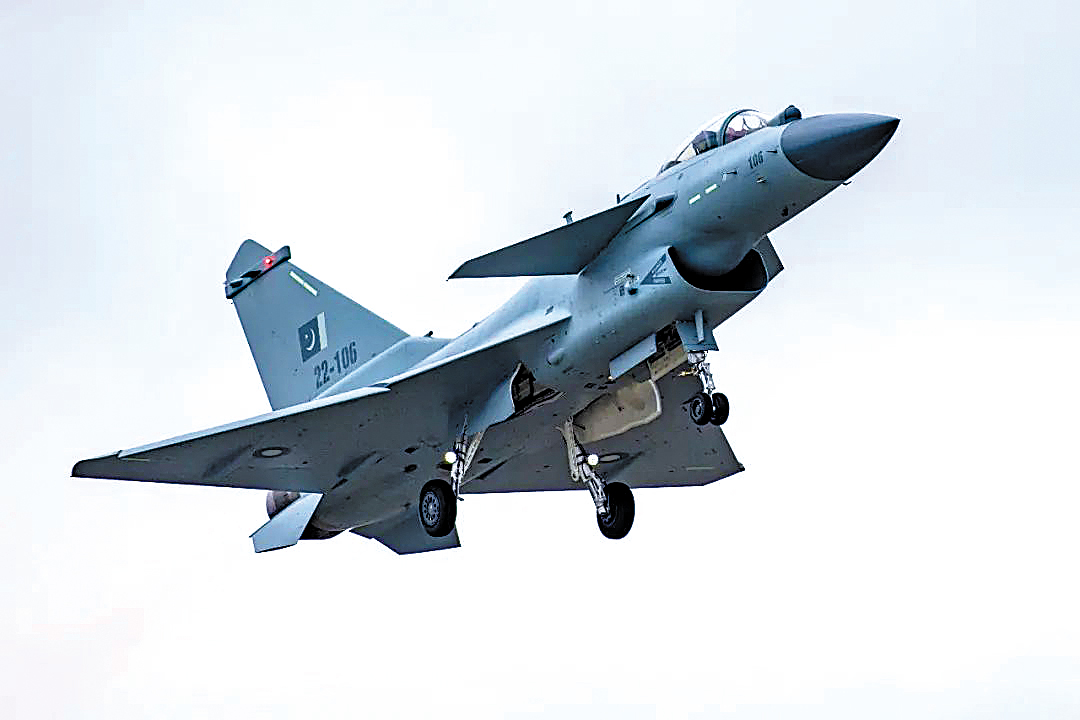
Pakistan’s proposed acquisition of approximately 40 Shenyang J-35 fifth-generation stealth fighters represents the most strategically consequential element within Islamabad’s broader military modernisation roadmap.
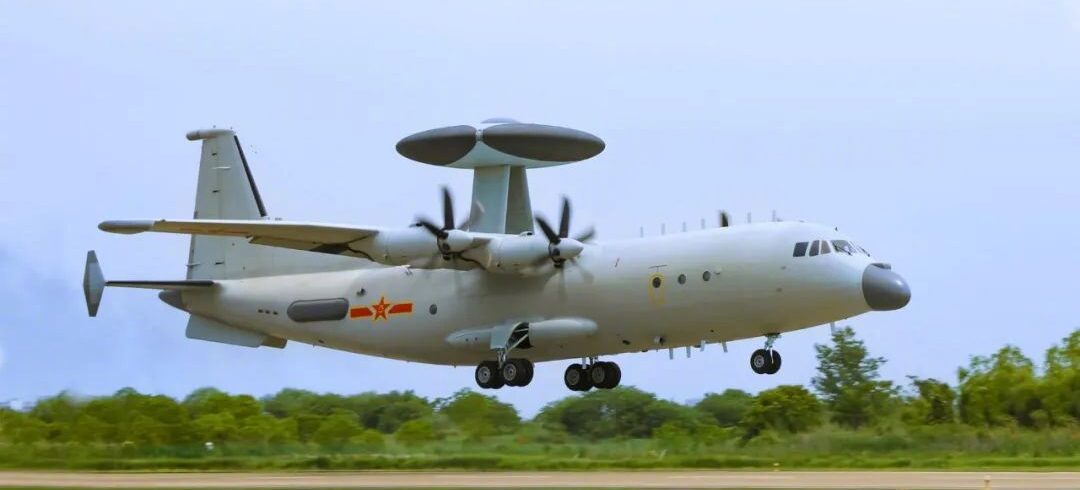
The proposed package reportedly includes accompanying KJ-500 airborne early warning and control aircraft together with HQ-19 long-range ballistic missile defence systems, creating an integrated network-centric warfare architecture.
Pakistan’s government confirmed the Chinese offer during June 2025, while the Pakistan Air Force reportedly signed an initial collaborative agreement by May 2026 supporting phased induction planning.
The J-35 acquisition would position Pakistan as the first foreign operator of an operational Chinese fifth-generation stealth fighter, generating major geopolitical implications for South Asian airpower competition.
The platform’s low-observable design, advanced sensor fusion capability, and multirole strike functionality would significantly improve Pakistan’s survivability within heavily contested airspace during future high-intensity conflict scenarios.
Integration with KJ-500 airborne early warning systems would further strengthen Pakistan’s ability to conduct network-centric air operations by extending radar coverage, improving battlespace awareness, and enhancing long-range target engagement coordination.
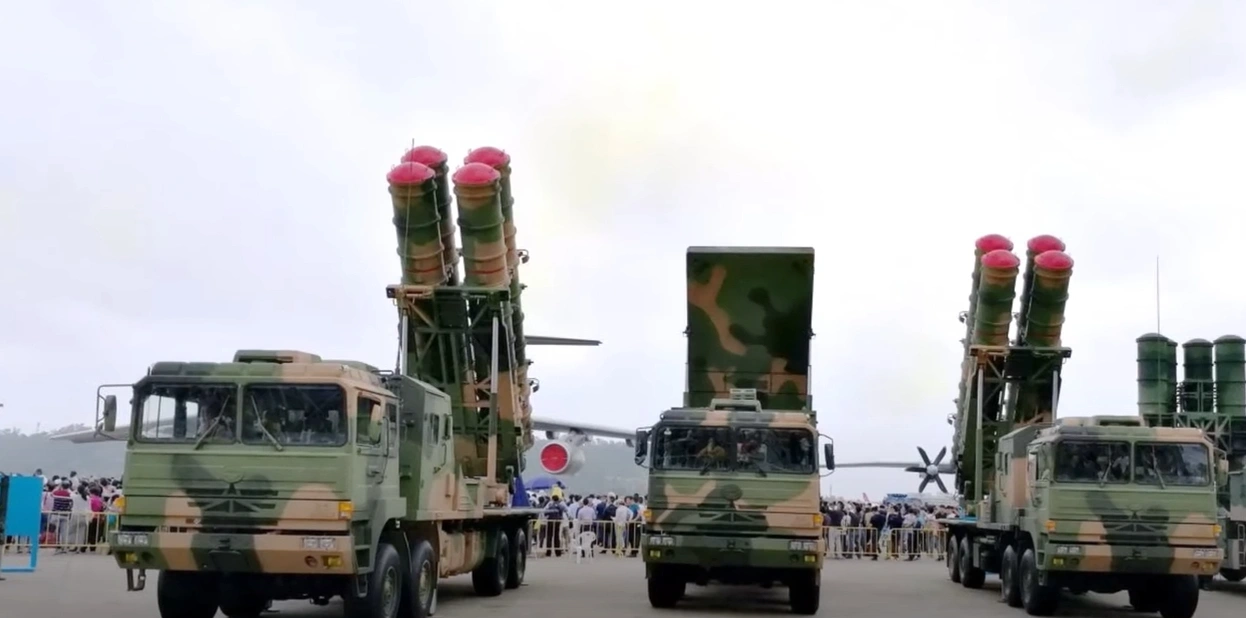
The accompanying HQ-19 missile defence system potentially introduces a Chinese equivalent to high-end anti-ballistic missile architecture comparable conceptually to the American THAAD framework.
HQ-19 reportedly possesses hit-to-kill interception capability against ballistic missiles, cruise missiles, and potentially hypersonic threats, dramatically enhancing Pakistan’s strategic air defence posture if operationally deployed.
The stealth fighter package simultaneously pressures India’s indigenous Advanced Medium Combat Aircraft programme by potentially accelerating regional fifth-generation fighter competition before New Delhi completes domestic developmental milestones.
The procurement trajectory also indicates that Pakistan increasingly prioritises qualitative capability offsets instead of numerical parity against India’s substantially larger conventional military inventory.
The combination of stealth fighters, airborne early warning systems, and ballistic missile defence architecture would collectively transform Pakistan’s integrated air defence network into a significantly more layered and survivable battlespace ecosystem.
Defence Spending Priorities Reveal Strategic Force Restructuring
Pakistan’s FY2026-27 defence budget breakdown reveals a significant redistribution of expenditure priorities toward procurement-driven capability enhancement instead of manpower expansion or operational sustainment.
Employee-related expenditures received Rs967.55 billion (US$4.13 billion/RM15.69 billion), accounting for approximately 32.25 percent of the total defence allocation while increasing by only 14.36 percent.
Physical assets spending reached Rs925.83 billion, representing nearly 31 percent of the entire defence budget and recording the single largest increase among all major defence expenditure categories.
Operating expenditures including fuel, rations, logistics, maintenance, and training received Rs743.46 billion (US$3.17 billion/RM12.04 billion), increasing by a comparatively modest 5.54 percent.
Civil works and military infrastructure development received Rs363.16 billion (US$1.55 billion/RM5.88 billion), indicating continued investment in operational facilities, military bases, and strategic infrastructure resilience.
The spending pattern demonstrates that Pakistan’s military leadership is deliberately prioritising capital-intensive capability acquisition instead of force expansion despite persistent security pressures along multiple operational theatres.
Military pensions remain budgeted separately under Pakistan’s broader federal pension framework, where allocations reportedly exceed Rs822 billion and remain excluded from the official Rs3 trillion defence services allocation.
The separation enables Islamabad to maintain a comparatively lower visible defence-to-GDP ratio while sustaining substantial long-term military personnel obligations outside headline defence expenditure figures.
Pakistan’s broader federal budget totals Rs18.77 trillion (US$67.5 billion/RM256.5 billion), while development spending under the Public Sector Development Programme has been compressed to Rs1 trillion.
The contrast between reduced development spending and expanded defence procurement highlights Islamabad’s prioritisation of national security requirements despite broader economic pressures, inflation concerns, and IMF-driven fiscal restructuring.
The budget framework ultimately reveals that Pakistan’s military establishment continues retaining strong institutional influence over national strategic priorities despite ongoing economic stabilisation efforts and constrained fiscal flexibility.
India-Pakistan Rivalry Drives Regional Military Escalation Cycle
Pakistan’s accelerated military procurement posture is likely to intensify the existing South Asian security competition by reinforcing reciprocal force modernisation dynamics between Islamabad and New Delhi.
The procurement surge follows approximately 20 percent growth in Pakistan’s previous defence budget after the 2025 India-Pakistan military confrontation fundamentally reshaped threat perceptions within both capitals.
Pakistan’s leadership increasingly frames conventional military modernisation as essential for preserving deterrence credibility against India’s expanding defence-industrial capabilities and growing access to advanced Western military technologies.
India’s induction of Rafale fighters, ballistic missile defence systems, and expanding naval aviation capabilities has generated persistent concern within Pakistan regarding widening qualitative military asymmetry.
Pakistan’s response increasingly relies upon Chinese military technology because Beijing offers advanced systems without the political restrictions, export limitations, or operational constraints commonly associated with Western defence suppliers.
The emerging China-Pakistan military ecosystem simultaneously strengthens Beijing’s strategic influence across the Indian Ocean while complicating American and Indian efforts to shape the Indo-Pacific security environment.
Pakistan’s submarine modernisation additionally enhances China’s long-term strategic depth because expanded Pakistani naval capabilities indirectly support Beijing’s maritime balancing strategy against India across critical sea lanes.
The procurement momentum also reflects lessons derived from the 2025 conflict, where both Pakistan and India reportedly evaluated the operational performance of modern air combat systems under real-world engagement conditions.
Pakistan’s emphasis on stealth fighters, long-range missiles, and layered air defence networks demonstrates increasing focus upon survivability, stand-off engagement capability, and anti-access operational concepts.
Significant uncertainty nevertheless remains regarding financing sustainability because many major acquisitions reportedly depend upon Chinese credit lines, off-budget arrangements, or classified procurement structures outside publicly disclosed allocations.
The long-term effectiveness of Pakistan’s military modernisation strategy will ultimately depend upon sustaining logistics support, maintenance infrastructure, pilot training pipelines, and operational integration capacity across increasingly sophisticated Chinese-origin defence ecosystems.