
U.S. Unveils LUCAS Drone: Reverse-Engineered Shahed-136 Weapon Designed to Flip the Script on Iran
The United States has deployed its new LUCAS one-way attack drone—reverse-engineered from Iran’s Shahed-136—to strengthen CENTCOM operations, boost deterrence, and redefine swarm warfare in the Middle East.
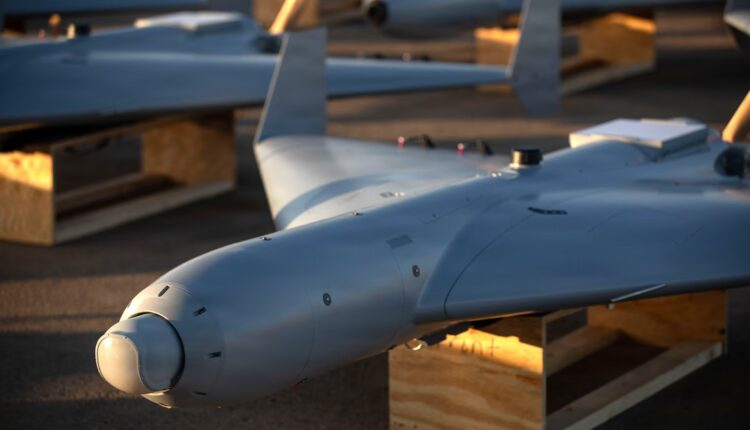
(DEFENCE SECURITY ASIA) — In a bold escalation that reflects the rapidly evolving character of 21st-century combat, the United States has formally unveiled and operationally deployed its newest unmanned precision-strike weapon: the Low-Cost Uncrewed Combat Attack System, or LUCAS.
The introduction of this one-way attack drone, reverse-engineered directly from Iran’s notorious Shahed-136 loitering munition, signals a profound transformation in American military thinking driven by affordability, mass production potential, and operational scalability.
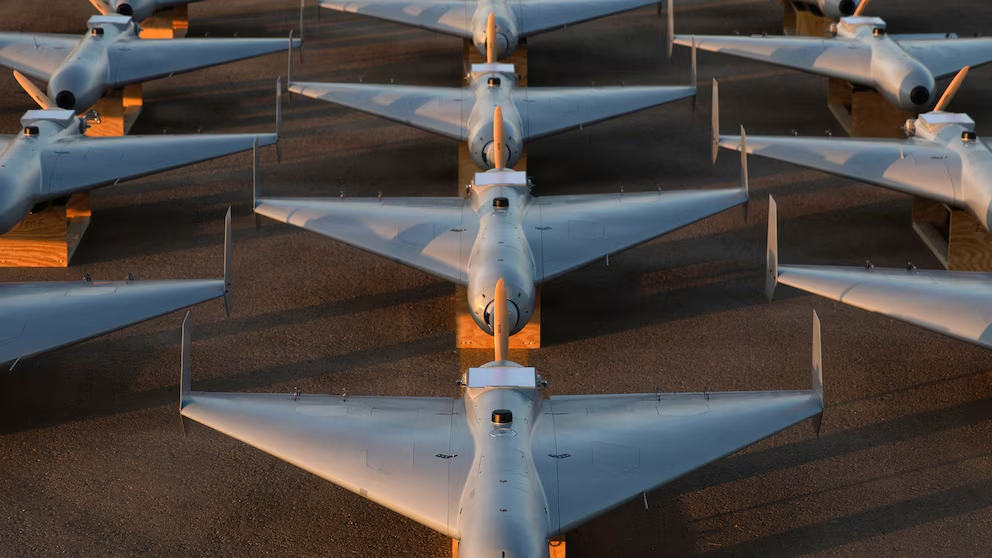
The first operational LUCAS unit is already in service under the U.S. military’s newly formed Task Force Scorpion Strike, operating in the Middle East under the oversight of U.S. Central Command (CENTCOM) to confront Iranian-backed threats.
This unprecedented move not only bolsters American deterrence but also directly challenges Iran’s regional drone supremacy, with officials declaring that the objective is to “flip the script” on Tehran.
The announcement arrives at a time when drone warfare—from trench lines in Ukraine to contested airspace in the Middle East—has reshaped traditional doctrines, forcing advanced militaries to adopt weapons once dismissed as primitive or asymmetric.
The LUCAS drone embodies Washington’s recognition that the future of warfare belongs not just to exquisite systems like the F-35, but to swarms of low-cost, disposable platforms capable of overwhelming enemy defenses at a fraction of the cost.
Designed for long-range autonomous missions, AI-enabled swarm tactics, and flexible launch options from land, sea, or mobile platforms, the LUCAS architecture positions the United States to dominate high-threat environments where traditional assets face escalating risks and financial strain.
Iran’s Shahed-136: The Drone That Changed Modern Conflict
The strategic significance of the U.S. LUCAS drone cannot be understood without examining its Iranian predecessor—the Shahed-136—now one of the most impactful weapons of the decade.
Developed by Iran’s state aerospace industries, the Shahed-136 is a purpose-built loitering munition, commonly labelled a “kamikaze drone” due to its one-way operational concept in which the aircraft itself becomes the warhead.
Unveiled in 2021, the Shahed-136 became globally infamous after Russia deployed it in massive numbers during its 2022–2024 campaign in Ukraine, rebranding it as the “Geran-2” while launching swarms against Ukrainian energy infrastructure and military positions.
The drone’s straightforward delta-wing design—approximately 3.5 meters long with a 2.5-meter wingspan—conceals the disruptive power hidden beneath its modest exterior.
Powered by a small piston engine derived from commercial components, the Shahed-136 achieves ranges of up to 2,500 km (1,350 nautical miles), cruising at about 185 km/h, and carrying 50–110 pounds of explosives.
Its estimated production cost—between USD 20,000 and USD 50,000 (RM 94,000 to RM 235,000)—gives Iran the ability to manufacture and deploy the system at staggering scales.
These drones are not designed to survive; they are designed to saturate, overwhelm, and break through defensive shields using sheer numerical mass rather than stealth, maneuverability, or advanced avionics.
Iranian proliferation of the Shahed-136 to partners and proxies—such as the Houthis in Yemen and Hezbollah in Lebanon—has amplified Tehran’s operational reach and destabilizing influence across the Middle East.
In April 2024, Iran launched over 300 Shahed-136 drones and missiles in a direct attack on Israel, marking one of the largest swarm-strike operations in modern history and demonstrating the weapon’s ability to shape state-level strategic confrontations.
The Shahed paradigm exposes the limitations of traditional high-cost systems like the U.S. MQ-9 Reaper, which can cost more than USD 30 million (RM 141 million) per unit—too expensive to absorb in attritional, swarm-based conflicts.
The proliferation of this Iranian drone forced Western militaries to acknowledge a critical vulnerability: adversaries with low-cost mass-production capabilities could impose asymmetric pressure previously unimaginable.
Ukraine’s battlefield experience underscored that cheap kamikaze drones could destroy or disable far more expensive systems, exposing gaps in Western air defense, cost-per-intercept dynamics, and the escalating economics of modern conflict.
The urgency to respond to this asymmetric shift directly informed the United States’ drive to reverse-engineer a comparable system—leading to the birth of LUCAS.

Reverse-Engineering Tehran: How the U.S. Built the LUCAS Drone
The LUCAS program represents one of the most rapid reverse-engineering efforts in recent U.S. defense history.
American forces and partners acquired intact Shahed-136 airframes through battlefield captures in Ukraine and interception operations in the Middle East, providing engineers with a rare opportunity to dissect Tehran’s low-cost drone architecture.
As defense analysts noted, “The U.S. military got hold of an Iranian Shahed,” enabling a full forensic breakdown of Iranian design philosophy focused on simplicity, cost reduction, and battlefield survivability through disposability.
The reconstruction process was led by the U.S. defense contractor SpektreWorks under the Pentagon’s accelerated innovation directives, developed in only 18 months, a timeline reflecting intense pressure from the Pentagon’s “drone dominance” initiative championed by Defense Secretary Pete Hegseth.
The resulting LUCAS drone mirrors the Shahed-136’s delta-wing configuration but integrates advanced American avionics, navigation systems, and manufacturing refinements.
Its key specifications include:
- Length: ~3 meters
- Wingspan: >2 meters
- Maximum takeoff weight: ~440 pounds
- Operational range: comparable to 1,350 nautical miles
- Unit cost: ~USD 35,000 (RM 165,000)
While slightly more expensive than its Iranian equivalent, LUCAS delivers vastly superior precision, autonomy, and modularity.
The system features two interchangeable nose sections:
- Explosive warhead module for direct-strike missions
- EO/IR sensor module for surveillance, target acquisition, and BDA (battle damage assessment)
This modularity allows the LUCAS airframe to perform multi-domain roles including ISR, electronic warfare, strike coordination, and even acting as a communication relay node for U.S. and allied forces.
Where the Shahed relies on rudimentary guidance that can be jammed or spoofed, the LUCAS incorporates upgraded GPS/INS systems hardened against EW interference, enabling autonomous route adjustments mid-flight.
The LUCAS drone also supports true AI-enabled swarm behavior, allowing multiple drones to coordinate tasks, share targeting data, and dynamically adapt to countermeasures—capabilities Iran has struggled to replicate at scale.
The drone’s launch versatility is another major advantage.
LUCAS can be fired from:
- Ground catapult systems
- Rocket-assisted takeoff platforms
- Vehicle-mounted rails
- Naval launch modules
This flexibility enables distributed operations across dispersed units, reducing vulnerability to preemptive strikes—one of the Shahed program’s known weaknesses.
Task Force Scorpion Strike: America’s First Dedicated One-Way Drone Unit
The operational debut of LUCAS occurs under Task Force Scorpion Strike (TFSS), the first U.S. military unit explicitly designed to operate one-way attack drones at scale.
TFSS falls under the Rapid Employment Joint Task Force (REJTF) within CENTCOM, tasked with rapidly fielding emerging technologies into active combat zones.
CENTCOM Commander Adm. Brad Cooper emphasized the urgency of this mission, stating that “TFSS is designed to quickly deliver low-cost and effective drone capabilities into the hands of warfighters.”
The Middle East—marked by rising tensions with Iran and persistent threats from Iranian-backed militias—was chosen as the strategic launchpad for LUCAS integration.
TFSS stands ready to counter threats from the Houthis, Hezbollah, and other Iranian-proxy formations that have repeatedly employed Shahed-variant drones against the U.S., Israel, and Gulf partners.
Under TFSS doctrine, LUCAS strikes are envisioned as part of massive swarm waves, deploying dozens or even hundreds of drones simultaneously to overwhelm sophisticated air-defense networks.
This approach echoes lessons from Ukraine, where swarm logic proved devastatingly effective in saturating radar systems and costing defenders millions in interceptors such as Patriot or NASAMS missiles.
The Middle Eastern deployment also carries a broader deterrent signal.
Following Israel’s November 2025 operations that degraded portions of Iran’s missile defenses, CENTCOM now possesses an opportunity to exploit these vulnerabilities through disposable long-range unmanned systems.
LUCAS enables the U.S. to deliver persistent, low-cost pressure on hostile assets without risking manned aircraft, thereby reshaping the calculus of regional escalation.
Geopolitical Shockwaves: Countering Iran and Reshaping Global Drone Warfare
The LUCAS drone is more than a military asset; it is a strategic message aimed squarely at Iran’s political and technological ambitions.
By mastering Tehran’s most successful export weapon and improving upon it, Washington undermines Iran’s asymmetric advantage built through years of investment in low-cost drone warfare.
U.S. officials unequivocally stated that the goal is “flipping the script on Iran,” a phrase that reflects both strategic retaliation and narrative reversal.
The move forces Iran into a defensive posture unfamiliar to its doctrine of exporting risk through proxies and deniable assets.
For the first time, Tehran must now prepare to defend itself against the same swarm-based threat it pioneered.
Beyond Iran, the LUCAS deployment marks a fundamental pivot in U.S. defense strategy away from reliance solely on big-ticket systems like the F-35A, which costs approximately USD 110 million (RM 518 million) per aircraft.
Instead, Washington is adopting a hybrid fleet model blending high-end stealth aircraft with swarms of cheap, attritable drones designed for saturation attacks, SEAD (Suppression of Enemy Air Defenses), decoy operations, and attritional warfare.
This shift aligns with the Pentagon’s broader Replicator initiative, which seeks to deploy thousands of autonomous systems in response to the mass-production strategies of China and Iran.
However, the rise of disposable drones is not without risk.
Low-cost kamikaze systems dramatically reduce the barrier for state and non-state actors to conduct precision attacks, raising concerns about proliferation, escalation, and misuse.
The growing reliance on autonomous swarm logic also raises ethical and strategic concerns around decision-making in high-tempo combat environments.
From an Indo-Pacific perspective, LUCAS will reverberate across Asia.
India, facing rising drone incursions along its borders with Pakistan and China, may seek similar systems.
In the South China Sea, LUCAS export variants could strengthen alliances with the Philippines, Vietnam, and Malaysia, helping counter the expanding footprint of Chinese unmanned aerial systems.
LUCAS vs. Shahed-136: A Detailed Comparative Analysis
A direct comparison underscores the divergent philosophies behind the two systems.
Both feature delta-wing designs prioritizing stability, range, and cost-efficiency.
However, the LUCAS surpasses its Iranian predecessor across several critical areas:
- Autonomy: AI-driven mission updates vs. Iran’s pre-programmed routes
- Navigation: GPS/INS fusion hardened against EW
- Payload options: Swappable warheads or EO/IR modules
- Swarm behavior: Networked coordination vs. rudimentary multi-drone operations
- Launch flexibility: Mobile, naval, and distributed vs. fixed or truck-mounted
Where Iran retains an advantage is in ultra-low manufacturing costs achieved through mass production and minimal quality-control constraints.
Iran reportedly produces thousands of Shahed units annually—capabilities the U.S. aims to replicate through industrial initiatives tied to Replicator and emerging commercial partnerships.
The Future: AI Swarms, Drone Arms Races, and a New Era of Attritional Warfare
Looking ahead, the LUCAS program and TFSS represent the opening phase of a new American doctrine prioritizing mass, autonomy, and attrition resilience.
The Pentagon plans to significantly expand LUCAS production, potentially integrating the system into joint operations with Israel, European partners, and Gulf states.
Future variants may incorporate:
- AI-assisted group targeting
- Electronic warfare payloads
- Directed-energy countermeasures
- Cooperative reconnaissance roles
- Maritime strike capabilities
However, adversaries will adapt.
Electronic warfare, laser defense systems, and anti-swarm technologies will accelerate, fueling a global drone-arms race.
Ensuring cost discipline while maintaining technological differentiation will be central to America’s competitive edge.
A Historic Turning Point in Drone Warfare
The unveiling of the LUCAS drone under Task Force Scorpion Strike marks a decisive shift in U.S. military strategy and signals a major evolution in the economics of war.
By reverse-engineering Iran’s Shahed-136 and transforming it into a more capable, modular, and autonomous platform, Washington has rewritten the rules of attritional airpower.
As Adm. Cooper affirmed, this program represents “U.S. military innovation and strength” channeled into a new class of affordable precision weapons.
In a world where drones are democratizing destructive capability, the LUCAS ensures the United States retains the initiative—flipping the script on adversaries that once wielded asymmetric advantage. — DEFENCE SECURITY ASIA

Both shahad 136 and lucas are copies of the israeli IAI Harpy developed in the 1990
This is a fascinating look at the practical realities of modern military tech competition. Reverse-engineering a threat system like the Shahed-136 isn’t just about understanding its capabilities; it’s the fastest way to develop and test hard-kill and electronic countermeasures under realistic conditions. The article highlights a crucial, often unseen layer of the defense-industrial response to asymmetric threats.
My question is about the strategic calculus behind publicizing this effort. Is there an advantage in openly disclosing that the U.S. has operational copies of the Shahed? Does it act as a deterrent to Iran (signaling that its weapon’s secrets are compromised), or is the primary audience U.S. allies and partners, to demonstrate a concrete solution is being worked on and to bolster their confidence in future air defenses?