
Singapore’s RSAF Shocks Red Flag Alaska 2026, F-15SG and F-16 Force Wins Top USAF Combat Awards Amid Indo-Pacific Air Power Race
Singapore’s deployment of F-15SG and F-16 fighters to Exercise Red Flag Alaska 2026 underscores the city-state’s growing expeditionary air combat capability as Indo-Pacific coalition warfare and air superiority competition intensify.
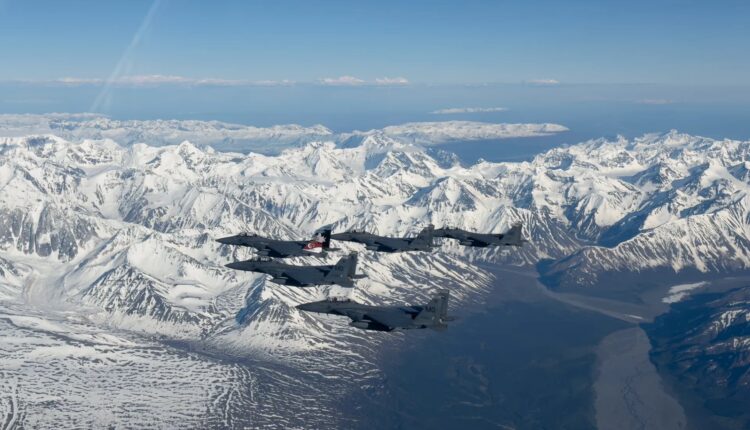
(DEFENCE SECURITY ASIA) — The Republic of Singapore Air Force’s participation in Exercise Red Flag – Alaska 2026 has reinforced Singapore’s status as one of the Indo-Pacific’s most operationally capable air forces amid intensifying regional competition over air superiority, distributed strike warfare, and coalition interoperability.
Held at Eielson Air Force Base in Alaska from 28 May until 12 June 2026, the large-scale multinational exercise brought together more than 60 combat aircraft and over 2,100 personnel from the United States Air Force and allied participating nations including Belgium, Canada, New Zealand, and the United Kingdom.
The RSAF deployed a substantial expeditionary air combat package comprising 10 F-16 fighter aircraft, eight F-15SG multirole strike fighters, and more than 250 personnel from its Peace Carvin II and Peace Carvin V detachments.
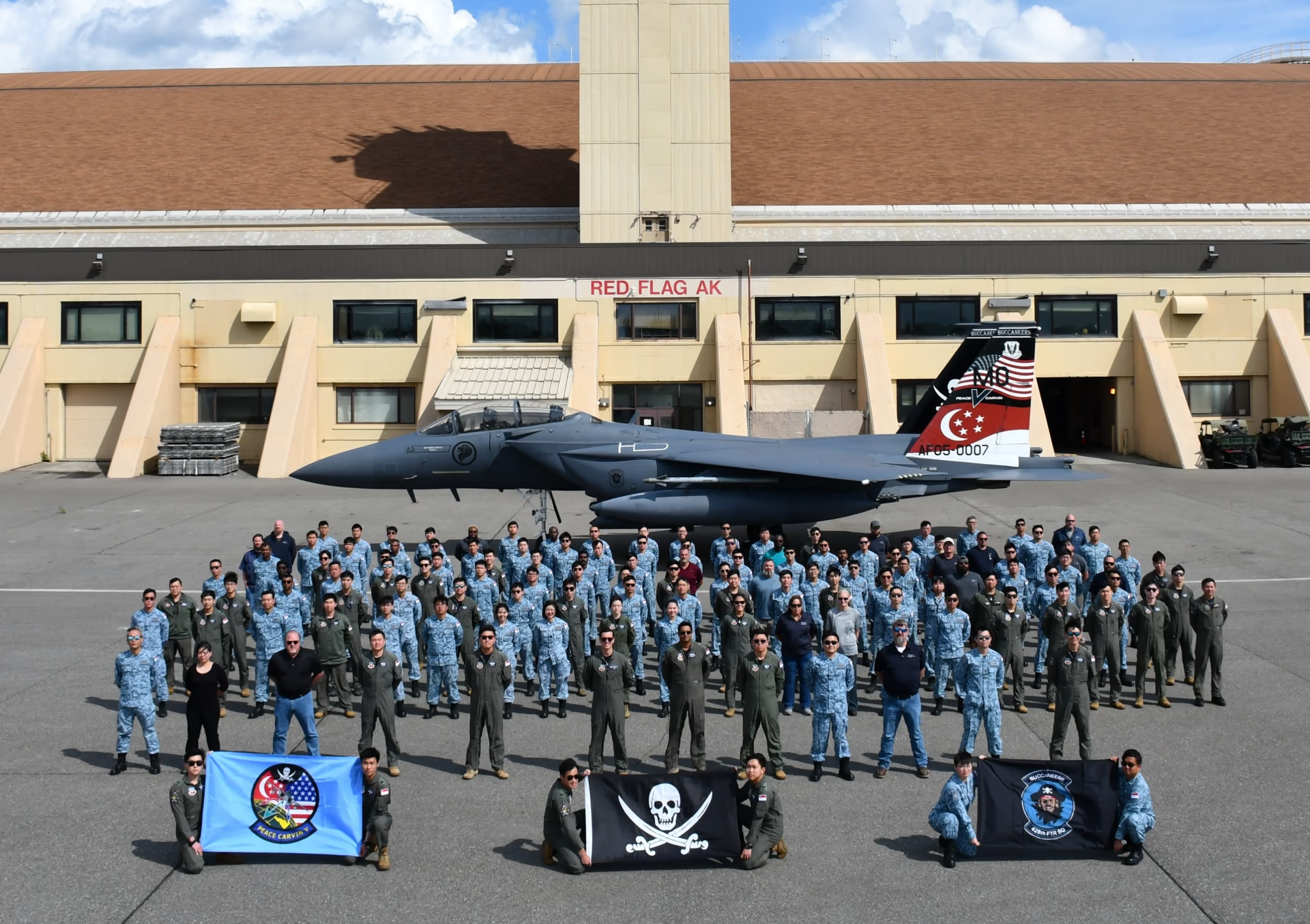
The deployment demonstrated Singapore’s ability to sustain long-range overseas combat aviation operations while simultaneously validating expeditionary logistics, maintenance resilience, sortie-generation capability, and multinational tactical integration under high-intensity simulated warfare conditions.
The exercise unfolded against a broader Indo-Pacific security environment increasingly shaped by rapid military modernisation, expanding fifth-generation fighter deployments, and growing emphasis on coalition-based deterrence architecture led by the United States and its regional security partners.
Red Flag – Alaska remains one of the most demanding air combat exercises globally because it replicates highly contested operational environments involving complex electronic warfare, integrated air defence suppression, air interdiction, and multi-domain strike coordination.
Singapore’s performance during the exercise attracted particular attention after the RSAF secured three major multinational awards, including “Top Mission Commander,” “Top Fighter Generation Squadron,” and “Top Sorties Generated.”
Those awards signalled not merely tactical competence but also demonstrated Singapore’s institutional capacity to sustain high operational tempo under conditions designed to replicate peer-level combat pressure and attrition-intensive air operations.
Lieutenant Colonel Zhang Jianwei, Commander of the RSAF’s Peace Carvin II Detachment, stated that the exercise enabled the RSAF to operate alongside participating air forces while sharpening operational competencies and enhancing readiness to defend Singapore.
He added that the awards reflected the professionalism and dedication of RSAF personnel together with the high training standards consistently maintained throughout the force’s overseas operational detachments and multinational combat exercises.
United States Air Force Deployed Forces Commander Colonel Christopher Austin further praised the RSAF’s professionalism and tactical capabilities, describing Exercise Red Flag – Alaska as an exceptional operation where Singapore’s combat aviation proficiency clearly stood out among participating air forces.
The RSAF’s performance at Red Flag – Alaska 2026 therefore carries significance extending beyond military symbolism because it directly strengthens Singapore’s strategic deterrence credibility within an increasingly volatile Indo-Pacific airpower landscape.
RSAF’s Expeditionary Combat Deployment Signals Advanced Operational Reach
Singapore’s deployment of 18 frontline fighter aircraft to Alaska highlighted the RSAF’s increasingly mature expeditionary warfare capability despite the city-state’s geographically constrained domestic operating environment.
The combined deployment of F-16 and F-15SG platforms enabled the RSAF to simulate layered offensive and defensive air operations integrating beyond-visual-range interception, deep strike missions, and coordinated suppression of hostile targets.
The F-15SG, regarded as one of the most advanced variants of the Boeing F-15 Strike Eagle family, provides Singapore with long-range precision strike capability supported by advanced avionics, AESA radar, and high payload endurance.
Its integration alongside the RSAF’s upgraded F-16 fleet allowed Singaporean pilots to rehearse composite air operations mirroring modern coalition warfare concepts increasingly central to Indo-Pacific contingency planning.
Deploying more than 250 personnel also underscored the logistical sophistication required to sustain overseas combat operations involving aircraft maintenance, mission planning, weapons integration, and continuous sortie generation.
Such expeditionary deployments remain strategically important for Singapore because the country lacks large domestic training airspace required for realistic high-intensity combat aviation exercises involving complex force integration.
The Peace Carvin detachments stationed overseas therefore form a critical pillar of Singapore’s long-term airpower strategy by providing access to expansive training environments unavailable within Southeast Asia’s congested airspace corridors.
Sustained participation in exercises like Red Flag also allows the RSAF to validate operational concepts under geographically unfamiliar conditions including Arctic weather, extended-range missions, and complex multinational command structures.
The deployment simultaneously sends strategic signalling across the region by demonstrating Singapore’s ability to rapidly project operational airpower far beyond Southeast Asia despite its limited territorial depth.
That capability carries increasing geopolitical relevance as Indo-Pacific security dynamics shift toward distributed coalition operations designed to counter advanced anti-access and area-denial military architectures.

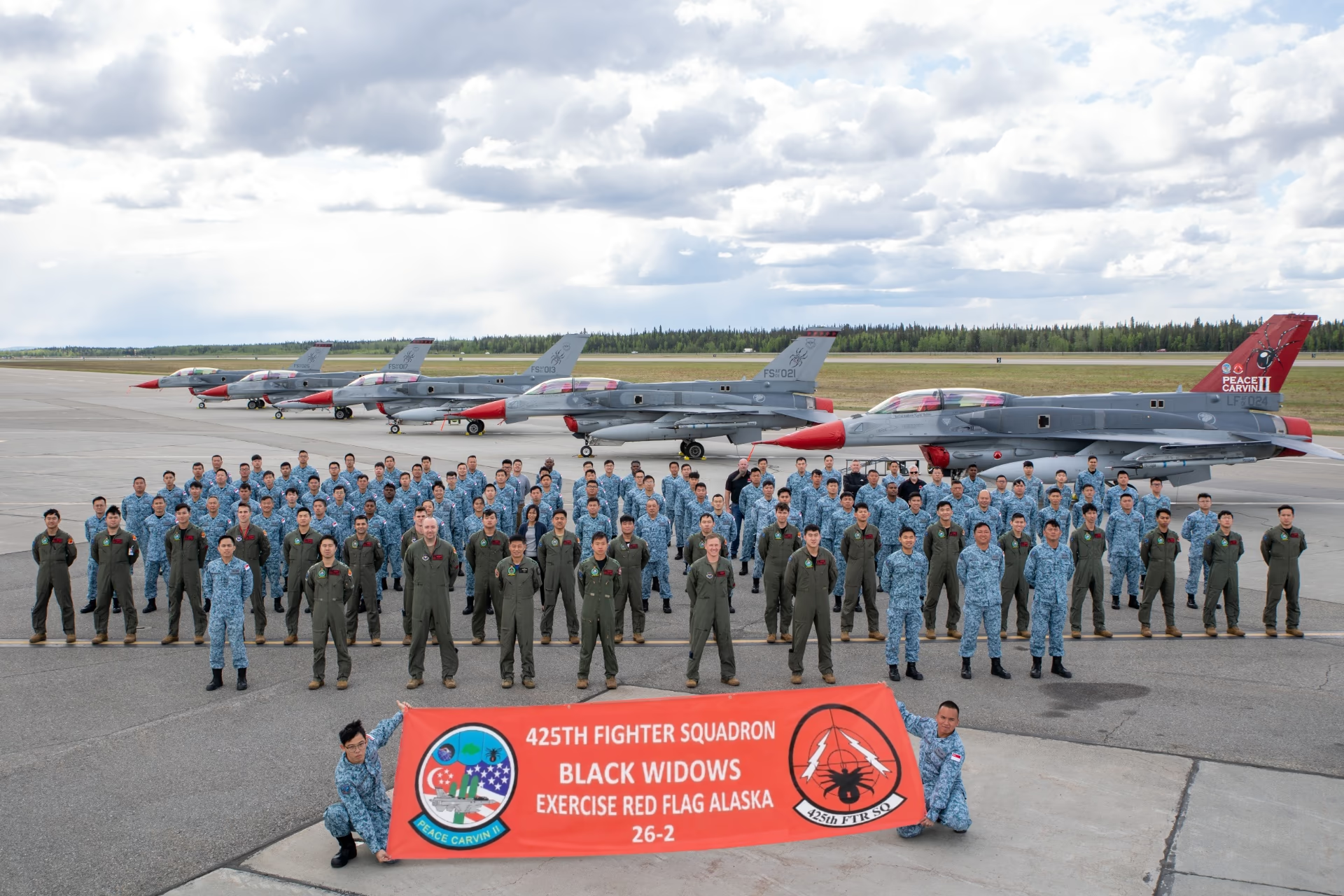
Red Flag Alaska Reinforces Coalition Interoperability and Allied Air Integration
Exercise Red Flag – Alaska functions as a critical coalition interoperability platform where participating air forces rehearse integrated combat operations against simulated peer-level threats under realistic wartime conditions.
For Singapore, interoperability with the United States Air Force remains strategically essential because the RSAF’s operational doctrine depends heavily upon networked coalition warfare and integrated command-and-control coordination.
The exercise exposed RSAF personnel to demanding multinational mission sets involving coordinated strike packages, tactical datalink integration, airborne threat response, and synchronised airspace deconfliction under compressed operational timelines.
Such operational exposure strengthens Singapore’s capacity to integrate seamlessly with allied air forces during potential future contingencies involving maritime security crises or broader Indo-Pacific coalition responses.
The USAF’s participation provided the RSAF direct access to advanced tactical methodologies, operational planning frameworks, and mission execution standards developed for high-end combat against technologically sophisticated adversaries.
Participation alongside Belgium, Canada, New Zealand, and the United Kingdom also deepened Singapore’s practical military relationships with multiple Western air forces beyond its traditionally strong bilateral defence ties with Washington.
The exercise therefore contributed not only toward combat proficiency but also toward expanding Singapore’s multinational defence diplomacy and operational networking architecture across several allied military ecosystems.
Integrated multinational training environments increasingly matter because future air warfare is expected to depend upon coalition force integration, distributed targeting networks, and rapid information-sharing across geographically dispersed theatres.
Singapore’s consistent participation in Red Flag exercises consequently positions the RSAF as a highly interoperable regional air force capable of integrating into larger coalition air campaigns if strategic circumstances require.
That interoperability advantage enhances Singapore’s broader deterrence posture by increasing uncertainty for potential adversaries regarding the scale and sophistication of multinational responses available during regional security crises.
RSAF’s Award Sweep Highlights Sortie Generation and Maintenance Superiority
The RSAF’s achievement in securing the “Top Fighter Generation Squadron” and “Top Sorties Generated” awards revealed operational strengths extending beyond pilot proficiency into maintenance efficiency and force sustainability.
Sortie generation rates remain one of the most important indicators of combat readiness because modern air campaigns depend heavily upon sustained aircraft availability under continuous operational pressure.
High sortie-generation capability enables an air force to maintain persistent combat presence, execute repeated strike cycles, and absorb operational attrition during prolonged high-intensity conflict scenarios.
Winning those awards against multiple advanced participating air forces demonstrated the RSAF’s ability to sustain aircraft operational readiness at exceptionally demanding levels throughout the exercise period.
Maintenance crews therefore played a strategically critical role because combat aircraft effectiveness increasingly depends upon rapid turnaround cycles, resilient technical support, and efficient troubleshooting under operationally stressful conditions.
Singapore’s maintenance doctrine has long prioritised high technical reliability because the RSAF operates relatively small but technologically advanced fleets requiring maximum availability during potential crisis situations.
The award for “Top Mission Commander” further indicated strong operational leadership capability involving mission planning, tactical decision-making, and coordination across multinational strike packages operating within contested environments.
Mission commanders at Red Flag exercises typically oversee highly complex combat scenarios involving multiple aircraft formations, simulated enemy threats, dynamic targeting changes, and real-time operational adaptation.
The RSAF’s success in this area demonstrated institutional emphasis on tactical command competence rather than reliance solely upon advanced military hardware or technological advantages.
That distinction matters strategically because future air warfare outcomes will likely depend upon decision-making speed, operational adaptability, and integrated force management as much as aircraft platform sophistication itself.
Singapore-US Defence Ties Gain Greater Strategic Relevance Amid Indo-Pacific Tensions
The RSAF’s participation in Red Flag – Alaska also reflected the enduring strategic depth of Singapore’s defence relationship with the United States amid intensifying Indo-Pacific geopolitical competition.
Singapore has long positioned itself as a reliable regional security partner supporting a stable rules-based order while simultaneously maintaining pragmatic defence relationships across multiple major powers.
Military cooperation between Singapore and the United States includes rotational deployments, advanced training access, operational support agreements, and extensive defence technology collaboration spanning several decades.
Exercises like Red Flag therefore function not only as military training opportunities but also as visible demonstrations of sustained strategic alignment and operational trust between both countries.
Washington increasingly values highly capable regional partners capable of contributing advanced military capabilities to coalition operations without requiring permanent large-scale American force basing arrangements.
Singapore’s sophisticated defence infrastructure and advanced airpower capabilities consequently provide the United States with an important strategic node supporting broader Indo-Pacific force distribution and operational resilience.
The RSAF’s performance at Red Flag also reinforces Singapore’s reputation as one of Southeast Asia’s most technologically advanced and professionally trained military forces despite its relatively small population base.
That perception enhances Singapore’s diplomatic influence within regional security discussions where military credibility increasingly shapes strategic partnerships and defence-industrial cooperation opportunities.
The exercise additionally demonstrated Singapore’s commitment toward maintaining operational relevance amid accelerating regional airpower modernisation involving stealth fighters, long-range missiles, and integrated air defence systems.
Such strategic signalling becomes increasingly important as Indo-Pacific states reassess deterrence architectures in response to rapidly evolving regional military balances and expanding great-power competition.
Red Flag Experience Strengthens RSAF Readiness for Future High-End Air Warfare
The operational complexity of Red Flag – Alaska provides participating air forces with critical preparation for future high-end combat environments characterised by electronic warfare, information saturation, and multidomain operational pressure.
For the RSAF, repeated exposure to realistic simulated combat conditions helps institutionalise operational adaptability and tactical resilience necessary for survival within highly contested airspace environments.
The exercise’s demanding scenarios likely included dynamic threat replication involving advanced surface-to-air missile systems, hostile fighter aircraft, and rapidly evolving battlespace conditions designed to stress operational decision-making.
Such training environments are increasingly relevant because modern air warfare now requires simultaneous integration of electronic warfare, intelligence fusion, precision targeting, and networked coalition coordination.
Singapore’s participation therefore contributes directly toward maintaining credible deterrence despite the emergence of increasingly sophisticated regional military capabilities across the Indo-Pacific theatre.
The RSAF’s emphasis on realistic multinational combat training reflects recognition that future conflicts would likely involve coalition operations rather than isolated unilateral military engagements.
Continued participation in Red Flag exercises also allows Singapore to benchmark its operational standards against leading Western air forces while identifying capability gaps requiring future doctrinal or technological refinement.
That benchmarking process supports long-term force modernisation planning involving aircraft upgrades, tactical evolution, training doctrine adaptation, and future combat systems integration.
The exercise additionally strengthens institutional confidence within the RSAF by validating its operational procedures and tactical competence against highly demanding multinational combat standards.
As Indo-Pacific strategic competition increasingly shifts toward advanced airpower readiness and coalition deterrence credibility, Singapore’s strong performance at Red Flag – Alaska 2026 has elevated the RSAF’s standing within the region’s evolving military balance.
