Pentagon’s 300,000 Kamikaze Drone Blitz Signals New Era of Mass Warfare Against China, Russia and Iran
The Pentagon’s “Drone Dominance” program aims to flood future battlefields with hundreds of thousands of low-cost autonomous attack drones as Washington races to counter China’s industrial scale, Russia’s attrition warfare and Iran’s swarm drone strategy.

(DEFENCE SECURITY ASIA) — The Pentagon’s “Drone Dominance” initiative is reshaping American military doctrine around the brutal battlefield realities emerging from Ukraine, the Middle East, and the Indo-Pacific, where inexpensive unmanned systems increasingly determine operational survival, strategic deterrence, and attritional battlefield superiority.
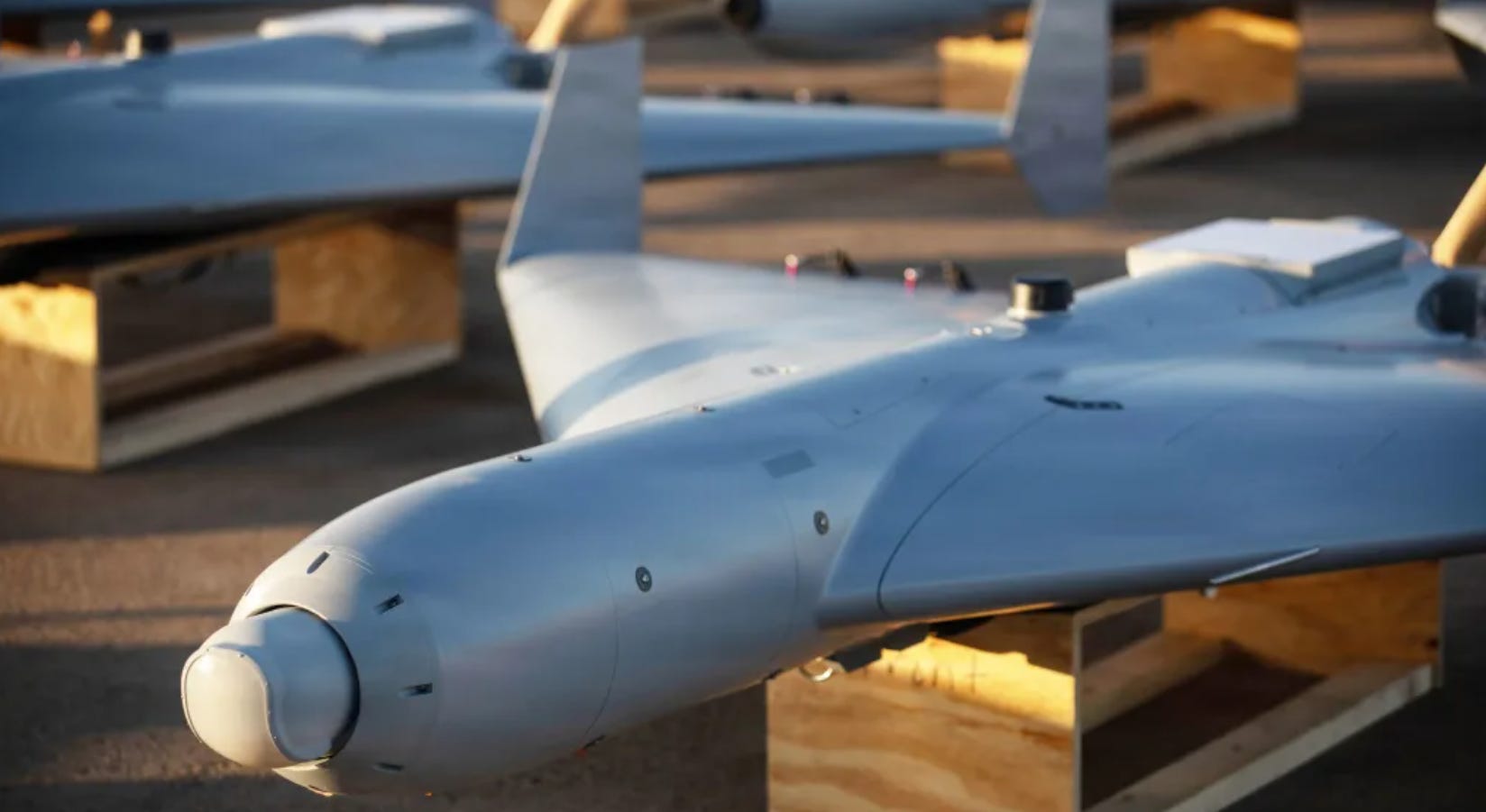
Senior U.S. defence officials are now pursuing an unprecedented plan to build as many as 300,000 low-cost one-way attack drones, fundamentally transforming the American defence-industrial ecosystem from a high-cost precision warfare model into a scalable mass-production architecture centred on expendable autonomous strike systems.
The program reflects growing Pentagon concerns that the United States remains dangerously behind adversaries in affordable drone manufacturing capacity, particularly as Ukraine reportedly produced nearly four million combat drones annually while U.S. production remains near approximately 100,000 systems per year.
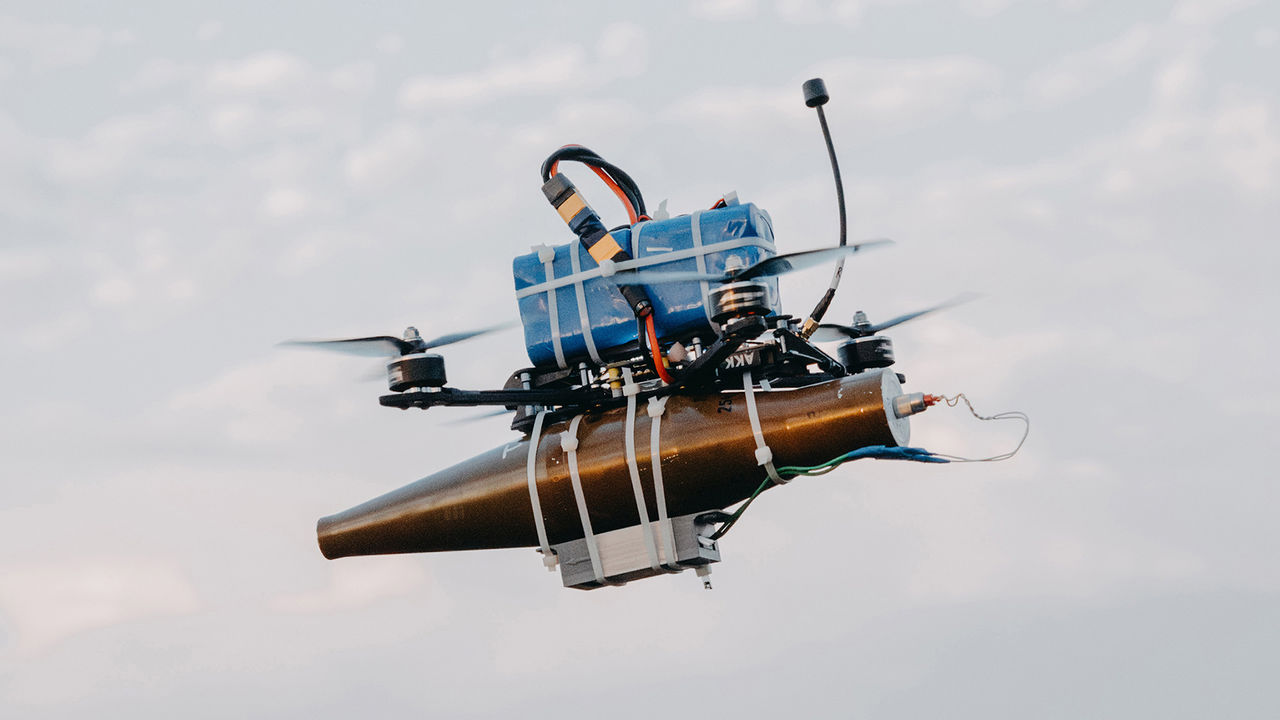
Washington’s strategic urgency intensified after Ukrainian FPV kamikaze drones demonstrated the ability to destroy tanks, artillery systems, logistics convoys, radar installations, and hardened defensive positions at fractions of the cost associated with conventional precision-guided munitions.
The initiative, sometimes called the “Drone Dominance Gauntlet,” seeks to compress procurement timelines, bypass traditional acquisition bureaucracy, and integrate Silicon Valley-style innovation cycles directly into U.S. combat capability generation under Secretary of Defense Pete Hegseth.
Pentagon planners increasingly believe future wars against near-peer adversaries will not be won solely through exquisite fifth-generation platforms, but through the ability to sustain enormous volumes of autonomous strikes across dispersed operational theatres under contested electromagnetic conditions.
The program’s first operational phase reportedly involves roughly 12 to 25 competing vendors producing approximately 30,000 drones under contracts valued near US$150 million (RM570 million), establishing an industrial proving ground designed to identify scalable battlefield-effective systems rapidly.
Broader autonomous warfare spending linked to the initiative could eventually exceed US$54 billion (RM205.2 billion), indicating that the Pentagon now views autonomous mass warfare as a core determinant shaping future military balance against China, Russia, and Iran.
According to officials familiar with the initiative, drone operators may require as little as two hours of training before deployment, illustrating how low-cost autonomous systems are compressing the barriers separating civilian technological ecosystems from modern combat operations.
The strategic logic behind the initiative rests upon a harsh battlefield calculation repeatedly validated in Ukraine and the Middle East, where low-cost drones routinely force adversaries into economically unsustainable defensive responses involving expensive missile interceptors and layered air-defence assets.
American planners also fear that China’s overwhelming dominance across global commercial drone supply chains, including batteries, sensors, processors, and small unmanned system components, could become a severe wartime vulnerability during any prolonged Indo-Pacific conflict.
The Pentagon’s response therefore represents not merely a procurement program, but a comprehensive restructuring of U.S. military-industrial strategy around mass autonomy, scalable attrition warfare, and distributed lethality designed to survive future high-intensity peer conflicts.
The Pentagon’s Shift Toward “Precise Mass” Warfare
The Drone Dominance initiative marks one of the most significant doctrinal transformations inside the U.S. military since the precision-strike revolution that emerged following the Gulf War and later dominated post-9/11 expeditionary operations.
Instead of relying predominantly upon expensive stealth aircraft, cruise missiles, and limited inventories of high-end precision munitions, the Pentagon increasingly seeks to overwhelm adversaries through sheer operational density generated by inexpensive autonomous strike systems.
Military planners describe the concept as “precise mass,” combining the accuracy of precision-guided weapons with the battlefield saturation traditionally associated with industrial-era attritional warfare doctrines previously considered obsolete within Western military thinking.
The initiative directly incorporates lessons from Ukraine, where inexpensive FPV drones and one-way attack systems reportedly account for a substantial proportion of battlefield casualties and have severely degraded traditional armoured manoeuvre warfare survivability.
U.S. officials increasingly believe future operational success will depend less upon platform survivability alone and more upon the ability to sustain continuous strike pressure through rapidly replaceable autonomous combat systems deployed at industrial scale.
The initiative’s targeted unit cost initially begins near US$5,000 (RM19,000) per drone, while later production phases reportedly aim to reduce costs toward approximately US$2,300 (RM8,740) through aggressive competition and mass manufacturing efficiencies.
Such economics dramatically alter battlefield calculus because relatively cheap drones can force adversaries into launching interceptors costing millions of dollars, creating asymmetric cost imbalances capable of exhausting even advanced integrated air-defence networks.
Pentagon planners increasingly view low-cost drone swarms as especially relevant against China’s anti-access and area-denial architecture, where dispersed autonomous systems could complicate targeting cycles and saturate layered defensive coverage across maritime theatres.
The operational philosophy also seeks to decentralize battlefield lethality by enabling small units to conduct precision strike missions previously requiring expensive airpower coordination or long-range missile support from higher-echelon commands.
This transformation reflects growing recognition that battlefield adaptation speed, manufacturing scalability, and logistical resilience may become more decisive than technological sophistication alone during prolonged industrial-scale conflicts against peer competitors.
Startups, Hobbyists and Silicon Valley Enter the Battlespace
One of the most disruptive elements within the Pentagon’s strategy involves opening the defence-industrial ecosystem to startups, drone hobbyists, commercial innovators, and small technology firms traditionally excluded from major defence acquisition programs.
Officials increasingly argue that legacy procurement processes remain too slow and inflexible to compete against rapidly evolving drone ecosystems emerging from Ukraine, China, and commercial civilian technological innovation sectors.
The competition reportedly includes companies founded by drone racers, commercial robotics developers, software startups, and even firms originating outside conventional aerospace and defence manufacturing sectors entirely.
Early participants reportedly include companies such as Neros, Modal AI, Auterion, Griffon Aerospace, Skycutter, Napatree, and Ukrainian Defense Drones.
Military-led operational testing reportedly determines advancement through successive competition phases, ensuring battlefield practicality rather than bureaucratic compliance becomes the primary determinant shaping procurement outcomes and production scalability decisions.
The Pentagon’s willingness to integrate non-traditional suppliers reflects growing institutional recognition that commercial innovation cycles increasingly outpace conventional defence acquisition frameworks across autonomous warfare technologies and software-driven battlefield systems.
This approach also seeks to create a resilient domestic drone manufacturing ecosystem capable of reducing dependence upon Chinese-controlled supply chains dominating much of the global small-drone industrial market.
American defence officials increasingly fear that Chinese dominance across commercial drone manufacturing could translate into wartime leverage capable of constraining U.S. operational sustainability during prolonged Indo-Pacific conflict scenarios.
The initiative therefore functions simultaneously as a military modernization effort and an industrial mobilization strategy intended to rebuild domestic autonomous manufacturing capacity across critical technologies and scalable production infrastructure.
By merging civilian innovation culture with military operational requirements, the Pentagon hopes to replicate the adaptive battlefield experimentation cycle that enabled Ukrainian forces to evolve drone warfare capabilities at unprecedented operational speed.
Ukraine and the Middle East Reshape U.S. Military Thinking
The wars in Ukraine and the Middle East have profoundly altered Pentagon assumptions regarding battlefield survivability, force protection, and the economic sustainability of modern high-intensity warfare operations against adaptive adversaries.
Ukrainian drone warfare demonstrated that relatively inexpensive FPV systems could neutralize tanks, artillery, command posts, and logistics hubs traditionally protected by layered armour and conventional battlefield dispersion techniques.
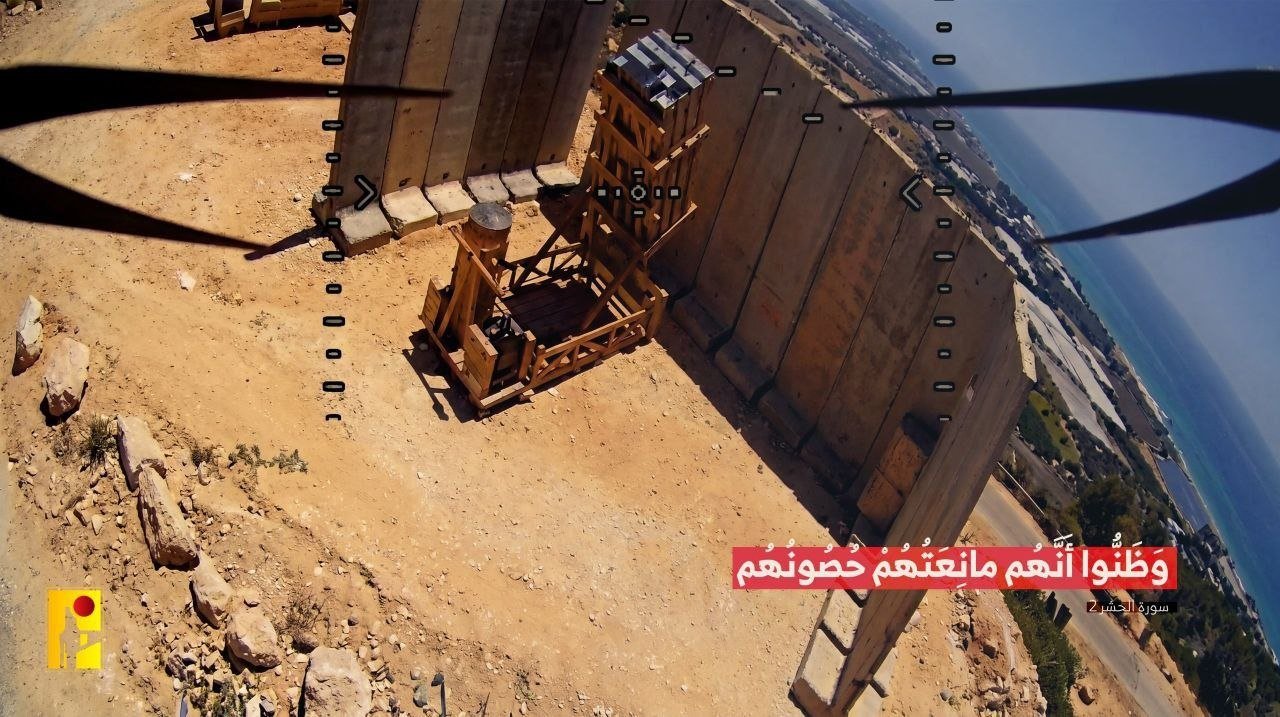
Iranian Shahed-style drone attacks across the Middle East meanwhile revealed how persistent low-cost strike systems could overwhelm sophisticated air-defence architectures through repeated saturation attacks targeting strategic infrastructure and military facilities.
American planners increasingly fear that similar mass drone attacks against forward operating bases, logistics hubs, naval formations, or dispersed Indo-Pacific installations could severely degrade operational endurance during future regional conflicts.
The Pentagon also recognizes that traditional Western acquisition cycles cannot adapt rapidly enough to evolving drone threats without fundamental institutional reforms prioritizing battlefield experimentation and accelerated procurement pathways.
Drone Dominance therefore integrates “fight tonight” operational philosophy, embedding drone swarm training directly into force-on-force exercises across the Army, Navy, Air Force, and Marine Corps operational ecosystems.
Military units are increasingly expected to operate under persistent surveillance and continuous drone threat environments where concealment, mobility, electromagnetic discipline, and decentralized command structures become essential survival requirements.
The initiative also emphasizes layered counter-drone architectures involving sensors, interceptors, electronic warfare, artificial intelligence battle management systems, and directed-energy technologies designed to counter mass autonomous swarm attacks.
No single defensive system currently guarantees reliable protection against large-scale drone swarms, forcing militaries worldwide to pursue integrated multi-layered defensive concepts capable of adapting dynamically under high-volume attack conditions.
These battlefield lessons collectively convinced Pentagon leadership that autonomous mass warfare is no longer an experimental capability niche, but an emerging operational reality fundamentally reshaping future global military competition.
China, Taiwan and the Indo-Pacific Strategic Equation
The Pentagon’s drone expansion strategy remains heavily influenced by concerns surrounding China’s rapidly evolving autonomous warfare ecosystem and the growing military risks surrounding a potential Taiwan contingency scenario.
Chinese military planners have aggressively pursued swarm warfare concepts, autonomous maritime systems, unmanned reconnaissance platforms, and low-cost strike architectures capable of saturating distributed American and allied force postures throughout the Western Pacific.
American officials increasingly believe future Indo-Pacific conflicts may involve massive autonomous engagements across maritime chokepoints, forward operating bases, naval task groups, logistics corridors, and contested island chains.
Drone Dominance therefore complements broader Pentagon concepts such as distributed lethality and autonomous “Hellscape” operational environments designed to impose severe attritional costs upon any large-scale Chinese amphibious assault attempt against Taiwan.
Low-cost autonomous systems could enable U.S. and allied forces to generate persistent strike density across enormous operational distances without relying exclusively upon vulnerable high-value manned platforms and concentrated basing structures.
The initiative also aims to strengthen deterrence credibility by demonstrating that the United States can sustain large-scale autonomous attrition campaigns despite China’s overwhelming numerical advantages in regional missile inventories and industrial production capacity.
Pentagon planners particularly fear the vulnerability of fixed American airbases throughout the Indo-Pacific, where inexpensive autonomous attacks could potentially degrade sortie generation, logistics operations, and distributed force survivability rapidly.
Autonomous maritime drone swarms also hold growing significance because they could complicate Chinese naval manoeuvre operations while expanding operational surveillance coverage across contested littoral and open-ocean environments.
The strategic competition increasingly revolves around industrial scalability, manufacturing endurance, and adaptive technological ecosystems rather than merely traditional platform superiority measured through individual aircraft or naval vessel capabilities.
Success or failure within the Drone Dominance initiative may therefore significantly influence long-term deterrence dynamics across the Indo-Pacific, especially regarding perceptions surrounding American military adaptability and industrial resilience during prolonged regional conflict.
Global Arms Race and the Future of Drone Warfare
The Pentagon’s initiative is accelerating a broader global transition toward drone-centric warfare where mass production, affordability, and autonomous scalability increasingly determine operational relevance and strategic deterrence credibility.
Rival powers including China, Russia, and Iran are already investing heavily in low-cost drone production ecosystems designed to sustain prolonged attritional conflicts while exploiting vulnerabilities within expensive Western military force structures.
The proliferation of affordable autonomous systems also lowers barriers enabling smaller states and non-state actors to conduct precision strikes previously achievable only by technologically advanced conventional military powers.
This transformation risks normalizing persistent low-level autonomous conflict environments where deniable drone operations blur traditional escalation thresholds and complicate attribution during geopolitical crises and gray-zone confrontations.
The Pentagon nevertheless views industrial agility as essential because future wars may depend less upon possessing small inventories of technologically exquisite systems and more upon sustaining enormous operational consumption rates over extended campaigns.
Drone Dominance also strengthens alliance signalling by reassuring NATO, Indo-Pacific partners, and Ukraine that the United States intends to scale autonomous warfare production aggressively rather than remain constrained by legacy procurement limitations.
At the same time, proliferation concerns remain severe because technologies associated with inexpensive autonomous strike systems could spread rapidly across unstable regions and eventually empower extremist or proxy organizations globally.
Military analysts also caution that drone swarms remain vulnerable to electronic warfare disruption, signal jamming, cyber interference, and degraded communications environments that could limit effectiveness against technologically sophisticated peer adversaries.
Pentagon officials therefore continue emphasizing that autonomous systems must complement rather than completely replace conventional airpower, integrated air defence, and survivable command-and-control architectures within future multidomain operations.
The Drone Dominance initiative ultimately represents a high-risk but potentially transformative American wager that industrial-scale autonomy, battlefield adaptability, and rapid innovation can restore deterrence credibility within an era increasingly defined by mass drone warfare and persistent attritional competition.