
India Greenlights Six More P-8I Neptune Aircraft, Expands Indian Ocean Anti-Submarine Dominance Against Rising China Threat
New Delhi’s decision to expand its Boeing P-8I Neptune fleet from 12 to 18 aircraft under a massive INR 3.6 trillion (USD 39.7 billion / RM187 billion) procurement framework signals a decisive maritime power shift across the Indian Ocean amid growing Chinese submarine deployments.
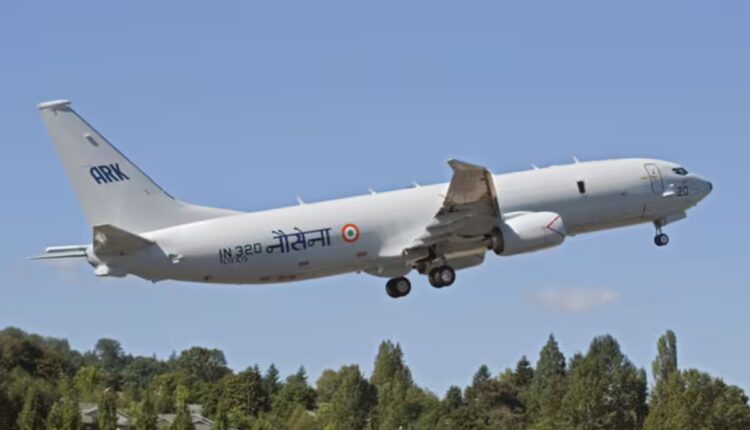
(DEFENCE SECURITY ASIA) — India has made a decision to grant Acceptance of Necessity for six additional Boeing P-8I Neptune long-range maritime patrol aircraft, a move that represents a decisive recalibration of its Indian Ocean maritime posture at a time when submarine proliferation, intensifying great-power rivalry, and the vulnerability of critical sea lanes are converging into a single strategic challenge stretching from the Strait of Malacca to the Arabian Sea.
Embedded within a colossal USD 39.7 billion or about RM187 billion including 114 Rafales—the P-8I approval underscores how maritime domain awareness, long-range anti-submarine warfare, and over-the-horizon maritime strike are now treated in New Delhi as co-equal pillars alongside air superiority programs such as the parallel 114-aircraft Rafale expansion.
“The acquisition of P-8I aircraft will significantly boost the navy’s combat/war-fighting capability of long-range anti-submarine warfare, maritime surveillance and maritime strike capability,” stated the Indian Ministry of Defence in an official release, a formulation that deliberately ties the platform not merely to reconnaissance but to kinetic deterrence and escalation management.

The expansion of the fleet from 12 to 18 aircraft elevates India to the position of the second-largest global operator of the Poseidon family after the United States, thereby consolidating its status as the preeminent indigenous security provider within the Indian Ocean Region’s evolving balance of naval power.
By distributing the additional aircraft between INAS 312 “Albatross” at INS Rajali on the eastern seaboard and INAS 316 “The Condors” at INS Hansa on the western coast, India is engineering a dual-ocean surveillance geometry that ensures persistent pressure on submarine ingress routes entering both the Bay of Bengal and the Arabian Sea.
The decision also closes a procurement cycle that began with a 2021 U.S. Foreign Military Sales notification, reflecting not hesitation but a prolonged process of financial structuring, industrial offset negotiation, and doctrinal refinement aligned with India’s long-term maritime capability roadmap extending into the mid-2030s.
At a time when nearly 80 percent of India’s oil imports and a decisive share of its seaborne trade traverse contested maritime corridors, the P-8I fleet expansion signals that maritime surveillance is no longer viewed as a support function but as the first line of economic defence.
This procurement therefore represents not simply aircraft acquisition but a strategic investment in maintaining information dominance across the Indian Ocean’s undersea battlespace, where detection timelines, sensor fusion latency, and rapid cueing cycles increasingly determine deterrence credibility.
The inclusion of U.S.-origin platforms within a broader multi-vector procurement package further illustrates India’s calibrated balancing strategy, wherein interoperability with QUAD partners coexists with indigenous industrial expansion under the Make in India initiative.
In effect, the decision to greenlight six additional P-8I aircraft crystallises India’s ambition to transform the Indian Ocean from a reactive surveillance zone into a proactively managed maritime security theatre shaped by persistent ISR, integrated ASW strike capacity, and network-centric maritime warfare architecture.
From Tu-142 Legacy to Poseidon Powerhouse: A Technological Transformation
India’s maritime patrol evolution from the Soviet-era Tupolev Tu-142M Bear-F to the jet-powered Boeing P-8I marks one of the most dramatic sensor and operational transitions in modern naval aviation history, reshaping how the Indian Navy conceptualises long-range ocean surveillance and submarine prosecution.
When New Delhi placed its initial USD 2.1 billion order in 2009—equivalent to roughly RM9.9 billion—it became the first international customer for the Poseidon platform, signalling early recognition that turboprop reconnaissance architectures were becoming insufficient against increasingly stealthy submarine threats.
The arrival of the first aircraft at INS Rajali in 2013 initiated a generational leap that Indian naval aviators famously characterised as moving “from a telegram to a smartphone,” a phrase that encapsulates the shift from analog-era detection chains to digitally fused sensor ecosystems.
Where the Tu-142M offered endurance but limited sensor integration, the P-8I introduced advanced radar modes, integrated acoustic processing, high-bandwidth datalinks, and precision-guided strike capability within a single multi-role maritime platform.
Over more than 40,000 mishap-free flight hours accumulated by the current fleet, the P-8I has demonstrated not only operational reliability but the sustained ability to conduct high-tempo maritime ISR missions across vast oceanic expanses without platform attrition.
The aircraft have shadowed PLAN submarines, monitored choke points including the Strait of Malacca, and provided overland ISR support during the 2017 Doklam and 2020 Ladakh crises, illustrating the platform’s dual maritime and littoral intelligence versatility.
The transition thus represents a doctrinal shift from episodic patrol to persistent presence, enabling India to compress detection-to-decision timelines across contested maritime zones.
By integrating long-range maritime surveillance with strike potential through Harpoon and torpedo carriage, the P-8I transformed the Indian Navy’s patrol doctrine from passive tracking to active deterrent posture.
This transformation has created a maritime aviation force capable of not merely observing undersea manoeuvre but shaping adversary deployment patterns through constant surveillance pressure.
With 18 aircraft projected by the mid-2030s, India’s maritime patrol community will operate a fleet capable of sustained dual-coast operational density unmatched by any regional competitor.
Technical Edge: Sensors, Weapons and Indigenous Integration
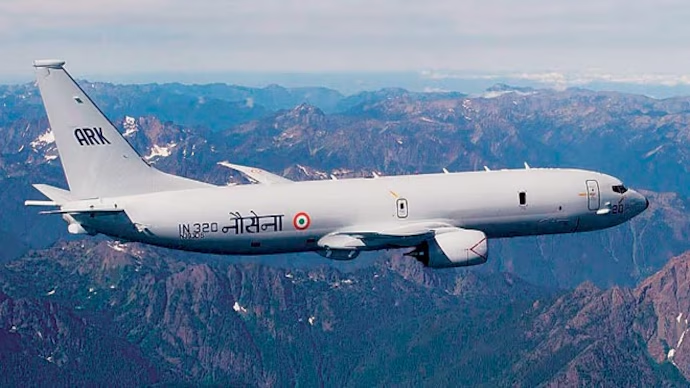
The P-8I is structurally derived from the Boeing 737-800 airframe, yet its transformation into a multi-domain maritime warfare system involves deep customisation that aligns the aircraft with India’s specific littoral and blue-water operational demands.
Unlike the U.S. Navy’s P-8A configuration, the Indian variant retains the CAE AN/ASQ-508A Magnetic Anomaly Detector tail “sting,” a feature designed to detect subtle magnetic distortions produced by submarine hulls, particularly in shallow and cluttered littoral waters.
This retention of the MAD capability enhances India’s effectiveness in high-traffic environments such as the Arabian Sea’s continental shelf regions, where sonobuoy-only detection chains may face acoustic interference.
The Raytheon APY-10 multi-mode radar provides high-resolution maritime and overland imaging, enabling detection of periscope masts, small surface contacts, and coastal infrastructure targets with precision mapping modes critical for maritime strike planning.
Complemented by the Telephonics APS-143 OceanEye aft radar, advanced electronic support measures, and a high-resolution EO/IR turret, the P-8I integrates multiple sensor streams into a unified tactical picture that supports rapid threat classification.
The aircraft’s internal weapons bay accommodates Mk 54 lightweight torpedoes and depth charges, while underwing pylons can carry AGM-84L Harpoon Block II anti-ship missiles capable of limited land-attack roles, significantly expanding maritime strike flexibility.
With a mission radius exceeding 1,200 nautical miles and extended on-station endurance, a single P-8I sortie can dominate enormous operational sectors, especially when forward deployed from the Andaman and Nicobar Islands.
Crucially, Indian-developed systems from Bharat Electronics Limited—including Data Link II communications, indigenous IFF transponders, and secure speech encryption modules—ensure sovereign command-and-control resilience.
Industrial participation by HAL, Dynamatic Technologies and Rossell Techsys embeds the P-8I program within India’s aerospace manufacturing ecosystem, reinforcing strategic autonomy while preserving high-end technological absorption.
The integration of indigenous subsystems within an American-origin airframe thus exemplifies India’s hybrid procurement model, combining global technology with domestic capability maturation.
The Chinese Submarine Shadow and the Indian Ocean Contest
The decision to expand the P-8I fleet coincides with sustained People’s Liberation Army Navy submarine deployments into the Indian Ocean Region, including both conventional Yuan-class and nuclear-powered Shang-class platforms operating under extended patrol cycles.
Chinese submarine appearances near the Bay of Bengal, Maldives approaches, and the Arabian Sea have heightened Indian threat assessments, particularly as Beijing’s Djibouti logistics base and potential “String of Pearls” nodes extend PLAN operational reach.
Given that the Indian Ocean carries energy flows and commercial shipping critical to India’s economic survival, submarine detection is no longer a peripheral concern but a central national security imperative.
“The P-8I is a fit against the People’s Liberation Army Navy (PLAN) submarine patrols, which increasingly adopt longer endurance profiles and more complex deployment patterns,” one defence analyst noted, encapsulating the platform’s counter-deployment logic.
Boeing has emphasised that the aircraft’s endurance enables “extended patrols over vast expanses of water, including conducting rigorous Anti-Submarine Warfare (ASW) patrols across the Indian Ocean and other key checkpoints,” underscoring its design intent.
An 18-aircraft fleet increases sortie generation potential, enabling simultaneous eastern and western oceanic saturation while maintaining reserve maintenance cycles.
Persistent airborne ISR coverage complicates adversary submarine concealment strategies by compressing safe operating windows and increasing exposure risk.
The aircraft’s capacity to function as a flying command-and-control node multiplies its operational impact by integrating surface combatants, submarines and shore-based assets into a real-time targeting network.
This surveillance density alters the psychological calculus of submarine commanders operating in contested waters, where detection risk translates directly into strategic vulnerability.
In strategic terms, the expanded P-8I fleet strengthens India’s undersea deterrence shield across one of the world’s most economically vital maritime theatres.
QUAD Interoperability and the Indo-Pacific Security Architecture
The expansion of India’s P-8I fleet also deepens interoperability within the QUAD framework, where the United States, Australia and the United Kingdom operate compatible Poseidon variants capable of shared acoustic and sensor data exchanges.
During Malabar exercises, shared operational architectures enable cross-platform coordination, accelerating multi-national ASW response cycles.
India’s compatibility with AUKUS Pillar 2 sonar data frameworks enhances collaborative undersea awareness across the broader Indo-Pacific.
For Southeast Asian states observing Chinese assertiveness, enhanced Indian maritime ISR contributes to a distributed regional surveillance web that reinforces freedom of navigation norms.
The Malacca Strait’s centrality as a strategic chokepoint linking the Pacific and Indian Oceans amplifies the significance of India’s enhanced detection coverage.
By increasing airborne ISR density, India indirectly strengthens collective maritime domain awareness across partner navies.
Cost projections exceeding USD 3 billion for the six-aircraft package—approximately RM14 billion—reflect not only inflation but expanded weapons, training and support integration.
Industrial offsets and technology partnerships further entrench Boeing’s footprint within India’s aerospace sector, reinforcing long-term strategic alignment.
The projected induction timeline into the early 2030s aligns with broader Indian naval modernisation milestones, including UAV integration and C-295 maritime reconnaissance development.
Collectively, these investments position India’s maritime aviation architecture as a layered, persistent ISR-strike ecosystem capable of shaping the Indo-Pacific’s emerging naval balance. — DEFENCE SECURITY ASIA
