
Israel Shocked as Hezbollah Unleashes Iran’s Almas-3 Drone-Launched “Armor-Killer” Missile — Precision Strike Threat Expands Middle East Battlefield
Iran’s Almas-3 drone-launched anti-tank missile—reverse-engineered from captured Israeli Spike technology—emerges on the southern Lebanon battlefield, signalling a dangerous escalation in Hezbollah’s precision-guided strike capability against Israeli ground forces.
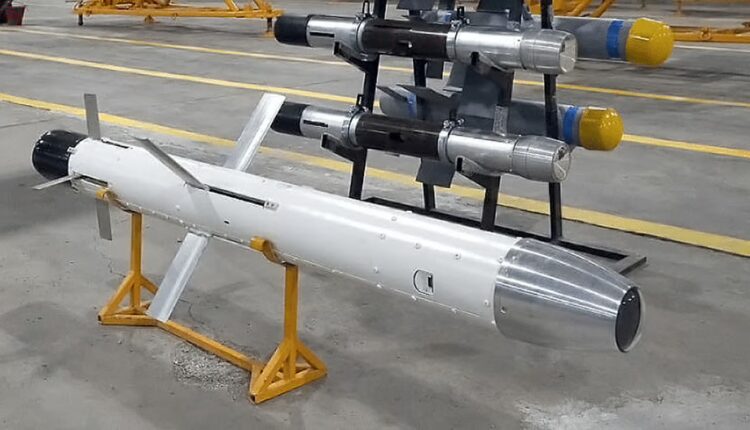
(DEFENCE SECURITY ASIA) — The sudden battlefield appearance of Iran’s Almas-3 precision anti-tank missile in southern Lebanon has injected a new level of strategic uncertainty into the Israel-Hezbollah confrontation, as drone-launched precision strikes against Israeli ground forces highlight how Iranian missile technology is reshaping the operational environment along Israel’s volatile northern frontier.
The weapon’s reported deployment against Israeli troops during clashes involving the Givati Brigade signals a tactical escalation with wider geopolitical consequences, because the integration of long-range anti-armor missiles into UAV-enabled strike networks expands Hezbollah’s ability to impose standoff precision firepower against Israeli maneuver formations operating near or beyond the border.
Security assessments indicating that Almas-3 strikes injured Israeli soldiers during Friday’s southern Lebanon incursion reinforce concerns among regional defence analysts that Hezbollah’s growing inventory of Iranian-supplied precision weapons—reportedly stockpiled in the thousands—could transform localized engagements into a technologically complex missile duel with regional strategic implications.

Drone-Launched Almas-3 Signals New Era of Precision Anti-Armor Warfare
The Almas-3 missile’s deployment via unmanned aerial vehicles demonstrates how Hezbollah is leveraging Iranian missile engineering to integrate long-range anti-tank precision weapons into airborne strike architectures capable of engaging armored targets from standoff distances reaching up to 16 kilometers.
This capability significantly alters battlefield geometry because UAV-launched anti-armor missiles allow Hezbollah operators to conduct top-attack strikes against Israeli armored vehicles and troop formations without requiring line-of-sight engagement, thereby complicating Israeli ground force protection and counter-surveillance measures.
The missile’s tandem high-explosive anti-tank warhead configuration is specifically designed to defeat armored targets protected by layered armor systems, allowing the Almas-3 to strike armored vehicles with sufficient penetration capability to threaten heavily protected platforms operating within contested zones.
Operational flexibility further increases the missile’s battlefield impact because the Almas-3 can reportedly be launched from multiple platforms, including UAVs, allowing Hezbollah to diversify firing positions and reduce the vulnerability of missile teams to counter-battery detection.
Such adaptability enables the missile system to target not only armored vehicles but also military bases, supply convoys, and forward operating positions located beyond the immediate border perimeter, extending Hezbollah’s potential engagement envelope deeper into operational rear areas.
The drone-enabled launch capability effectively transforms the Almas-3 from a traditional anti-tank weapon into a precision strike system capable of engaging targets from unpredictable angles and altitudes, introducing a new layer of tactical complexity to Israel’s ground operations.
Because UAV-mounted missile launch platforms can maneuver independently of ground forces, Hezbollah operators may theoretically exploit aerial vantage points to identify vulnerable armored formations or logistical nodes before initiating precision missile attacks.
The resulting engagement dynamic forces Israeli ground commanders to account for threats emerging not only from conventional anti-tank teams but also from airborne launch platforms capable of delivering guided munitions from beyond direct observation range.
Such developments illustrate how non-state actors equipped with advanced missile technologies can exploit relatively inexpensive drone platforms to challenge technologically sophisticated military forces in contested border environments.

Reverse-Engineered From Captured Israeli Technology
The Almas-3 missile’s technological lineage reportedly traces back to Israeli Spike ER missiles captured during the 2006 conflict, highlighting how battlefield technology proliferation can reshape future engagements when advanced weapons systems are reverse-engineered and reintroduced by adversaries.
By replicating the design characteristics of the Spike ER missile family, Iranian engineers developed a fire-and-forget anti-tank weapon capable of integrating modern imaging infrared and electro-optical guidance systems that allow precise targeting even under complex battlefield conditions.
This reverse-engineering process underscores a recurring pattern in Middle Eastern military competition where captured Western-designed weapon systems are studied and adapted into indigenous variants capable of serving regional strategic objectives.
The missile’s imaging infrared guidance system enables operators to track armored targets based on thermal signatures, allowing engagement even when conventional optical observation may be degraded by battlefield smoke, terrain, or night operations.
Electro-optical targeting components further enhance the missile’s ability to maintain lock-on guidance throughout its flight trajectory, ensuring that the weapon can adjust its path during the terminal attack phase to strike vulnerable sections of armored vehicles.
The integration of these guidance systems into a fire-and-forget architecture allows launch operators to disengage immediately after missile release, minimizing exposure to counter-fire or electronic detection while the missile autonomously tracks its designated target.
Such design characteristics mirror the operational philosophy of modern Western anti-tank guided missiles, which emphasize rapid launch capability, automated guidance, and minimal operator exposure to hostile fire.
The reverse-engineering of captured missile technology therefore demonstrates how regional actors can adapt advanced weapon concepts to their own industrial ecosystems, producing systems that replicate or approximate the tactical capabilities of Western precision weapons.
For Israel, the reappearance of technology derived from its own captured missile systems highlights the strategic risks associated with battlefield technology leakage during prolonged regional conflicts.
Technical Specifications — Almas-3 Anti-Tank Guided Missile
| Category | Specification | Operational / Strategic Implication |
|---|---|---|
| Weapon Type | Long-range anti-tank guided missile (ATGM) | Designed to destroy armored vehicles and hardened military targets in modern battlefield environments. |
| Country of Origin | Iran | Represents Iranian missile technology transferred to proxy forces such as Hezbollah, influencing regional military balance. |
| Operational User (Reported) | Hezbollah | Demonstrates Iran-aligned proxy groups possessing advanced precision strike capabilities. |
| Missile Family | Almas series | Part of Iran’s precision anti-armor missile development program. |
| Design Lineage | Reverse-engineered from captured Spike ER missile | Technology replication from captured Israeli systems highlights battlefield technology proliferation dynamics. |
| Guidance System | Imaging Infrared (IIR) + Electro-Optical (EO) guidance | Allows autonomous target tracking and precision engagement in complex battlefield conditions. |
| Guidance Mode | Fire-and-forget | Operators can launch the missile and relocate immediately, reducing exposure to counter-fire. |
| Attack Profile | Top-attack capability | Enables the missile to strike the most vulnerable upper armor of tanks and armored vehicles. |
| Maximum Range | Up to 16 km | Provides long-range standoff capability allowing strikes beyond direct line-of-sight. |
| Warhead Type | Tandem HEAT (High-Explosive Anti-Tank) | Designed to defeat reactive armor and penetrate heavily armored targets. |
| Launch Platforms | UAV-launched (reported), adaptable to multiple platforms | Enables airborne missile deployment from drones and potentially other launch systems. |
| Propulsion | Solid-fuel rocket motor | Enables rapid launch readiness and stable propulsion performance. |
| Targeting Capability | No line-of-sight requirement | UAV integration allows engagement from concealed or distant launch positions. |
| Operational Sensors | In-flight camera feed | Allows operators to monitor target engagement and confirm strike accuracy. |
| Primary Targets | Armored vehicles, military bases, supply convoys | Expands anti-armor weapons into broader battlefield precision strike roles. |
| Secondary Targets | Military infrastructure and border outposts | Enables deep strike capability beyond frontline engagement zones. |
| Operational Flexibility | Multi-platform launch adaptability | Enhances survivability and unpredictability of missile deployment. |
| Reported Stockpile | Thousands (Hezbollah inventory claim) | Suggests potential for sustained missile warfare in prolonged conflicts. |
| Operational Theatre (Reported) | Southern Lebanon clashes with Israeli forces | Indicates real combat use in the Israel-Hezbollah confrontation. |
Hezbollah’s Expanding Missile Arsenal Alters Regional Deterrence
Reports that Hezbollah has stockpiled thousands of Almas-series missiles suggest that the organization has invested heavily in building a layered anti-armor and precision strike capability capable of imposing sustained pressure on Israeli ground forces.
Such inventory depth would enable Hezbollah to conduct repeated missile engagements over extended operational timelines, creating attrition risks for Israeli armored formations attempting to maneuver within contested border zones.
The presence of large missile stockpiles also enhances Hezbollah’s deterrence posture because the availability of numerous precision weapons increases the probability that Israeli forces operating near the border will face sustained missile threats during future incursions.
The Almas-3 missile’s solid-fuel propulsion system contributes to this operational readiness by enabling rapid launch preparation and consistent missile performance across varying battlefield conditions.
Solid-fuel propulsion eliminates the need for complex fueling procedures, allowing missile launch teams to deploy quickly and maintain high operational tempo during active combat scenarios.
The missile’s integrated in-flight camera feed reportedly provides operators with real-time visual data during engagement sequences, enabling confirmation of target identification and strike accuracy.
Such real-time video guidance also introduces potential tactical advantages because missile operators can observe battlefield conditions and refine targeting decisions based on live imagery transmitted during flight.
In combination, these technological features transform the Almas-3 from a basic anti-tank weapon into a precision battlefield intelligence and strike platform capable of influencing tactical decision-making in real time.
The resulting capability reinforces Hezbollah’s broader strategy of leveraging advanced missile technologies supplied by Iran to offset Israel’s conventional military superiority.
Tactical Impact on Israeli Ground Operations
The reported use of the Almas-3 missile during clashes involving Israeli Givati Brigade forces illustrates how the introduction of drone-launched anti-armor weapons can directly affect the survivability of infantry and armored units operating near contested borders.
Precision missile strikes capable of targeting armored vehicles from standoff distances force Israeli commanders to reconsider traditional maneuver doctrines that rely on armored protection and mobility to maintain operational advantage.
Because UAV-launched missiles can strike from beyond visual detection ranges, Israeli ground forces may face challenges identifying launch platforms before missile release, complicating defensive countermeasures.
This uncertainty increases the risk environment for Israeli troops deployed in southern Lebanon, where terrain features and cross-border operational dynamics can obscure potential launch positions.
The threat of top-attack missile trajectories further intensifies these challenges because such attack profiles target vulnerable upper sections of armored vehicles rather than frontal armor plating.
Consequently, armored formations operating in the region must account for vertical engagement angles that traditional armor designs may not fully mitigate.
Such tactical realities illustrate the broader trend of missile proliferation reshaping ground warfare in contested environments where advanced precision weapons are increasingly available to non-state actors.
In this context, the Almas-3 missile represents not only a tactical weapon but also a strategic signal regarding the evolving capabilities of Hezbollah’s missile forces.
Proxy Warfare Escalation and Strategic Signalling
The deployment of Iranian-supplied Almas-3 missiles in southern Lebanon reflects the broader dynamics of proxy warfare in the Middle East, where advanced missile technologies are increasingly transferred to allied non-state actors.
Such transfers enable regional powers to project influence indirectly by enhancing the military capabilities of partner organizations operating along strategic frontlines.
For Iran, supplying precision missile systems to Hezbollah reinforces its deterrence strategy by increasing the operational costs that Israel must consider when conducting cross-border military operations.
The integration of drone-launched anti-tank missiles into Hezbollah’s arsenal therefore represents a form of strategic signalling that advanced Iranian weapon systems can influence battlefield outcomes even without direct Iranian deployment.
At the same time, Israel’s continued operations against Hezbollah positions demonstrate that the strategic balance along the Lebanese border remains fluid and highly contested.
The introduction of Almas-3 missiles adds another layer to this evolving military competition by expanding the range and flexibility of Hezbollah’s precision strike capabilities.
Regional defence observers therefore view the missile’s deployment as part of a broader technological contest in which missile engineering, UAV integration, and precision guidance systems play increasingly decisive roles.
The resulting operational environment underscores how the convergence of drone technology and advanced anti-armor missiles is reshaping the character of warfare along one of the Middle East’s most volatile strategic frontiers.
