Saudi Arabia Breaks Europe’s Monopoly on Eurofighter Typhoon Heavy Maintenance, Reshaping Gulf Airpower Balance
The Royal Saudi Air Force has completed the first-ever Eurofighter Typhoon 2,500-flight-hour heavy maintenance overhaul outside Europe, dramatically strengthening Saudi military aviation sovereignty, combat readiness, and Gulf regional force projection capabilities.

(DEFENCE SECURITY ASIA) — Saudi Arabia has crossed a critical threshold in military aviation sovereignty after successfully completing, for the first time outside Europe’s manufacturing nations, the 2,500-flight-hour Major Scheduled Servicing overhaul for the Eurofighter Typhoon entirely on Saudi soil.
The milestone fundamentally alters the Royal Saudi Air Force’s long-term sustainment architecture because depot-level heavy maintenance historically remained tightly controlled inside the United Kingdom, Germany, Italy, and Spain, where the Eurofighter consortium concentrated technical authority, industrial expertise, and sensitive aerospace engineering capabilities.
The 180-day maintenance cycle was completed at King Fahd Air Base West Sector in Taif, the operational hub for all Royal Saudi Air Force Eurofighter Typhoon squadrons under the RSAF 2nd Wing, transforming the facility into a strategic node within the global Eurofighter sustainment ecosystem.
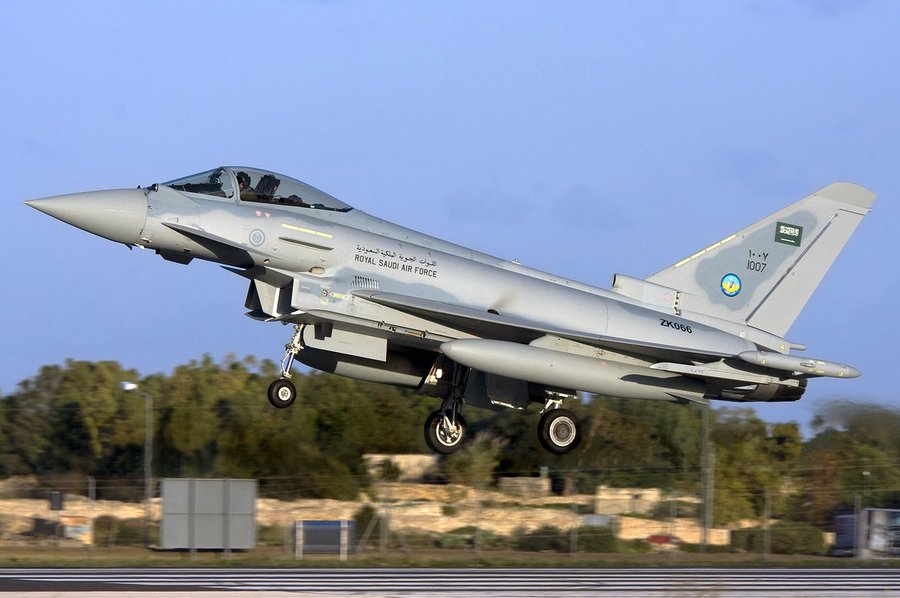
The achievement immediately enhances Saudi Arabia’s operational resilience because combat aircraft no longer require transcontinental ferry flights to European maintenance depots, reducing logistics vulnerability, operational downtime, geopolitical exposure, and dependence upon foreign industrial schedules during regional crises.
BAE Systems Saudi Arabia confirmed the breakthrough on June 21, 2026, declaring that “for the first time outside the manufacturing nations, the 2,500 Flying Hour Major Scheduled Servicing for a Typhoon has been completed successfully in Saudi Arabia,” signalling a major expansion of defence localisation within the Kingdom.
The maintenance overhaul required extensive disassembly of structural components, internal inspections beyond standard line maintenance thresholds, structural integrity testing, replacement of fatigue-sensitive assemblies, systems recalibration, and full combat requalification before operational re-entry into frontline service.
Such maintenance procedures represent one of the most technically demanding phases in military aviation sustainment because they directly determine long-term fleet survivability, sortie generation capacity, fatigue management, and combat readiness for high-performance fourth-generation-plus multirole fighters operating under elevated operational tempos.
Saudi Arabia’s Typhoon fleet has accumulated significant operational hours due to sustained regional missions near the Yemeni border, where persistent airborne alert operations, interdiction patrols, and force projection requirements accelerated airframe utilisation and intensified sustainment pressures on the RSAF inventory.
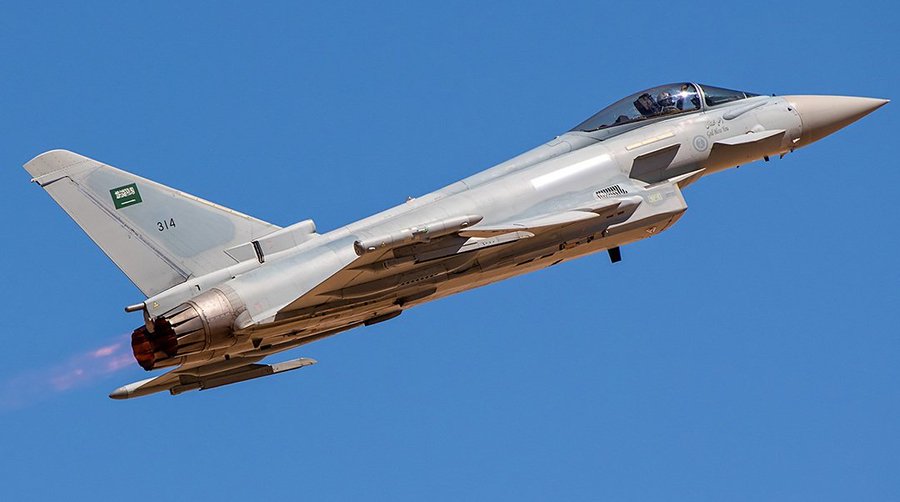
The Kingdom currently operates 72 Eurofighter Typhoons, with approximately 71 aircraft assessed as active or operational, making Saudi Arabia one of the world’s largest Typhoon operators outside Europe and a central pillar of Middle Eastern pemodenan kuasa udara strategy.
Approximately 80 percent of personnel involved in the depot-level overhaul were Saudi nationals, reflecting years of technology transfer, aerospace workforce development, industrial offset implementation, and localisation policies embedded within the broader Project Salam acquisition and industrialisation framework.
The Taif heavy maintenance centre now stands as the only certified Eurofighter Typhoon Major Scheduled Servicing facility outside Europe, giving Saudi Arabia a unique strategic position among global Typhoon operators and substantially strengthening Riyadh’s leverage within future sustainment and procurement negotiations.
The development also emerges amid ongoing discussions regarding a potential acquisition of 48 additional Eurofighter Typhoons, which could expand Saudi Arabia’s fleet toward approximately 120 combat aircraft and dramatically increase regional force projection capacity across the Gulf and wider Middle East.
Saudi Arabia’s Typhoon Sustainment Breakthrough Alters Regional Airpower Calculus
Saudi Arabia’s successful execution of independent Typhoon heavy maintenance significantly enhances wartime sustainability because modern air campaigns depend not merely upon advanced fighter acquisition, but upon the ability to sustain high sortie rates during prolonged regional contingencies.
The strategic significance lies less in the maintenance procedure itself and more in Riyadh’s growing capacity to maintain sovereign operational continuity without requiring continuous foreign industrial intervention during periods of heightened geopolitical instability.
Historically, dependence upon overseas depot maintenance created latent strategic vulnerabilities because political tensions, export controls, logistical bottlenecks, or supply chain disruptions could potentially delay combat aircraft availability during critical operational periods.
The Taif facility therefore functions as a strategic force multiplier because sustainment infrastructure directly influences combat persistence, mission generation capacity, and long-duration operational endurance during regional conflict scenarios involving Iran-backed militant networks or broader Gulf instability.
The Eurofighter Typhoon remains one of the region’s most capable multirole combat aircraft due to its advanced radar AESA integration pathways, high thrust-to-weight performance, electronic warfare systems, and long-range air superiority profile across contested battlespaces.
Saudi Arabia’s ability to internally manage complex structural overhauls reduces aircraft downtime and improves fleet availability rates, enabling more predictable operational planning for the Royal Saudi Air Force during simultaneous regional security commitments.
The achievement also strengthens Saudi Arabia’s layered deterrence posture because combat readiness increasingly depends upon sustainment sovereignty rather than merely procurement volume or headline acquisition figures within modern military modernisation programs.
Regional rivals must now account for a Saudi combat aviation ecosystem capable of maintaining elevated operational tempos independently, reducing assumptions that external maintenance dependencies could constrain RSAF force projection during extended crises.
The Kingdom’s sustainment autonomy complements its broader investments in sistem pertahanan udara, integrated command-and-control architecture, aerospace industry localisation, and strategic deterrence frameworks associated with Vision 2030 defence transformation objectives.
The maintenance breakthrough consequently shifts Saudi Arabia from being primarily an advanced defence importer toward becoming an emerging sovereign sustainment power capable of independently preserving frontline combat aviation capability within an increasingly volatile Middle Eastern security environment.
Technology Transfer and Aerospace Localisation Expand Saudi Defence Sovereignty
The heavy maintenance milestone represents a major victory for Saudi Arabia’s long-term defence localisation agenda because aerospace sustainment capability remains among the most difficult industrial competencies for emerging defence powers to internalise successfully.
The participation of an approximately 80 percent Saudi national workforce demonstrates how technology transfer mechanisms tied to Project Salam have evolved beyond symbolic industrial offsets into strategically meaningful aerospace capability absorption.
Military aviation sustainment requires highly specialised competencies involving structural fatigue analysis, systems diagnostics, avionics integration, materials engineering, propulsion management, and precision calibration processes that traditionally remained concentrated within original manufacturing states.
Saudi Arabia’s growing proficiency in these areas reflects a broader geopolitical trend in which emerging regional powers increasingly pursue indigenous sustainment ecosystems rather than permanent dependency upon foreign defence contractors.
Earlier localisation milestones already positioned the Kingdom as the first approved Eurofighter avionics repair centre outside Europe through the Advanced Electronic Company, gradually expanding domestic repair authority across critical systems integration domains.
The progression from avionics repair capability toward full depot-level heavy maintenance indicates Riyadh is methodically building a vertically integrated sustainment architecture capable of supporting long-term sovereign combat aircraft operations.
This localisation process carries major economic implications because Saudi Arabia seeks to localise 50 percent of military expenditure under Vision 2030, reducing capital outflow while simultaneously expanding domestic high-technology industrial sectors.
The aerospace industry component remains especially significant because military aviation ecosystems generate secondary technological spillover effects involving advanced manufacturing, systems engineering, digital integration, composite materials, and precision industrial capability development.
Saudi Arabia’s expanding aerospace workforce also enhances strategic resilience because indigenous engineering capacity reduces vulnerability to foreign labour disruptions, export restrictions, or political leverage linked to sensitive military technologies.
The Kingdom’s defence industrial trajectory increasingly mirrors broader global trends in which advanced military customers seek operational sovereignty through technology absorption, sustainment localisation, and long-term industrial self-sufficiency rather than perpetual dependence upon overseas defence ecosystems.
UK-Saudi Defence Partnership Deepens Through Strategic Sustainment Integration
The Typhoon maintenance breakthrough substantially reinforces the United Kingdom-Saudi Arabia defence relationship because BAE Systems remains central to Riyadh’s long-term combat aviation sustainment, training, industrialisation, and force modernisation architecture.
The success validates the strategic logic underpinning Project Salam, which combined fighter acquisition with long-duration industrial offset arrangements designed to embed British aerospace expertise within Saudi Arabia’s defence industrial base.
For London, Saudi Arabia remains one of the most strategically important export customers for the Eurofighter program because sustained Saudi procurement directly supports British aerospace employment, industrial continuity, and long-term Typhoon production viability.
The localisation achievement may also strengthen ongoing negotiations surrounding the potential acquisition of 48 additional Eurofighter Typhoons, which would carry substantial geopolitical and industrial significance for both countries.
A follow-on purchase would likely generate multi-billion-dollar defence commitments potentially exceeding USD10 billion (RM38 billion), reinforcing the Kingdom’s position as one of the largest non-European Eurofighter operators globally.
The United Kingdom also benefits strategically because deeper sustainment integration strengthens bilateral defence alignment across broader Middle Eastern security issues involving maritime security, Iran deterrence, and regional force balancing.
For Saudi Arabia, maintaining strong British defence relationships complements its parallel reliance upon American-origin F-15 fleets, enabling Riyadh to preserve a diversified procurement and sustainment strategy across multiple Western suppliers.
This multi-supplier approach reduces strategic vulnerability because reliance upon a single defence provider could expose operational capability to political pressure, export controls, or changing geopolitical calculations among supplier nations.
The Eurofighter sustainment localisation model may consequently emerge as a template for future Western arms export strategies where industrial sovereignty becomes increasingly central to major international defence procurement agreements.
The Saudi experience demonstrates that advanced combat aircraft programs can evolve beyond transactional acquisitions into deeper industrial partnerships capable of reshaping regional aerospace ecosystems and long-term geopolitical alignments.
Regional Force Projection Gains New Strategic Depth Across the Gulf
Saudi Arabia’s expanded sustainment autonomy directly enhances regional force projection because combat aviation effectiveness depends upon continuous aircraft availability during sustained operational campaigns across multiple theatres.
The Royal Saudi Air Force operates within one of the world’s most strategically contested security environments where rapid-response capability, persistent airborne readiness, and long-range strike capacity remain central to Gulf deterrence dynamics.
By internalising heavy maintenance capacity, Riyadh significantly reduces operational friction associated with maintaining a large advanced fighter fleet under elevated utilisation conditions near active regional flashpoints.
The development holds particular significance given persistent tensions involving Iran-backed armed groups, ballistic missile threats, unmanned aerial systems, and expanding regional military competition throughout the Gulf and Red Sea security corridors.
Combat aircraft sustainment infrastructure therefore becomes strategically important because prolonged regional crises can rapidly exhaust maintenance cycles, spare parts inventories, and operational readiness across heavily utilised frontline fleets.
Saudi Arabia’s new capability improves resilience against supply chain disruptions because critical maintenance functions can continue domestically even during periods of international transport interruption or geopolitical instability affecting overseas support networks.
The Taif maintenance hub additionally increases strategic redundancy because sustainment activities conducted domestically are less exposed to foreign political constraints, transportation vulnerabilities, or operational secrecy concerns during sensitive military contingencies.
Regional military planners must consequently account for a Saudi airpower ecosystem possessing greater endurance, faster turnaround cycles, and reduced dependence upon external sustainment timelines within future operational calculations.
The maintenance breakthrough also strengthens Saudi Arabia’s broader force posture as the Kingdom simultaneously expands investments involving integrated air defence systems, electronic warfare capability, aerospace industry development, and strategic military modernisation programs.
This evolving sustainment ecosystem ultimately reinforces Riyadh’s ambition to position itself not merely as a major arms purchaser, but as a central military-industrial power capable of independently sustaining advanced Western combat aircraft operations across the Middle East.
Eurofighter Program Gains Strategic Validation in Global Export Competition
Saudi Arabia’s achievement carries wider implications for the global Eurofighter Typhoon program because it validates the viability of sovereign sustainment models for non-European operators purchasing advanced Western combat aircraft.
The Eurofighter consortium faces increasingly intense competition from platforms including the F-35, Rafale, KF-21, and emerging sixth-generation combat aircraft concepts across international procurement markets.
Potential buyers increasingly prioritise technology transfer, industrial participation, and sustainment sovereignty rather than focusing exclusively upon aircraft performance specifications during major defence acquisition evaluations.
Saudi Arabia’s success therefore strengthens the Typhoon’s attractiveness because it demonstrates that structured partnerships can eventually enable customer states to internalise complex sustainment functions traditionally monopolised by manufacturing nations.
The precedent may prove especially influential among emerging regional powers seeking military modernisation without accepting permanent dependence upon external aerospace ecosystems for frontline fleet sustainment.
The development also reflects broader geopolitical shifts toward a more multipolar defence-industrial landscape where customer nations increasingly demand deeper access to advanced aerospace technologies, sustainment authority, and industrial participation rights.
Western defence exporters may consequently face growing pressure to expand localisation packages and industrial transfer mechanisms in order to remain competitive within evolving global combat aircraft markets.
For the Eurofighter consortium, Saudi Arabia’s localisation success potentially extends long-term program viability because sovereign sustainment capability improves customer confidence regarding lifecycle affordability, operational independence, and fleet survivability.
The Taif maintenance centre now serves as a tangible demonstration that advanced Western combat aircraft ecosystems can evolve beyond traditional dependency structures into more distributed sustainment networks involving trusted strategic partners.
Saudi Arabia’s breakthrough therefore represents far more than a maintenance milestone because it signals the emergence of a new geopolitical model where defence procurement increasingly intertwines with industrial sovereignty, strategic autonomy, and long-term regional power projection.