
Thailand Pushes China’s S26T Submarine Towards 2028, Renewing Underwater Ambitions
China’s military assistance agreement supports Thailand’s delayed S26T submarine, linking its underwater ambitions to Chinese engines, crew training and long-term logistics.
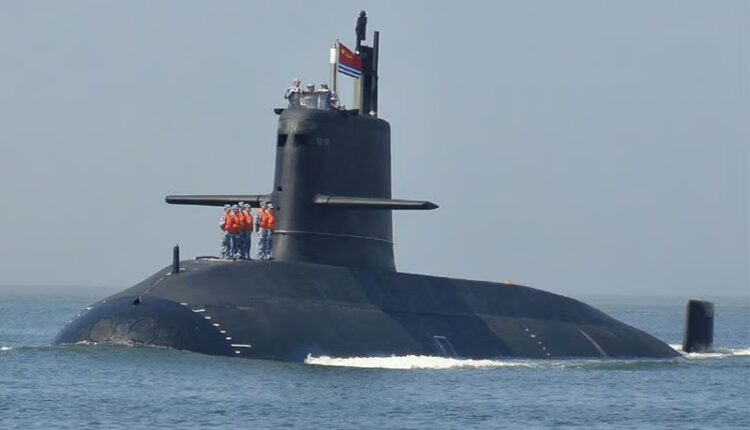
(DEFENCE SECURITY ASIA) — Thailand’s September 2026 military assistance agreement with China seeks to accelerate its delayed S26T submarine, but the strategic test extends beyond construction to whether engines, crew training and logistics can deliver a credible underwater capability by 2028.
The agreement signed in Beijing on September 16 supports the single submarine already contracted, making this a readiness and delivery intervention rather than a fleet expansion, despite the regional significance of restoring Thailand’s long absent submarine arm.
Its immediate importance lies in connecting spare parts, simulator provision and personnel training with an amended construction programme, because completing a hull without the technical workforce would leave Bangkok with an expensive platform whose operational availability remained constrained.
The revised delivery objective remains the end of 2028, five years beyond the original target, exposing how an apparently narrow propulsion specification became a strategic procurement vulnerability involving German export restrictions, Chinese manufacturing alternatives and successive Thai political decisions.
Admiral Nares Wongtrakul, Assistant Commander in Chief of the Royal Thai Navy and chairman of its submarine procurement project board, signed the assistance agreement with China’s military cooperation office, distinguishing this government support instrument from the shipbuilder’s commercial contract.

Thai Defence Minister Lieutenant General Adul Boonthamcharoen and Chinese Defence Minister Admiral Dong Jun witnessed the signing, placing submarine delivery within a broader defence relationship whose bilateral discussions also covered cyber capabilities and artificial intelligence alongside established military cooperation.
Rear Admiral Parach Rattanachaiphan, the Royal Thai Navy spokesman, described the agreement as a project milestone and outlined continued attention to construction, testing, training and logistics, making technical compliance and safety conditions central to any attempt at earlier delivery.
The engine dispute was formally addressed in September 2025, when Thailand accepted Chinese CHD620 diesels in place of unavailable German MTU 396 units, meaning the latest agreement reinforces an existing recovery programme rather than independently restarting the submarine project.
China’s proposed assistance also intersects with compensation for delayed delivery, although unpublished annexes prevent a definitive assessment of equipment quantities, weapons provision and financial value, requiring a distinction between the acknowledged support agreement and broader descriptions of its contents.
The original submarine contract was valued at approximately US$417 million, creating a substantial financial commitment for a fleet that still comprises only one contracted boat and therefore cannot sustain continuous submarine patrols through training, maintenance and operational deployment cycles.
For the Gulf of Thailand and Andaman Sea, the prospective S26T introduces an underwater patrol option with potential anti surface and anti submarine applications, but shallow operating environments and unresolved configuration details limit confident predictions about its eventual combat effectiveness.
DSA’s assessment is that Thailand’s procurement recovery will be measured through demonstrated propulsion reliability, completed acceptance trials and sustainable crew readiness, because neither a diplomatic signing nor advertised endurance figures establish the availability required for persistent regional maritime influence.
(CLICK): Thailand Seeks to Proceed with Submarine Purchase from China, Months After Cancellation
The Engine Dispute and Strategic Exposure
Thailand signed its government to government agreement with China Shipbuilding and Offshore International Company on May 5, 2017, selecting a Yuan class export derivative whose German diesel requirement ultimately connected Bangkok’s naval modernisation to export decisions outside either contracting government’s control.
The Royal Thai Navy favoured the MTU 396 because it already operated German machinery and regarded the engine as a mature, quiet option, making propulsion selection part of both acoustic performance expectations and management of technical familiarity.
Steel cutting began at Wuchang Shipbuilding in Wuhan in September 2018, followed by keel laying on September 5, 2019, committing manufacturing resources before the engine issue was resolved and increasing the financial consequences of changing course later.
Germany refused the export licence because the engines were intended for a Chinese built military submarine under the European Union arms embargo on China, demonstrating how an export restriction targeting one country can obstruct another country’s defence procurement programme.
Construction effectively stopped around 2021 with the submarine approximately 64 percent complete, while Thailand had paid ten of eighteen instalments, leaving an unfinished platform whose advanced construction status narrowed the practical choices available during contractual and political negotiations.
Early pandemic disruption at the Wuhan shipyard also affected the programme’s timetable, but the engine prohibition created a separate contractual obstacle that could not be overcome by restoring industrial activity or increasing the pace of hull construction work.
China proposed the CHD620 engine family as a replacement, introducing a route towards completion while shifting the procurement question from obtaining the original machinery to validating an alternative whose performance and support arrangements required Thai acceptance before integration.
German Defence Minister Boris Pistorius reiterated the export barrier during discussions with Thai Defence Minister Phumtham Wechayachai in May 2025, removing the expectation that diplomacy could restore the contracted engine and strengthening the case for a negotiated substitution.
Thailand’s cabinet approved the engine change on August 5, 2025, together with a 1,217 day extension, converting a prolonged technical impasse into an authorised recovery programme whose risks centred on implementation, acceptance and the revised delivery schedule.
The resulting amendment signed on September 16, 2025, changed propulsion and construction arrangements without adding submarines, illustrating that the programme’s immediate strategic objective had become rescuing one contracted capability rather than achieving the envisaged three boat force structure.
(CLICK): Rejected by Thailand, China Now Attempts to Sell Yuan-Class S26T Submarine to Indonesia

China’s Support Package and Submarine Logistics
The September 2026 agreement was signed during the thirteenth Beijing Xiangshan Forum with China’s Office of International Military Cooperation, giving the support package an institutional framework from the amended commercial construction contract held by the Chinese submarine supplier.
Spare parts, a training simulator and personnel instruction form the publicly described core of the assistance, directly addressing the maintenance skills and crew preparation needed to turn submarine delivery into usable capability rather than completing a procurement milestone.
The replacement engines remain within the paid commercial arrangement, so the assistance should not be interpreted as China supplying the powerplant free of charge, a distinction that matters when assessing compensation, contractual responsibilities and the financial structure of recovery.
Descriptions of the wider settlement place its value at approximately US$24.7 million and include in kind support instead of a cash delay payment, but the unpublished agreement annexes prevent independent confirmation that every described element carries binding contractual status.
An extension of warranty and maintenance support from two years to eight appears in accounts of the negotiated package, potentially reducing early sustainment exposure while leaving the exact service obligations, coverage limits and practical availability of specialist assistance unclear.
Engine spares and technician training would be particularly consequential because adopting the CHD620 creates a different maintenance requirement from the originally selected German machinery, linking submarine availability to adequate inventories, diagnostic competence and access to the technical support network.
Simulator provision could move part of crew preparation ashore, allowing procedural training without consuming the submarine’s limited operating time, although its value will depend on configuration fidelity and integration with the systems ultimately installed aboard the Thai boat.
Additional equipment and weapons have also appeared in descriptions of the compensation package, but official public statements do not identify quantities or weapon types, making any assumption about an expanded combat load or improved strike capability premature at this stage.
The Thai Navy’s emphasis on transparency and accountability therefore has operational relevance, because clearly defined support commitments determine whether promised assistance produces reliable maintenance capacity rather than leaving uncertainty over who supplies critical components during initial service years.
For Beijing, delivering the agreed support would reinforce confidence in its submarine export relationship with Bangkok, while for Thailand the central calculation remains whether those provisions reduce downtime sufficiently to justify accepting a delayed platform with a substituted powerplant.
(CLICK): Thailand Ditches Chinese Submarine, Opts for Frigate Replacement!
CHD620 Propulsion and Stirling AIP Face the Sea Trial Test
The amended S26T configuration uses CHD620V16H6 diesel engines to drive generators, while a main electric motor turns the shaft, preserving the distinction between generating electrical energy and delivering underwater propulsion that is essential to understanding conventional submarine endurance and exposure.
The Royal Thai Navy says the engine underwent more than 6,000 hours of bench testing with Thai engineers observing runs and reviewing factory data, providing a technical basis for acceptance without establishing the same operational evidence as sustained submarine service.
Lloyd’s Register classification has also been claimed for the engine, but the supplied material does not disclose the certification scope or acceptance documentation, limiting conclusions about precisely which design, manufacturing or performance requirements that classification independently establishes for the installed powerplant.
The Navy applied criteria covering comparative performance, safety, warranty and after sales support, presenting the substitute as meeting contractual requirements, while the consequential remaining question is how the complete propulsion installation performs under the submarine’s operating and maintenance conditions.
Pakistan’s related Hangor class uses the same engine family, offering a relevant comparison for industrial support and integration experience, although common ancestry does not demonstrate identical Thai equipment, acoustic characteristics or reliability across boats configured for different naval customers.
The S26T’s advertised air independent propulsion uses Stirling cycle machinery associated with China’s Yuan design, with Thai briefing material describing three approximately 75 kilowatt sets, a combination intended to sustain submerged operation without continuously relying on diesel generator use.
Shipyard figures claim approximately twenty days submerged using air independent propulsion, but that headline endurance does not establish sustained high speed operation, since electrical demand, propulsion settings and the actual installed configuration determine how the advertised duration translates into patrol options.
Mixed diesel electric and air independent operation is marketed at up to approximately sixty five days, yet this broader mission endurance should remain distinct from uninterrupted submerged endurance when evaluating exposure, patrol planning and the logistical burden of deploying one submarine.
Published submerged speed estimates range from seventeen to twenty two knots, with the higher figure associated with a short battery sprint, illustrating the tradeoff between rapid movement and endurance that prevents maximum speed and maximum underwater persistence from being treated as simultaneous capabilities.
Machinery isolation rafts, anechoic tiles and a skewed propeller are claimed quieting features within the design family, but Thailand’s actual acoustic signature remains undisclosed, making completed trials and configuration confirmation more meaningful than comparisons with Chinese Navy Yuan class submarines.
Torpedoes, Missiles and Sonar: Unconfirmed Combat Potential
Published S26T figures describe a submarine approximately 77.7 metres long with submerged displacement around 2,550 to 2,600 tonnes, although differing reference tables underline why Thai specific configuration data should take precedence over specifications attached to other Yuan family boats.
Six 533 millimetre bow tubes are the standard advertised arrangement, providing a common launch interface for heavyweight torpedoes, mines and encapsulated anti ship missiles, but the existence of compatible tubes does not independently confirm which weapons Thailand has purchased or integrated.
A typical load is described as approximately eighteen weapons, with alternative mine configurations also advertised, making payload allocation an operational choice between different mission requirements rather than evidence that every published weapon category will be carried simultaneously during Thai patrols.
The CM-708UNB submarine launched anti ship missile has been associated with the original package and advertised at approximately 290 kilometres, but the final weapons list remains undisclosed, preventing that stated range from being treated as a confirmed Thai operational engagement envelope.
An export heavyweight torpedo associated with the Yu-6 family, sometimes identified as ET38, also appears in Thai descriptions with a range around forty five kilometres, although designation, quantity and final integration status remain insufficiently clear for a definitive inventory assessment.
The advertised sensor arrangement includes bow sonar, flank arrays and a towed array alongside surface search radar and electronic support equipment, creating a potential layered detection architecture whose actual effectiveness will depend on the export fit and its integration aboard Thailand’s submarine.
Chinese marketing claims that the sonar can track numerous contacts and support multiple engagements, but these statements do not provide independently demonstrated performance in shallow water, where the operating environment makes detection quality and contact classification central to tactical usefulness.
Missile employment would require a sufficiently reliable targeting solution, while torpedo engagements depend on detection and tracking quality, so advertised weapon reach alone cannot establish the submarine’s ability to identify, prioritise and engage maritime targets under realistic conditions.
The export design should also be assessed separately from Chinese Navy Yuan submarines, because Thailand’s exact acoustic suite and quieting provisions remain unconfirmed, preventing a transfer of assumptions about domestic Chinese platforms into estimates of the S26T’s combat performance.
For opposing anti submarine forces, the relevant challenge would be locating and maintaining contact with a submerged platform, but assessing how effectively the S26T complicates that task requires evidence about its real acoustic signature, operating procedures and deployment patterns after acceptance.
One Submarine Changes Force Posture Without Delivering Persistent Coverage
Thailand has not operated submarines since the early 1950s, making the S26T programme an institutional reconstruction effort as well as a ship purchase, with crew proficiency, squadron management and maintenance practice all requiring development before routine operations become credible.
The intended patrol areas include the Gulf of Thailand and Andaman Sea, giving Bangkok potential underwater options across distinct maritime approaches while requiring planners to align limited submarine availability with training requirements, transit demands and the priorities assigned to each operating area.
A single submarine cannot maintain continuous patrol coverage because maintenance, crew training and operational preparation compete for the same hull, meaning even successful delivery would introduce intermittent underwater presence rather than the sustained deployment capacity associated with a larger submarine force.
The original three submarine ambition reflected that force structure problem, but the September 2026 agreement does not exercise options for additional boats, leaving Thailand’s prospective posture dependent on the availability of one platform and any future procurement decisions beyond the present contract.
Former Defence Minister Sutin Klungsang’s 2023 statement that the programme was postponed “until the country is ready” captured the political constraint, as Bangkok considered redirecting resources towards a Chinese frigate before eventually returning to the submarine and replacement engine solution.
By May 2024, joint discussions had judged the proposed frigate substitution less favourable, while the government subsequently warned cancellation could cost up to approximately eighty percent of the submarine contract, demonstrating how financial exposure shaped the eventual decision to proceed.
That cancellation estimate strengthened the recovery case but did not itself prove the submarine’s military value, because financial losses already incurred and future operational benefits remain separate considerations when evaluating the personnel, sustainment and deployment resources required after eventual delivery.
The official target remains the end of 2028, although strictly counting 1,217 days from the September 2025 signing points towards January 2029, leaving a scheduling discrepancy that warrants clarification before acceleration claims are translated into an expectation of earlier arrival.
For regional observers, the strongest strategic signal is therefore Thailand’s renewed commitment to completing a Chinese supplied underwater capability, rather than evidence of immediate naval superiority, expanded fleet numbers or a demonstrated missile armed submarine available for deployment today.
The programme will change Thailand’s maritime options if the Navy receives a technically accepted boat with trained personnel and sustainable support, but its lasting geopolitical weight will depend on operational availability, employment and whether Bangkok eventually funds the wider force it initially envisaged.
